
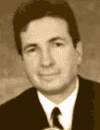
Asahel Nettleton Biography
E.A. Johnston highlights the powerful legacy of Azahel Nettleton as a pivotal revival preacher whose life and ministry shaped 19th century American evangelicalism and offers timeless lessons on faithfulness and revival.
In this biographical sermon, E.A. Johnston explores the remarkable life and ministry of Azahel Nettleton, a pivotal figure in the Second Great Awakening. Johnston reveals how Nettleton's revival preaching and theological defense shaped American evangelicalism and offers insights into the spiritual fervor of 19th century America. This sermon encourages believers to draw inspiration from Nettleton's faithfulness and to seek revival in their own time.
Full Transcript
Before we go through a time of prayer, friends, I want to read us an excerpt from my biography on Azahel Nettleton, Revival Preacher, here now taken from my introduction. In the library of Hartford Seminary in Hartford, Connecticut, hangs an old portrait of a man forgotten by historians, his present obscurity standing in stark contrast to the times in which he lived. In 19th century America, the name Azahel Nettleton was a household word.
In fact, a study of historical documents of 1810 to 1844, the years of his public ministry, will reveal that Azahel Nettleton was the leading figure of the revival of religion known as the Second Great Awakening. He was friends with the leading religious figures of his day, and he was one of the original founders of what is now Hartford Seminary. Yet today, he's practically unknown.
Looking at his old portrait, one can see the haggard look in his blue eyes, a result of typhus fever and a lifespan at full stretch for his lord. In his day, the name Azahel Nettleton literally made strongmen tremble at the news of his arrival in New England towns, for they knew that soon a revival of religion would occur, and many would be face-to-face with their eternity and the God of that eternity. It was said of Nettleton that he knew human nature so thoroughly he could read a man's heart.
He was the leading human instrument of God in over 50 revivals during the period known as the Second Great Awakening, and if I may pause here, when I was conducting my primary research on Nettleton's life, I actually went to visit those 50 locations in three different states throughout the east coast of this country. Bennett Tyler Whitfield's first biographer stated that he was the means of bringing 30,000 souls into God's kingdom. I can assure you, friends, it was a lot more than that.
Just studying Nettleton's records, he recorded a large amount of converts, and his grave lies in a remote cemetery in East Windsor, Connecticut. The inscription on the brown mossy tombstone simply reads, Reverend Azahel Nettleton, D.D., died May 16, 1844, yet he is among God's choice of servants. May I interject here, friends, before I continue that, as I stood often at the tombstone of Nettleton's grave, I was gripped with the holy solemnity of God's presence.
It's as if God still honors the life of his choice servant, Azahel Nettleton. Let me proceed. A study of the ministry of the 19th century evangelist, Azahel Nettleton, is vastly important if we are to comprehend the reasons and circumstances of why the majority of our churches in not only America, but the world, hold to the theological views they have and conduct evangelism in the way they do.
The preponderance of evangelism that is conducted today can trace its roots directly back to the New Measures Movement of the 19th century and the personages of Charles Grandison Fanny and Nathaniel William Taylor. Concerning theology and the preaching of the gospel, what is considered by the majority of the church today to be orthodoxy was considered by the orthodox New England ministers of the early 19th century to be heresy in their day. Why the grand shift in theological views? Did society play a part? Who were the primary religious leaders of America in the 19th century? What roles did they play in this giant theological seismic shift in American theology? These questions will be answered in this new biography on Azahel Nettleton.
No other man in history would so mightily use a God and revival as Azahel Nettleton. He labored amidst more revivals of religion than Jonathan Edwards and George Whitefield. One can learn much about how God moves in revival by studying Nettleton's life.
Therefore, this book would be a useful tool for any serious student of revival. Secondly, the role that Nettleton played as a defender of the faith against the New Measures and the New Haven theology reveals how theology in America shifted from its Puritan roots of Calvinism to a more federalized man-centered theology. The roots of this Pelagian theology stem from Yale College and specifically the teachings of N.W. Taylor, professor of theology at Yale.
Azahel Nettleton fought almost the same battle as C.H. Spurgeon. Spurgeon had his downgrade controversy, which took a real toll on his health and life. Nettleton fought Taylorism with its complete overhaul of New England Calvinism, and this battle took a severe toll on Nettleton's health and quickened his early demise.
Azahel Nettleton neared the end of his life an invalid and in acute physical pain. His final words, heard by his good friend and biographer, Bennett Tyler, were reported to be, while ye have the light, walk ye in the light. In order to accomplish this, cling to the cross of Christ.
There are few men in the history of the church who lie among the mighty dead. As the great evangelist Azahel Nettleton, to study his labors is to be amazed. It is my prayer that the reading of Azahel Nettleton, revival preacher, will encourage you to do great things for God and that his life will inspire you to keep eternity and the judgment seat of Christ ever before you as you labor for him who was worthy.
All glory to his holy name. Let us take time now, friends, to pray for revival, to come again to our land, to grip this country with a God-consciousness and an utter need of him. Let us pray.
Sermon Outline
-
I. Introduction to Azahel Nettleton
- Nettleton's obscurity contrasted with his historical impact
- His role in the Second Great Awakening
- Personal research and visits to revival sites
-
II. Nettleton's Ministry and Legacy
- Instrumental in over 50 revivals and thousands of conversions
- His theological stance against New Measures and Taylorism
- Comparison to other revivalists like Edwards and Whitefield
-
III. Theological Shifts in 19th Century America
- From Calvinism to man-centered theology
- Influence of Yale and N.W. Taylor
- Nettleton's defense of orthodox faith
-
IV. Lessons from Nettleton's Life
- His health struggles and perseverance
- Final exhortation to walk in the light
- Encouragement to labor for God with eternity in view
Key Quotes
“In his day, the name Azahel Nettleton literally made strongmen tremble at the news of his arrival in New England towns.” — E.A. Johnston
“No other man in history would so mightily use a God and revival as Azahel Nettleton.” — E.A. Johnston
“While ye have the light, walk ye in the light. In order to accomplish this, cling to the cross of Christ.” — E.A. Johnston
Application Points
- Commit to studying the lives of faithful servants like Nettleton to learn from their example.
- Stand firm in sound doctrine amidst theological shifts and challenges.
- Keep eternity and the judgment seat of Christ before you as motivation for faithful labor.