
The Reign of Error 10 86
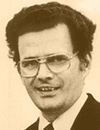
Don Wilkerson challenges believers to embrace true sonship by understanding the intimate relationship between the Father and the Son, warning against reigning in error through shallow spiritual experiences and emphasizing obedience, surrender, and holy living.
In 'The Reign of Error,' Don Wilkerson explores the critical yet often overlooked relationship between God the Father and Jesus the Son, highlighting its significance for true Christian sonship. He critiques contemporary movements that emphasize spiritual experiences without corresponding holiness and obedience. Wilkerson calls believers to a deeper understanding of their identity as sons of God, grounded in surrender, trust, and the authority of the Father. This teaching challenges the church to move beyond superficial faith and embrace the full responsibility of living in God's family.
Full Transcript
If you have your Bibles, turn with me to the Gospel of John, chapter 14. I met a sister, a couple sisters on the elevator, and one of them said to me, are you speaking? I said, yes. He said, well, I'm looking forward to it, I think.
I want to speak to you this afternoon, a message entitled, The Rain, R-E-I-G-N. In fact, if you write this down, you'll get it better. The rain of air, E-R-R-O-R.
Is that how you spell air? The rain of air. In John, chapter 14, Philip said to him, verse 8, And Philip said to him, Lord, show us the Father, and it is enough for us. And Jesus said to him, have I been so long with you, and yet you have not come to know me, Philip? He who has seen me has seen the Father.
How do you say, show us the Father? Do you not believe that I am in the Father, and the Father is in me? The words that I say to you, I do not speak on my own initiative, but the Father abiding in me does his works. Now, Philip asked, seemingly, a worthy question, when he requested a revelation of the Father. But nevertheless, it revealed ignorance.
Even though the disciples had been told over and over again that the Father is manifested in the Son, they never grasped it. And since his first public appearance, more than three years had elapsed, prompting Jesus to say to Philip, haven't I been with you so long a time? And still you don't understand. You still ask.
You don't understand that if you've seen me, you've seen the Father? For the Father is in me, and I in the Father. Now, not only did Philip not understand this, or the meaning of it, neither does much of the church today. And this lack of understanding lies at the root of some of the error that I see in the church, which prompts me to share with you this afternoon the fact that there are saints who are reigning in error.
You see, little emphasis is given in teaching of the Father, particularly the relationship between the Son and the Father. Yet Jesus spoke numerous times of that relationship. 245 times in the New Testament, God is called Father.
But some 50 times in chapters 14, 15, 16, and 17, Jesus talks about the Father. And one cannot read those words without understanding the intimacy between Father and Son. In fact, when Jesus began his ministry, when we first hear of him in the New Testament, where is it? It's in the temple.
His parents have lost him. And when they find him, they, of course, reacted, and he's surprised at their reaction, and he says to them, What's wrong? I must be about my Father's business. And again, the last words that he utters at the cross and at Calvary, and he says, Father, into thy hands commend I my spirit.
Now, the importance of a study of the Father and Son is that it has so much to teach us about subordination and surrender and obedience and holiness and reigning with Christ now and also what it means to be a son in relationship to a father. And in a time when the popular message, one of the popular messages in the body of Christ is about claiming our rights as sons of God, but little is taught on living up to the responsibility to the Father. Living in Father's house is not only enjoying the robe of righteousness or the fatted calf or the gifts of the Spirit or a festival of praise.
It is also to be perfect as your heavenly Father is perfect. And when we look at the Father, we are not only looking at the one who gave us his Son, we are not only looking at the blessings of sonship, but we also look at the goal of the Christian life when the church and its kingdom and all of its members are brought to completion to the will of God. The Father is the one who, according to Paul in 1 Thessalonians 5, 23 and 24, desires, he said, I desire to sanctify you through and through or sanctify you wholly that may your whole spirit, soul, and body be kept blameless at the coming of our Lord Jesus Christ.
And every time Jesus spoke in John chapters 14, 15, and 16 about how we should abide in him, he used the example of how he obeyed and abided in and related to the Father because the appropriate relationship of a son to a father is one of dependence. In fact, Satan's attack upon him in the wilderness was to defeat the Son at this very point, and I'll come to that a little bit later. Now, in recent times, we've had or gone through both a Jesus movement and a charismatic or Holy Spirit movement.
I'd like to start a Father movement. But in respect to the Jesus movement and the charismatic movement, one is gone and the other has splintered into a variety of teachings characterized by one as charismania. But both movements, each in a different way, espouse an inadequate gospel, and what is needed is a Father movement.
You see, the charismatic movement failed to see that Christ received from the Father the promise of the Holy Spirit. And this means that there is responsibility that goes with a spirit-filled life. But the charismatic movement has been in large part responsible for spawning the strange children that David talked about last night and Bob referred to this morning.
Now, don't get me wrong. The charismatic movement was a great move of God, especially among mainline churches that previously had a dead Orthodox religion. They had a theology in which God was a concept and Christ simply as an historical figure.
And the renewal brought people into a now living relationship with Christ by the Holy Spirit. It's kind of like what... We had a psychologist came to Teen Challenge one time. We've had people come from all over the world that beat a path to our door to find out about drug addicts being cured.
And we had a psychologist came one time and very skeptical and he was trying to analyze what was going on and find an explanation for it other than the fact of what we call the... It's the Jesus factor that brings about the curing and the transformation of drug addicts. And he asked me a lot of questions. And finally he said, I want to talk to one of your residents privately.
I said, okay, and I knew what he was up to. So I picked out the right young man and I said, here, you go in this room with him. He's going to ask you some questions and you answer them.
And so he threw out all these questions at him and again, he kept driving the point home. What did you get here that you didn't get in a hospital or a therapeutic community or wherever you went for help? And the young man thought about it for a few minutes and his answer is a classic. He said, well, sir, they give us God in the morning, Jesus in the afternoon and the Holy Ghost at night.
The psychologist didn't have the same reaction you did. He said, don't you think you're using God as a crutch? He said, I don't know, man. If I am, give me two of them.
But that young man understood basically what happened in the outpouring of the Holy Spirit is that Jesus is in the now and he is the God in the morning, Jesus in the afternoon and the Holy Ghost at night, a 24 hour day Jesus. But on the other hand, the movement has failed to subject itself to the Father and to the Son and instead the emphasis has been the Spirit as a sovereign source of renewal, power, spiritual gifts and fruits and certain truths are ignored. For example, it says in John 16, 15, it says that the Spirit does and brings nothing of himself or on his own authority but simply takes the things of Christ and shows them to us.
Just as the Son also does nothing on his own authority but only what he sees the Father does and so it's the Father, Son and Holy Ghost working in concert one with the other. Now as a result of this neglect, the standard of practice in the body of Christ today and in some circles of the charismatic movement has become manifestations of the Spirit and spiritual experiences with little regard for holy living or purity of heart. The claim was and is is that the experiences speak for themselves without reference to anything outside themselves.
In other words, if it feels good, it must be of the Spirit and thus it must be of God. And in this realm is an interest in our spiritual experiences, our religious experiences in and for themselves and the more satisfying and sensational they are, the more they become the norm of church practice and thus the validation of what is of God and what is the move of the Spirit becomes this. Does it make me happy? Does it draw a crowd? Does it cause church growth? Does it make you successful? Does it make you dance or jump or fall down or have spirits cast out of you or heal your innards? And in the process, the criteria of church life and practice evolves from within inside itself building on its own experiences and developing its own techniques.
It is no longer does it glorify God. Does it conform to the image of God? Is the will of the Father the highest gold that's thrown out the window? Does it conform to sound doctrine? And listen to me, there is nothing more seductive as a good praise and worship service that appeases the flesh but never deals with the sin in a man's heart. They that worship me must worship me in spirit and in truth.
It is only as we look to the Father and learn disciplines as sons will we come under godly, scriptural and fatherly authority that shapes us inwardly and makes us responsible outwardly to others within the body. Again, Jesus is a model. One of the major themes of Luke's account I've made reference before about the temptation in the wilderness.
One of the major themes of Luke's account of Jesus' temptation in the wilderness is the attack that it launched on this consciousness of sonship that came to him in his baptism when the Father said, this is my beloved Son in whom I am well pleased. And the casting of doubt on his sonship is the starting point of the first and the third temptation which begins, and Satan said to him, the devil said to him, if you are the Son of God, do this and do that. And Satan challenges the authority of the voice that spoke to him as he emerged from the waters of the Jordan.
And in the first temptation, Jesus is attacked at the point of obedience. And he is invited to use charismatic power, if you please, to meet his own need rather than to be in obedience to his Father's word to him. You see, to fall from sonship is to fall from a life that has God and his word at the center to a life that either makes its shape from its own human needs, its own ministry to its own needs.
And against this temptation, Jesus affirms that he draws his strength and his meaning from his obedience to his Father. And he said, man shall not live by bread alone. In the third temptation, the attack is on the trust, the trust of what his Father has said to him.
It is a temptation to prove his sonship by signs and wonders. Satan says, if you don't do this, it shows that you don't really believe you're the Father's son. It's not enough that the Father has said it.
You've got to establish it. You've got to prove it. You've got to show it by signs and wonders.
But this temptation is exposed and is defeated. And Jesus says this, God is to be trusted, not to be tested. Do not put the Lord your God to the test.
Because you see, if Jesus fails at this point, if he fails here, his whole mission is defeated before he has started. And that is that he is totally dependent upon the voice and the will of the Father. And these are two classic charismatic temptations.
One, it is made up of those who misuse spiritual power to satisfy their own need. Bob referred to it this morning, to satisfy our own need for healing or for peace or for prosperity or for excitement or for sensation. Or secondly, the temptation is to establish our status as sons of God by the fact that we are possessors of gifts and blessings or performers of signs.
And people that are into this do so because they have not really believed or obeyed their sonship. In other words, well let me put it this way, the hyper-faith people really in the end don't have true faith. They cannot accept the fact that God said it, that settles it, and I believe it.
They keep needing and asking God to turn stones into bread or they ask for ridiculous things like throw yourself down and see if God doesn't perform a mighty sign and wonder. They haven't learned yet to rest in the arms of the Father and trust Him explicitly apart from anything else. Now let me examine one event which reflects the son's relationship to the Father and how a misinterpretation of it leads to adopted sons reigning in error.
Turn with me to Romans, the eighth chapter. And here Paul tells us that the work of the Spirit is to produce within us a cry and a confession, Abba, Father. And let's take a look at the meaning of Abba, Father here.
Romans 8, verse 14, For all who are being led by the Spirit of God, these are the sons of God. For you have not received a spirit of slavery leading to fear again, but you have received a spirit of adoption as sons by which we cry out, Abba, Father. The Spirit Himself bears witness with our spirit that we are children of God and of children, and heirs also, heirs of God, and fellow heirs with Christ, if indeed we suffer with Him in order that we may also be glorified with Him.
And again, I read over in Galatians 4, 6 and 7. You don't have to turn there, but it says, And because you are sons, God has sent forth His Son into our hearts crying, Abba, Father. Therefore you are no longer a slave but a son and then an heir through God. Now I want you to note that this cry is a name not of our own choosing.
It has its origin in the language of Jesus who alone spoke of God in this way. We approach the Father and we call Him Abba through the Son and by the Spirit. Now just what does this mean? Does it mean that I have a heavenly daddy who invites me to sit on his lap and ask for whatever I want? Is this what it means to be heirs of God and joint heirs of Jesus Christ? I've heard the most perverted, distorted and shallow interpretation of the believer's cry, Abba, Father, and what it means to be a son of God.
Now first of all, this cry was uttered in a society whose idea of fatherhood is quite different from an alien to ours. You see in our culture it's almost a virtue to express one's independence, one's independence of father and like the prodigal son to go out and make it on one's own. Fathers in western cultures are proud of sons who move out from under their parental care.
It's a sign of adult maturity in this culture, but this is far different from what a father was in the Old and New Testament days. In that culture, the father was absolute disposer and sovereign protector of his children all of their lives and we must understand this in order not to place modern cultural ideas into our interpretation of the doctrine of God's fatherhood. Father is not the indulgent daddy of the 20th century who fears imposing his will on his sons lest they rebel.
That means that pastors or shepherds are afraid to preach the truth. That's what Bob was talking about this morning. Father in the Bible is not the indulgent daddy of the 20th century who fears imposing his will on his sons lest he rebel, but one who holds authority and absolute right to the obedience of his children.
Turn to Isaiah 63 and verse 16. You see when the Old Testament speaks of the fatherhood of God, it's careful to avoid the sentimental use of the metaphor, but rather it affirms that the relationship between son and father is one in which God is our father because he is the ultimate origin of our being and thus he has free authority over his sons. He has established his covenant relationship and his covenant responsibility to protect and care for his children and can expect their obligation to trust and obey him in return.
Isaiah 63 and verse 16. It says, For thou art our father. Though Abraham does not know us and Israel does not recognize us, thou, O Lord, art our father.
Our redeemer from of old is thy name. In other words, he said you're not living like children. You call yourself the children of Abraham.
If Abraham came, he wouldn't even know you. He couldn't even identify with you. Though Abraham does not know us, but still that does not change the fact that thou art our father or in chapter 64 and verse 8 and it says, And now, O Lord, thou art our father.
We are the clay and thou art the potter and all of us are the work of thy hand. And you can find a cross reference there where in effect it says the same thing as one of the scriptures Bob used this morning about can the ax head dictate to the ax and he said here can the clay dictate to the potter? Said no, you can't. Turn to Deuteronomy 32 verses 5 and 6. We see it again here.
It says, They have acted corruptly toward him. Deuteronomy 32. They have acted corruptly towards him.
They are not his children because of their defect, but are a perverse and crooked generation. Do you thus repay the Lord, O foolish and unwise people? Is not he your father who brought you? He has made you and established you. And the thought here is of his freedom and his authority as creator which makes for a claim on his children's obedience rather than any natural bond between them.
And therefore Jesus' use of Abba has all of this behind it and only can be understood in this context. Now follow me please. Our right to call God our father, Abba Father is a conferred right.
We have been given the spirit of adoption by which we cry Abba Father because it was first uttered from the lips of Jesus in the garden of Gethsemane. Abba Father is a Gethsemane word. It's a Calvary word.
It can only be prayed by sons who've had a Gethsemane experience and who themselves have gone to that cross and died to themselves and died to their flesh. Mark 14 verses 35 and 36. Going a little further and this is what this conference is all about.
Mark 14. Mark 14. Let me show you what this conference is all about.
Verse 35. I think in the King James, I have it here also in the King James. I think it says, Going a little farther.
Here it says, And he went a little beyond them. I don't know about you but I find that Jesus is a little bit beyond me. Going a little farther.
And that's what the Holy Spirit is trying to say to a body today. Go a little farther. Not father further.
Excuse me. Going a little further. He fell on the ground and prayed that if possible the hour might pass from him.
And here it is, Abba Father. He says, Everything is possible for you. Take this cup from me Yet not what I will but what you will.
And you see, Gethsemane cannot be understood except in understanding this cry, Abba Father. Now what's going on here? It's at this moment that we understand what the Father means to the Son. It is here that the Old Testament meaning of fatherhood is affirmed.
To be the son of this Father is to be able to have such secure trust, such confidence in the Father's will, such intimacy between son and father that he is willing to drink the cup of immeasurable suffering, making the sacrifice of life itself. There's no rebellion here. There's no hesitation here.
There is no privileged exemption from the obligation of obedience which the Father imposes and the Son accepts. And there is neither a picture of an indulgent father shielding his son from suffering nor a vengeful, demanding father threatening the son. This is not an enforced obedience.
The son has been with the father from the beginning. He has known him to be abundant in his provisions, reliable in his promises, and faithful in his love. The son can obey the will of Abba whose love has been so proved that it can be so trusted so fully by being obeyed so completely.
But too many today have a daddy relationship with the father. This is a teaching and a concept that we are king's kids living in a rich father's house who has given all of his children access to all of his credit cards, all of his wealth, and just about anything they want when they want it. And therein lies the reign of error.
When Jesus cries to the father, it's not a casual, it's not a cry of a casual word of familiarity, but it's the deepest, most trustful reverence. Abba is the intimate word of a family circle where obedient reverence was at the heart of the relationship, while daddy is a familiar word of a family circle from which all thoughts of reverence and obedience have largely disappeared. And today we have a church that has turned the father into a 20th century daddy.
If you don't believe it, listen to the language of preachers today. Listen to the music that's written where it treats God in this manner without respect to his authority over us as his sons. Now this is not to say that we're not heirs, H-E-I-R-S.
This is not to say that our father is not rich in mercy and in grace. We do have access to the privileges of father's house. Christ ordained that.
He obtained that for us. We are heirs of God and co-heirs with Christ. I never forget what my brother said one time.
We were in an office. With our office, we were talking about this last, the message of judgment and the fact that what's gonna happen when economic chaos breaks out in our land and everything that can be shaken will be shaken. I like what he said.
He said, when that happens and when fear strikes the heart of the church, he said, we're gonna become the prosperity preachers. Yes, there is truth there that we are the sons. We are heirs and joint heirs with Jesus Christ.
Hallelujah. But the meaning of this being preached today is so shallow and so carnal and so corrupting that it's turned believers into prodigals. The inheritance of the saints, the reign of heirs of God must reflect the likeness of Jesus Christ.
It's to possess a unique combination of obedience and authority, humility and greatness, weakness and power, suffering and glory, dying and rising, serving and reigning. Anything less is cheap charismatic triumphantism which is only interested in a painless solution to all of its problems. Now this brings me to another point of my message and that is that I believe what is needed is a conversion experience for saints who are reigning in error.
I think they need to be converted. It's not a conversion from your sin but it's a conversion from your error. I remember in our third conference a young couple came to me.
Well I'll tell you about that later. I didn't purposely try that to keep your interest. I just got ahead of myself.
Turn with me to Luke chapter 22. Luke chapter 22, verse 31. Leave it open there.
I'm going to go back to some other parts of it but let me begin with verse 31. It says, Simon, Simon, behold Satan has demanded permission to sift you like wheat. He said, but I have prayed for you that your faith may not fail.
And you, when once you have turned again, I think King James, doesn't King James say converted? He said, once that you have been converted, strengthen your brother, your brethren. Now I believe the kind of conversion that Peter needed is the kind some in the church need. And some of you maybe this afternoon you need this kind of conversion.
It's the kind of conversion that the prodigal experienced. You don't have to turn to it but remember in Luke 15 when the story begins he says, give me. And then he goes out and he squanders his inheritance in riotous charismatic living.
And when he came to himself, I want to tell you when you don't have Jesus and you just come to yourself you're in trouble. And he says, I will go, I will get up and go to my father and say to him, Father, I have sinned against heaven and in your sight I am no longer worthy to be called your son. Make me as one of your hired men.
What a conversion from give me to make me. And I challenge you to do something. Go across the dial of the radio preachers or the television preacher.
Go across the dial and rate them if you will. And you can tell very quickly which are the give me ones and which ones are the make me ones. Don't come asking me for a list.
It's very simple. It's a very simple deduction. You'll hear them very quickly and they come across as this right that we have a give me attitude towards God not a make me.
Now Peter needed a similar conversion if for different reasons. Peter had a wrong concept of salvation and what it meant to be a member of Christ's kingdom and to be a son who reigns with him. Peter was reigning in error.
You see all along the way he was looking for a physical a material a political if you please an earthly kingdom. He and the other disciples kept wondering when is this Messiah who raises the dead who opens blind eyes that has this power when is he going to use it to kick those scoundrels out of the White House. When is he going to use his power to overthrow Roman rule lead a political coup and fulfill the testimony of the prophets.
You see the disciples were as obsessed with Christ taking over Rome as some of the church today is obsessed with taking over the White House. Look at it. Look at it in verse 17 and 18 of Luke 22.
And when he had taken a cup and given thanks he said take this and share it among yourselves for I say to you I will not drink of the fruit of the vine from now on until the kingdom of God comes. Now they were excited about this because they thought when he said I will not drink it again until the kingdom of God comes they thought it was around the corner. They thought it was about to happen.
And he went on and he said this is my body which is given for you this due in remembrance of me. And it's right after this in the context of this what happens they begin to argue they say this is terrific we've been waiting for this day. He's going to set up the kingdom and they started to talk among themselves as to who was going to be secretary of defense.
Who was going to be secretary of state. Peter of course was going to be secretary of defense. You know Judas the secretary of treasure.
Verse 24 And there rose also a dispute among them as to which one of them was regarded to be the greatest. Hey they said we're coming in we're coming in we're taking over. It's interesting you go on Jesus did not rebuke them.
And he said to them the kings of the Gentiles lorded over them and those who have authority over them are called benefactors. And they said yeah and they thought we're about to be the benefactors. But then he said but not so with you.
But let him who is the greatest among you become as the youngest and the leader as a servant and who is greater the one who reclines at the table or the one who serves. It is not the one who reclines at the table. That breaks my heart.
We sit around tables we sit around tables contemplating our next political move. It is not the one who reclines at the table. But I am among you as the one who serves.
And here again here again he throws Peter off. And you are those who have stood by me in my trials and just as my father has granted me a kingdom I grant you that you may eat and drink at my table in my kingdom and you will sit on thrones judging the twelve tribes of Israel. And then he says to Simon, Simon you don't understand.
You need to be converted from your concept of what the kingdom is all about. Even up to the very end this question plagued the minds of the disciples. They still did not understand that the kingdom of God is within.
That Christ reign is first one of the heart not of the hand or the flesh. At the ascension Acts 1-6 even after the resurrection and when they were come together they were asking him saying Lord is it at this time now finally now that you have my goodness the greatest thing that happened now he has conquered death raised from the dead. Lord is it this time finally now you are restoring the kingdom to Israel.
And he said to them it is not for you to know the times or epochs which the father has fixed by his own authority. And after this he was lifted up while they were looking on and a cloud received him out of their sight. King James says and they were gazing up do you know what their problem was? Is that the kingdom theory went up in the clouds.
Their kingdom theory just went up in the clouds. And I want to tell you it is going to come back in the clouds hallelujah, hallelujah. This has been a problem for the church down through the ages.
A wrong view of the kingdom leads to a reign of error. It produces a church seeking to rule not to be ruled. It creates a people wanting to be the greatest among us not the servant of all.
It sees its inheritance as an arrogant right to enjoy not a privilege or a condition to fulfill. Now my brother stole my illustration the other night I wasn't even going to use it anyhow. But I was up just before I came down and the Holy Spirit gave me another revelation on it.
Listen I can't help it I can't help it God speaks to me through a hanky. You pardon me. But he did.
You see David if you weren't here last night you said you know some people they come to the church like this. Feed me. Tell me what makes me happy.
Make me feel good. And that's just like a baby. And that's when you first come to the Lord it's your needs that draw you to him.
Yes there's no problem with that. But then you see where the Lord is really trying to take us is here. But the church doesn't want to go there.
You know what they want to do? They want to go directly here. From here to here. Without serving.
I want to show you a contrast why Peter needed to be converted. Jesus was teaching out of the disciples boat and when he had finished speaking he said to Simon put out this is Luke 5 4 and when he had finished speaking he said to Simon put out into the deep water and let down your nets for catch and Simon answered and said Master we're the fishermen. And we worked hard all night and caught nothing.
But at your bidding I will let down the nets. And when he had done this they enclosed a great quantity of fish and their nets began to break. And they signaled to their partners in the other boat for them to come and to help them.
And they came and filled both of the boats so that they began to sink. And as the boats filled up and Peter has just seen the greatest catch in his life. Being a good Jew he probably was calculating what that catch was.
Or he might have done that but he didn't. There was a spontaneous he did something very spontaneous he fell down at Jesus' feet saying depart from me for I am a sinful man oh Lord. And this is remarkable for at the moment of Peter's greatest catch his greatest prosperity he turns his eyes away from the catch to the catcher.
And he worships him. And when they brought the ships to land they left everything and followed him. And here Peter stands before Jesus not with a need to be satisfied but convicted of his own sinful unworthiness.
And when Jesus sees it he calls him and he says now you can go forth and catch men. And I just think what the scene might be if that took place today in some circles. A doctrine of success would be built around it.
Peter would hold a seminar on how to fill your nets your boat your mouth and your wallet. But Peter worships the Lord as an object of worship one in which he's willing now to let to follow to let go of his greatest prosperity in his life and to leave everything and follow the Lord. But Peter did not remain consistent.
Turn to John chapter 21. In three and a half years of seeing miracles and healings and manifestations of power his heart was turned from self-sacrifice to a wrong concept of the kingdom and of sonship. And he had to be converted from his own reign of error.
Verse three again after the resurrection Peter says I go a fishing. You recall that in the very shadow of the cross he denies the very one he swore he'd lay his life down for. Instead he curses the person who identifies him as a disciple.
And so he decides to do he reverts back to the flesh. He said let's go fishing. He reverted back to that which he previously had left behind to follow Jesus.
Remember Jesus said Satan cometh and findeth nothing in me. There was no place for him to abide. But Satan desired to sift Peter and he came and he found something in Peter.
Peter was into the kingdom message. He wasn't into suffering. He wasn't into dying.
And as Peter and the disciples that accompanied him fish Jesus comes on the shore and we see a replay a reenactment as it were almost of the fifth chapter of Luke because once again commercial fishermen have failed to bring in a catch. And Jesus therefore said to them in verse five Children do you not have any fish? Do you? And they answered no. And he said to them Cast the net on the right side of the boat and you will find a catch.
And they cast therefore and they were not able to haul it in because of the number of fish. Now when he said cast your net there they didn't know it was Jesus. They couldn't even see him.
They didn't know it was him. For if they did see him they didn't recognize him. But as soon as they heard him say cast your nets in and they saw all the drought of fish come in immediately they know who it was because then who was it said it is the Lord.
The disciple therefore whom Jesus loves said to Peter it is the Lord because it's only the Lord can do things like this. Now verse seven And so when Simon heard it that it was the Lord he put his outer garment on for he was stripped for work and threw himself into the sea. Remember before he threw himself at the feet of Jesus and worshipped him said I'm a sinful man.
But now he doesn't and so when they got upon the land they saw a charcoal fire already laid and fish placed on it and bread and Jesus said to them bring some of the fish which you have now caught. And Simon Peter went up and drew the net to the land full of large fish 153 and although there were so many the net was not torn. Peter is so caught up in his own self interest and self pity that when the Lord invites him to come and dine he's so out of fellowship with the Lord instead what does Peter do? And this amazes me he counts fish.
I read that and I wonder why does it say 153? How did John the writer know that? Because Peter spent time and he took the time to catch the fish while the Son of God was fixing a meal for him and said come and dine. Can you imagine turning down an invitation to break bread with the King of Kings and the Lord of Lords? To count how many big mouth bass you've just caught? Well I can imagine it because I've done it. I've been right where Peter was.
It's that place where the number of souls saved is more important than fellowship with Jesus. It's when the size of the catch the building program the church membership the number of gifts or blessings that God has blessed me with are more important than an invitation to sit with Him. You see it's when heirs are caught up with their own inheritance more than the Father who bestows those riches of His grace.
And then Jesus showed Peter his sin without saying one word about it. Follow with me again. And when they got upon the land they saw a charcoal fire already laid and fish placed on it and bread.
Oh the meaning of that. Jesus is preaching to Peter especially an illustrated sermon because you remember at the Calvary at the trial and Peter was below during Jesus' trial in the courtyard. One of the servant girls of the high priest came and seated Peter warming himself by the fire.
She looked at him and said you too were with Jesus the Nazarene but he denied it. And that's when the cock crew the cock crowed. Thanks for helping me preach.
And when Peter looked into the charcoal fire he saw a reflection of the other fire. And in the charcoal fire Peter saw a reminder that he was willing to reign with him but he was not willing to suffer with him. And then finally in verses 15 and 16 Peter says Jesus asked him you know the three questions and I close with this three questions and each time Jesus says to him Peter do you love me more than these fish 153 do you love me more than your catch do you love me more than all the blessings do you love me more than all the things I do for you and he said Lord you know I love you and the first two he answers and the third one he says one little thing different just one little thing verse 17 and he said to him the third time Simon son of John do you love me Peter was grieved because he said to him the third time do you love me and he said to him Lord you know all things you know that I love you Jesus said to him tend my sheep you see before there's a difference in the Greek the know in the first two meant knowledge of past and he said Lord you know you know I loved you I proved my love for you in the past but Peter was avoiding the confession of where he stood with the Lord at that very moment and finally he says you know all things you know that I have not been willing to bear the cup you know that I have not been willing to go through Gethsemane and then verse 18 is remarkable truly remarkable truly truly I say to you when you were younger you used to gird yourself and walk wherever you wished but when you grow old you will stretch when you grow old you will stretch out your hands and someone else will gird you and bring you where you do not wish to go of course he was speaking of how Peter would die but he's also speaking to the church and he's saying to the church truly truly I say to you when you were younger in the faith you used to gird yourself and you walked about wherever you wished and you said bless God I'm a king's kid bless God I have a right to this and that but when you grow old when you grow up when you grow old you will stretch out your hands and you will say not my will but thine be done and someone else will gird you and bring you where you do not wish to go and when you reach that point you have been converted hallelujah and I believe that in this conference there are some strange children that need that kind of conversion some of you God's opening your eyes as in our last conference a couple came after one of the sessions and said oh I didn't know all I heard was one message and over and over again they said I didn't know I didn't know they said oh God forgive me I didn't know I want to grow up they admitted that they were strange children because they had been spawned by a teaching that did not teach them that when you grow old you will stretch out your hands and someone else will gird you and bring you where you do not wish to go and when you can come to that point then you are capable of tending my sheep and going on to Pentecost may such a conversion take place in some young and some of you are just beginning to get the revelation and it's painful it's very painful and you are not entirely to blame because you haven't heard any other message you maybe have not heard any other message you just thought that's the way everybody else talked and now you've come to hear a deeper a fuller message may you experience that kind of conversion shall we pray oh God we pray today for strange children in this place Lord how difficult it is to discover to discover that you've been a prodigal a spiritual prodigal but nevertheless a prodigal how difficult to realize that you've been reigning in error but oh God today and through this conference change, change hearts we pray and may they be willing to say Lord I'll go where you want me to go I'll do what you want me to do I'll be what you want me to be let that fire convert let it convert in Jesus name we thank you Amen
Sermon Outline
-
I. The Relationship Between the Father and the Son
- Jesus reveals the Father through Himself
- The church's misunderstanding leads to error
- The importance of intimacy and obedience
-
II. Critique of Modern Movements
- Jesus and Charismatic movements' shortcomings
- The need for a 'Father movement'
- The dangers of experiential spirituality without holiness
-
III. Temptations to Misuse Sonship
- Temptation to use spiritual power for self
- Temptation to prove sonship by signs
- Jesus' model of obedience and trust
-
IV. Understanding Abba, Father
- Cultural and biblical context of 'Abba'
- Sonship as responsibility and obedience
- The cry of adoption comes through suffering and surrender
Key Quotes
“There are saints who are reigning in error.” — Don Wilkerson
“The charismatic movement has been in large part responsible for spawning the strange children that David talked about last night.” — Don Wilkerson
“Abba Father is a Gethsemane word. It's a Calvary word. It can only be prayed by sons who've had a Gethsemane experience and who themselves have gone to that cross and died to themselves and died to their flesh.” — Don Wilkerson
Application Points
- Examine your relationship with God the Father beyond just spiritual experiences, focusing on obedience and surrender.
- Resist the temptation to use spiritual gifts for personal gain or to prove your faith.
- Embrace the responsibility of sonship by living a holy and obedient life modeled after Jesus.