
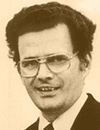
Praying Like Jesus Prayed
Don Wilkerson teaches that praying like Jesus involves intimate communion with the Father, heartfelt petition, and intercessory prayer, transforming prayer from duty to delight.
In this powerful teaching, Don Wilkerson explores the profound prayer life of Jesus as recorded in John 17. He emphasizes that prayer is not merely a list of requests but an intimate communion between the Son and the Father. Wilkerson encourages believers to embrace prayer as a delight and a continual relationship, offering practical insights and personal testimony to inspire a deeper connection with God.
Full Transcript
This message is one of the Times Square Pulpit series. It was recorded in the sanctuary of Times Square Church in Manhattan, New York City. Other tapes are available by writing to World Challenge P.O. Box 260, Lindale, Texas 75771 or calling 214-963-8626.
None of these messages are copyrighted and you are welcome to make copies for free distribution to your friends. Gospel of John, chapter 17. Gospel of John, chapter 17.
Page 1550 in my Bible. I guess you don't have my Bible. Amen.
Praying like Jesus prayed. Praying like Jesus prayed. Hallelujah.
Let's bow in prayer. Thank you, Jesus. Lord, my heart is just filled tonight because you have filled us in this house with your presence.
And Lord, as I was worshiping, I thank you that you just gave me such an overwhelming sense of gratefulness that I know you, that I'm your son, I'm your child. Oh, thank you. Lord, I don't understand.
I don't know why you chose me, but I thank you that you did and that you chose me before the foundation of the earth. And Lord, tonight I can say that I'm yours. Many who walk the streets are blind and they're deaf spiritually, but Lord, you opened my eyes.
You opened my ears. And I can call you Abba Father tonight and have that relationship with you. Oh, Lord, I thank you.
I just thank you, Lord. And Lord, just pour this out on everybody in this city. Lord, I pray also, as I, in my heart, I said I would do today, I thank you for a young man I saw on 34th Street today passing out tracks.
Lord, thank you that there are people that are out reaching others. Thank you for young men just going up one after another, handing out a gospel piece of literature, and people looking at it, some putting it in their pockets. Lord, let your word penetrate those hearts.
And for everybody here that is witnessing, be it in the upper room or on the job or wherever they go, Lord, thank you. Thank you that the gospel is going forth. Lord, may others come to know you as we know you tonight, that we can stand in your presence or sit as we have done in your presence and just say thank you, Jesus.
Thank you, Jesus. Hallelujah. The name that is above every name.
And Lord, our hearts are just filled. But now, Lord, I ask you that you would open the word to our hearts and to our understanding tonight. Thank you for your precious word.
Let the Holy Spirit move and penetrate our hearts with your word tonight, we pray in Jesus' name. Amen. You know the familiar prayer which begins, our Father which art in heaven, you know that it is known as the Lord's Prayer.
Technically, it is not the Lord's Prayer. It is actually the disciples' prayer given to them by Jesus as a patterned prayer. And here's how it happened.
In Luke 11, 1, it came to pass that as he was praying in a certain place, apparently the disciples were close enough to hear him pray and when he had ceased praying, Scripture says when he had ceased, one of the disciples said unto him, Lord, teach us to pray. Now, evidently, this was the first time that the disciples had actually heard Jesus praying and they were in earshot. You recall another occasion near the end of their time with him that they could have also heard him pray, but they didn't.
They fell asleep in the garden. But the occasion in Luke 11 must have been quite a moving experience for the disciples to hear Jesus talking to his father. And as I said, it may have been the first time that they heard it and it made such a deep impression on them that they asked after he'd finished, they said, Lord, teach us to pray like that.
Hearing Jesus pray must have brought such conviction and such a desire in their own hearts that they wanted to know how to begin a prayer life and what to say and how to address the father in praying as they heard Jesus pouring out his own soul. What an experience it must have been. Have you ever heard somebody pray and you said to yourself, oh, I'd love to be able to pray like that? I don't just mean praying pious or eloquent words or to pray long or to pray loud or to pray with a voice quivering with emotion.
Some people think that's the anointing. You see, God is not impressed with pious prayers and neither should we be. I've heard some of the most simple prayers and prayers.
I love to hear young converts testify because there's a freshness about their testimony at their early stage. You're only a baby once. And I love to hear baby prayers.
Oh, there's just something about young people, young converts that I love to hear. And if you want to be motivated to pray, stick close to somebody who knows how to pray and loves to pray. Like the disciples who overheard Jesus pray, if you hear a man or God, a man or woman of God pray, it'll awaken a desire in your own heart to seek the Lord.
I remember there are two individuals that crossed my mind. One was a man, one was a woman. I loved to hear them pray.
One was, I've mentioned his name before, Brother L.K. Dodge, you know, an evangelist. I loved the man. I loved to hear him pray.
He excited me to pray. And I'll never forget him because we used to have him around Thanksgiving and every Thanksgiving time he wouldn't eat because he'd say, look, I'm so thankful that I can't eat today. And I can't tell you how convicted he is when you're trying to eat turkey and you hear him pacing back and forth in the chapel that used to be right there at Teen Challenge.
The dining room was one place and right across the hall was the chapel and Brother L.K. Dodge would be going back, just talking to Jesus, talking to Jesus. And I tried to get him in to eat with me so I could relieve some of my conviction, but no, he just went on to pray. And I remember another sister, Sister Ruth Kogle, that used to pray and oh, how it awakened something in my own heart.
Psalms 42,4 says, When I remembered these things, I poured out my soul in me. For I had gone with a multitude, I went with them to the house of God with a voice of joy and praise with a multitude that kept holy day. In other words, I heard these people praying, I heard them praising and it made me want to go with them to the house of God and into the presence of God.
Children ought to have times, frequent times when they hear their mother, their father, their parents pray. When I was a kid, when I was a young fella, we used to have some of the, I'd have some of my neighborhood friends come into the house, we'd run into the house to pick up something and maybe then to run back out of the house and I can remember some of my friends stopping in their track and hearing a sound coming from upstairs and they'd say to me, What's that? And I'd just say nonchalantly and keep running and I'd say, Oh, that's my dad praying. To me, it was a common occurrence and I used to think back then, in my innocence, I used to think, Well, doesn't every dad do that? What can we learn from our Lord's prayers, his praying? There are frequent scriptural references to the Lord's prayer life and some of his actual words are recorded for us.
And from this, I'd like to share three things about why and how Jesus prayed so that we can have a proper understanding of how to pray as Jesus prayed. Now, these things that I'm going to share are very basic, they're very simple, but when it comes to prayer, we need constant reminders of the basics. You see, prayer is not that complicated.
It just needs to be done. As one man of God said, Prayer does not enable us to do a greater work for God. Prayer is a greater work for God.
And when we realize this, we'll want to pray. And when we pray, we want to pray like Jesus. And the three things that I believe prayer meant to our Lord was first of all, it was communion.
And I'll explain that. Secondly, he asked, he petitioned his father. And thirdly, we learned something about intercessory prayer.
And these are the three things I want to share. Now, first of all, Jesus, for Jesus prayer, prayer was communion between a son and a father. It was a son talking to his father.
There is no greater or more beautiful teaching on prayer as communion than what we read in John chapter 17. John chapter 17 is truly the Lord's prayer or our Lord praying at his best. Now, first the definition of communion, which is what we call the Lord's supper.
But the definition of communion is to share, to be in accord, in harmony or agreement. And a prayer of communion then is to enter into a time of sharing with our father through the son. Or simply put, communion is the time that we spend talking to our Lord and sharing our heart with him.
It may involve worship, it involves praise, but it is a son talking to his father. One of the ancients has stated that prayer is conversation with God. And listen to this wonderful conversation in John 17, in verse one.
It says, these things Jesus spoke and lifted up his eyes to heaven. And he said, or he prayed. Now, he prayed, Father, the hour has come, glorify thy son, that the son may glorify thee.
Now, note that the very first word that he speaks, he says, Father, Father, the hour has come. And in chapter 17, Jesus goes on to refer to his father 39 different times, either addressing him as father or using the words, thee, thou, thyself, and thine. But the word father is the most meaningful of all the terms that he used.
Now also, if you were to study chapters 14, 15, 16, and 17, which are all within the same framework, Jesus used the term father approximately 45 times in those various chapters. And so when Jesus begins his prayer in John 17, one, with the word father, what follows is a conversation prayer or communion between a son and a father. Now, listen to me.
If you want to learn anything about the way Jesus prayed, it is this, that prayer is more than asking. It is more than just making requests or presenting a want list to God. Prayer is an intimate conversation between a son and his father.
And what normal earthly son would not want to spend time sharing with his father? There is a bond between a son and a father that is rarely broken, even when a father is not a good father, even in cases of divorce and separation, a son longs, an earthly son longs to have communion, relationship, intimacy with a father. And if that be the case in earthly relationships, how much more is it the case of a spiritual son with a heavenly father? Jesus taught this very principle when he said in Luke 11, 13, he said, If ye then, being evil, know how to give good gifts to your children, how much more shall your heavenly father give the Holy Spirit to those that ask him? Well, you see, that is not only about receiving the Holy Spirit, it's about a spiritual son coming to his heavenly father in prayer and in communion. Hebrews 12, 9 says, Moreover, we have all had human fathers who disciplined us and we respected them for it.
How much more should we submit to the father of our spirits and live? And we will see later just how Jesus submitted to his father. But it is not just submission that drew Jesus to his father. He was drawn because of the joy of intimacy, of communion, of sharing and simply talking with his father.
That's what motivated Jesus in prayer. The very first recorded words of Jesus when he was 12 years old, his parents had lost him for a period of time and when they found him, he said, Not to worry, not to worry. I must be what about my father's business? What was the very last words before Jesus died on the cross? Again, his last words were, Father, into your hands I commend my spirit.
And from the age of 12 to that death on the cross, Jesus had a relationship of communion in prayer with his father, a son talking to his father. Oh, what sweet communion that is. You see, prayer will take on more meaning for us if we view it as Jesus did, a son talking to his father.
And the kind of communion that Jesus had with the father, he desires that you and I, his sons, have the same thing. And oh, you see, for a long time or for a period of my time in my life, I didn't understand that. But I'm getting ahead of myself.
Look at John 17, 21. One of the great verses. Here is Jesus has this special, this intimate, this unceasing.
Paul said, pray without ceasing. And I think Paul understood this kind of unceasing relationship that the son, that Jesus had with his father. And now that he is about to go, he is praying that his own disciples would have the same thing.
And so he says in John 17, 21, that they may all be one. Now, let me just stop there because that verse is probably one of the most misunderstood or misquoted verses in John 17, or especially when it is often used today. And you're gonna hear this verse more and more in these days because this verse is used to promote unity.
Unity in the body. Because you see, there is a teaching in the church today that says this. If just all of the pastors would get together, if all the churches would get together, all of the denominations would get together, if there would be a spirit of ecumenicalism, I think that's right.
In other words, the Protestants and Catholics, we're all gonna get together. If we could all be one, the world will somehow believe and be converted. Well, listen to me, I've worked with drug addicts for 30 years and I've never had one drug addict, one alcoholic, one street person ever say to me, when's a church ever gonna get together? When are you people ever gonna get your act together? Unity never cured a drug addict, a prostitute, a homosexual, or a Wall Street businessman.
But what the world does want to know is do I know God? Do I know Jesus? Am I in unity and in oneness with the Father and with the Son? And you see, when I'm walking with God, when I'm in that kind of relationship of a son to a father, then you see, the world is gonna get the overflow of that, that's all. John 17, 21, Jesus is not praying for church or ecumenical unity. He is praying for you and me.
He's praying that his disciples, his church will have intimacy, unity, knowledge, and fellowship with the Father and with himself. He says that they all may be one, even as thou, Father, art in me and I in thee. In other words, Jesus is saying, oh, that my disciples just knew how close we were.
If they would just be as close in our circle, if they would just come into that inner circle, if they just understood, oh, how precious that intimacy, that fellowship is, oh, that they would come into that, and if they would come into that, then they'll have power, then the world will believe, then because Jesus will be alive in our hearts, hallelujah. Then we'll be like this, that's what Jesus is praying. He said, oh, Father, I wish they were just like you and I, just like this.
And then Jesus also prays that they also may be in us. You see, prayer is to be drawn into the inner circle of the Godhead. It's to be on intimate terms with both the Father and the Son near the power center.
And I believe, listen, I believe that any child of God who understands this will view prayer not just as a duty, but as a delight. Not just as a discipline, but as a desire. And not just something that we have to be told over and over again to do, but something that we look forward to doing.
Psalm 38.9 says, Lord, all my desire is before thee. Psalms 138.14 can be applied to prayer. It says, this is my resting place forever.
Here will I dwell, for I have desired it. Now, I want to give you a little personal testimony tonight about my own struggles in prayer. Over the years, in my earlier life, when I was about 14 years of age, I started my own prayer closet.
Having learned and heard as a youngster, my dad, who had a walk-in closet in his bedroom, and that's where he went to pray, it so happened that I had a little walk-in closet in my bedroom. And so at the age of 14, I went in there, and I had communion. And I had, you know, they used to sing when I was a little kid, just a little talk with Jesus will make it all right, all right.
Well, I used to have a little talk with Jesus, but it was not little, it was an enjoyable experience. I looked forward to it. And then, and by the way, I think I had the kind of prayer life of a son with a father.
But at the age of 17, I went to Bible school. And there, and you know, sometimes you can be over-taught. And when I went to Bible school, I was taught over and over again, prayer is work.
Prayer is work. Well, there is some truth to that because it's not natural for the natural man to pray. It's not natural for the natural man to pray.
Also, the flesh hates to pray. The only time the flesh prays is when it wants something. And the flesh will pray.
And the only time the unsaved will pray is, you know, when they're in deep, deep trouble, then they'll pray. But I kept hearing in Bible school that prayer is hard, that prayer is work, that prayer is a discipline, that sometimes you have to force yourself to pray, whether you like it or not. And again, there is some truth to that.
However, every time I heard my teacher say prayer is work, that bothered me because you see, I didn't particularly like to work. Not that I didn't work. I worked at the age of 16.
I had my first job. I worked my way through Bible school. And in one of those summers, I worked in a sweat factory, what they call a sweat shop, literally in Scranton, Pennsylvania, in a factory where they made ladies' coats.
I was the steam guy. When it came around, I had to run a steam machine in the hot summer, making some money for Bible school, earning minimum wage back in 1956, 1957. Now, Sister Gwen, you'll know then because you had a birthday today.
I asked her today, or I sent her a little card and said, you know, I'd like to know, will you tell me on your birthday how old you are? She came to me and she said, I just want you to know that I'm not as old as you are. Her son was there, and he said, but you're pretty close. So maybe you'll know what minimum wages was in 1956, 1957.
So when I went to Bible school, I heard all the preachers say prayer was work. And I thought about the sweat factory. And so my prayer life turned into primarily a duty, a discipline, and a fight against the flesh.
And I realize now that I had already understood something about precious communion. I had understood something about it, but I then was laid on a certain teaching, got a hold of me, and it turned from being a joy to a duty. And it must have been that my teachers and my teachings or the people who were teaching me, that for them, prayer was work.
Prayer was duty. Prayer was not a joyous communion between a son and a father. And oh yes, I say to you, and I admit that at times, especially when the flesh is weak and weary, that prayer is work.
And it's a fight against the flesh. And when you have to take yourself by the nap of the neck and say, get your knees down and get down before the Lord that you don't go by feelings, or you have to be prayed under conviction in order to spend more time with the Lord. Oh, but my friend, it's more than that.
And I believe to pray like Jesus prayed is to pray motivated by delight and desire as well as by discipline and duty and say, oh, Father, I thank you that I have this communion with you that I can go and talk as a son talks to his father and I can unburden my heart to you or I can praise you. I can worship you and I can enjoy you. Hallelujah.
Hallelujah. I've yet to find my three kids, my three children to rebel against my love or against spending times of family sharing, fellowship, conversation together. In fact, I kid them sometimes.
I said, I think I've treated you all too good. I can't get rid of you. Can't get rid of you.
You love to be around your parents. Oh, listen. I love to be around my father.
Hallelujah. Oh, what sweet communion there is there. Psalms 104, 34 says, Let my meditation be pleasing to him.
As for me, I shall be glad in the Lord. Psalms of Solomon 2, 3 says, And his fruit was sweet to my taste. And I believe his presence is like a fruit.
It is sweet to the taste. Hallelujah. And when you have that kind of relationship with your heavenly father and with Jesus, it's sweet.
It's sweet. It draws you to him. Here's another wonderful description of the prayer of a son to the father through and to his son.
Psalms of Solomon 2, 14, it says, Oh, my dove, in the clefts of the rock, in the secret place of the steep pathway. And the steep pathway refers to our walk with God. And sometimes there is steep pathways and tests and trials that we have to go through.
But he says, in the secret place of the steep pathway, let me see your form. Let me hear your voice for your voice is sweet and your form is lovely. Now you tell me a prayer and communion with our Lord is not inviting when we can hear his voice and we can see his form and we can see his intervention into our lives and we can know that his presence is there with us.
Hallelujah. Hallelujah. Psalms 21, 6 describes a blessing of communion between a son and his father.
It says, For thou hast made him most blessed forever. Thou hast made him exceedingly glad with thy countenance. Oh, hallelujah.
Hallelujah. I know there's any child loves to be able to look at his father and see a smile, a countenance that is inviting. And oh, I thank God when I can go into the presence of the Lord.
His countenance is welcoming me and I want to be there with him, hallelujah. Now another way we ought to pray, like Jesus prayed, is in seeing how and what he asked his father in prayer. I researched this carefully as to what did Jesus ask for when he prayed.
It's very interesting. It's very simple. It's very evident in the study of Jesus' prayer life that when it came to asking and petitioning his father, he had one thing that he asked for.
And it didn't relate actually to himself, but to the father. Jesus wanted a heart and mind to do the father's will. He was always asked.
That was his prayer. Jesus used prayer as a means of keeping himself in line with the father's work and will for him. And numerous times he said this or he prayed this.
And even when Jesus asked to receive, I found out back in the pastor's office before, the message that Brother Dave was preaching on prayer on Sunday. I'm glad I got here first. I'm glad I got here first.
That I'm waiting to hear the follow up on Sunday. But you see, even when Jesus asked to receive glory or honor. John 17, 1. And he said, Father, the hour has come.
Glorify thy son that the son may glorify thee. Look at verse 5. He says, And now glorify thou me together with thyself. Now you see, any honor, any glory or honor that Jesus was to have was bound up with the father.
Jesus had no prayer. He had no desire. He had no request.
He had no prayer apart from the father. He said, Glorify thou me together. That's the key word, together with thyself.
Verse 10, And all things that are mine are thine, and thine are mine. Now, let me show you something about this. Because this was Jesus' attitude in prayer.
That he always had the father's will predominant. Let me show you how God reacted to it. Turn with me to John chapter 12.
You see, as I said, John 17 is really the Lord's prayer. It's Jesus' prayer. It's Jesus praying.
Luke 11, what we call the Lord's prayer is really the disciples' prayer. But there was a time when the father was so pleased with this Lord's prayer that the heavens literally thundered and the crowds of people stood in awe of a supernatural phenomena. Now, Jesus prayed this prayer.
Look at it. In John 12, what did I say it was? It's John 12, 27. He says, Now my soul has become troubled.
He's speaking now about the hour of trial. He's talking about the cross. He said, Now my soul has become troubled.
And what shall I say? And this is Jesus' reaction to his trouble. He said, Should I say, Father, save me from this hour? Nah, but for this purpose I came to this hour. Father, glorify thy name.
Glorify thy name. And there came therefore a voice out of heaven. I have heard.
I have both glorified it and will glorify it. The multitude therefore who stood by and heard it were saying that it had thundered. Others were saying an angel has spoken unto him.
Oh, you see, the father said, I hear that prayer. I hear that request. Not for yourself, but for my will.
And I have honored your prayer. And he said, I will do it now and I will do it again. And again refers to the same prayer prayed in the garden of Gethsemane.
And the multitude therefore who stood by and heard it were saying, What is it that has thundered? Others were saying an angel has spoken to him. Ah, but what was it? It was the almighty God. It was the father responding to that kind of a prayer.
And listen to me. If you want to have heaven thunder and if you want to have an open heaven and if you want to hear the father's voice talking back to you, then ask that you might lose yourself completely in the father's will. And when you bow down to him, you gain an open heaven.
Hallelujah. One fellow put it this way. He said, Since the lines have been cleared between the Lord and me, the telephone has never stopped ringing.
Hallelujah. You see, prayer will keep you in line with the father. It keeps you from straying off course.
And that's why Jesus was in continual contact with the father. Now, you see, we generally and erroneously look upon prayer primarily as a means of getting things for ourselves. Whereas the Bible idea of prayer is that God's holiness and his purposes and his will might be brought about.
Our ordinary views about prayer and much what is taught in the church today is not found in the New Testament. Very evidently, our ideas about prayer and Jesus' ideas are not the same. Prayer is not just a way to get things from God, but it is first of all that we might get to know him.
Prayer is not to be used as the privilege of a spoiled child seeking ideal conditions to indulge his carnal whims or wishes. The purpose of prayer is to reveal the presence of God and to honor him by our will being submitted to him and his will being manifested through us. You know, there's an amazing thing that Jesus said.
If you want to turn to it, it's John 11, 42, but if you want to trust me, I'll just give it to you. At Lazarus' tomb, Jesus prayed one of the most remarkable prayers. He said his father always heard and always answered every one of his prayers 100% of the time.
And that just kind of blew me away. Let me read it to you. John 12, 41, 42.
And so they removed the stone, and Jesus raised his eyes, and he said, Father, I thank thee that thou hearest me, and I know that thou hearest me always. But because of the people standing around, I said it, that they may believe that thou didst send me. And when he had said these things, he cried out, Lazarus, come forth.
And you know the rest of the story. You see, our Lord never once, in teaching on prayer, referred to unanswered prayer. It's taught elsewhere in Scripture, but Jesus did not talk about it.
He said God always answers prayer. Now let me say this. I don't think we can have quite that track record, but if our prayers are in the name of Jesus, and they're in accordance with his nature and his will, then the prayers will not be in accordance with our will or nature, but with his.
That's what it means. Some people have this mistaken idea that praying in Jesus' name is a little cliche. You go around and say, and in the name of Jesus, and in the name of Jesus.
It's kind of like a charismatic rosary. Say three in the name of Jesus. That's not what it's talking about.
Praying in accordance to the nature, the character of Jesus. And when you pray that, you will pray, not my will, but thine be done. You put your nature in me, so that when I ask, it's your asking.
You're asking through me, hallelujah. And the reason that people don't teach this, people don't teach this, that the reason Jesus taught his disciples to ask, seek, and to knock, and he said it shall be opened, is that he had already established that the first prayer of disciples is one of communion, of accord, of agreement with his will. And he said unto them, when you pray, say, Father, hallowed be thy name, thy kingdom, thy will be done.
And when we're praying like that, then he says, you can ask what you will, and it shall be done, because you'll be in right relationship with me, hallelujah. And see, when you walk right, you talk right. When you walk right, you pray right.
And your prayers get through, hallelujah. Oh, hallelujah. You see, my kids usually know when they can ask or not.
Sometimes, once in a while, my daughter will say, Dad, you know, I want to ask you something, but you'll probably say no. And I say, you're right, I'll probably say no. But they know me, and they know what they can ask for, and they know what they shouldn't ask for.
And so it is with our heavenly father. Your father knoweth what things ye have need of before you ask. Well, why ask? Because we need to find out his mind and his will for us.
Jesus was preoccupied with this, and so ought we be. So, first of all, prayer is communion, and prayer is asking, and then Jesus, finally, thirdly, there's a prayer of intercession. Probably the greatest thing, and I'm not going to spend a lot of time on this, but I believe the greatest thing, one of the most beautiful things about his prayer, if you read it, go home and read it.
Primarily, Jesus is interceding for his disciples, and he shows us the importance of intercessory prayer, standing in the gap before him on behalf of others. Look at verse 9. He said, I ask on their behalf. I do not ask on behalf of the world, but of those whom thou hast given me, for they are thine.
And Jesus said, and please follow me carefully, because I'm praying that some of you will find a ministry tonight. You'll find a ministry tonight, a ministry of intercessory prayer. Jesus said one of the reasons he was sent into the world was to form a body of people who are filled with his love, and over and over again in John 17, Jesus intercedes for his disciples in his church, and he uses words like them and us, and he prays for them, intercedes for them.
And by doing so, he's teaching us modeling prayer. E.M. Bounds, who was one of the great writers on prayer, states this. Listen carefully.
He says, talking to men for God is a great thing, but talking to God for men is even greater still. And I believe this is a place in God that he wants all of his children to reach, to turn our focus from ourselves and our needs onto others, and to intercede for others, even as Christ is at the right hand of the Father, ever making intercession for us. And listen, I want to say something.
If I could hear Christ praying for me in the next room, I would not fear a million enemies, but I want you to know there is no distance. Hallelujah. He is praying for me.
Hallelujah. And you know what that means? Because he's praying for me, it frees me up to pray for other people and to have a ministry of intercession, because I know he's got me all taken care of. Hallelujah.
And I've watched some of you. I've watched the Lord change some of you, where every time you prayed, and every time, and some of you are still at this place, but some of you, God's taken you beyond that, but some of you are still at the place. Every altar call that's given, you respond to it.
And that's all right. I'd rather have you come this way than go that way. But I want to tell you something.
The Lord wants, the reason that he wants to clean up your life is that he wants you to take the focus off of yourself and onto other people and to begin to intercede. And oh, I've seen some of you. God's brought you.
You used to be all inwardly focused. Everything you prayed for was self, not everything, but a lot of things you prayed for were self-centered. But God's taken.
Now you've given yourself to him, and the focus is coming off of yourself, and the focus is coming onto him. And when it comes onto him, like Jesus, you'll want to begin to intercede for other people. The reason it's important to clean up your life and to grow and mature in him is so that you can be a giver, not just a taker, an intercessor, not just a petitioner, and one who stands before God for others, not just for yourself.
And some of you, listen, there is a little book, not a little one, but there is a book back at the book table called Operation World. It has an account of every country in the world. I have one at home.
I happen to be in Peru right now. I go to Peru as often as I can during the week, interceding in prayer, because years ago, God put it on my heart. He gave me China one time.
He gave me Vietnam one time in a motel room, interceding in such agony, prayer that I had to put the pillow over my face because the spirit of intercession had come upon me. And my friend, many of you are looking for a ministry. I want to tell you, you can have a worldwide ministry and not even leave home, not even buy an airplane ticket.
You can go to whatever country you want, hallelujah, on your knees before God interceding. And I say to you, take on a country. Take on East Europe.
We heard about it Sunday morning. Take it on and be an intercessor for the Lord, hallelujah. Well, one final word about prayer.
When we pray, we must have faith and confidence that God the Father hears us. There's an old evangelist a century ago, Sam Jones. He said this, he said, Many a fellow is praying for rain with his tubs the wrong side up.
Now, Jesus prayed with such confidence that he knew his father was listening. Matthew 6, 8, I quoted it before. He said, But ye therefore, be ye therefore not like unto them.
Don't be like the people who just say in the name of Jesus and don't know Jesus or people who pray just mere words and they don't have faith, they don't have confidence, they don't believe that God will hear them. He said, For your father knoweth what things ye have need of before ye ask him. Now, think of that.
It makes it a lot easier to go to the Father when you know that he knows what our need is, even before we ask. And all he is, he's waiting for us to come before him with confidence and desire so that he can release the answer. And this confidence and trust in the Father is especially important when our prayers don't seem to be getting through and we're being tested by things that seem to indicate that God has forgotten about us.
You see, sometimes when I pray, the Lord sends it federal express. When I walked in the church tonight, I thought maybe one of the answers was on the way. There was a federal express truck parked right in front of the church.
I thought, well, Lord, maybe you're sending me one of my answers. But sometimes he sends it by fourth-class U.S. mail. Very slow.
And sometimes I think it gets lost in the mail. Have you ever had this happen to you? That he got your address mixed up and you hear somebody else give a praise report and you say, hey, they got my letter? They got my answer? Jesus shows us the importance of having a proper attitude. And I had to close on this note because if there's one thing the Lord's been speaking to me about, the one thing that I am going to share as much as I can throughout this year, that we must come.
That's why I heard a chorus here. I grabbed a hold of it. About confidence.
When you come to the Lord, you've got to come. Otherwise, it's vain repetition. You've got to come faith-believing.
Turn with me one last Scripture. One last Scripture or two Scriptures. I want you to go to John chapter 12.
And I must share this because the Holy Spirit put this on my heart. He showed me something in regards to prayer. This is John 12, 23.
And Jesus answering them saying, the hour has come for the Son to be glorified. Now, what an hour that was that Jesus was referring to. He was going to be glorified.
He was going to have the glory which he had with the Father before the world had begun, before the world was. But he was going to have to suffer rejection and suffering and pain and death before receiving the answer to his prayer. And look how Jesus illustrated his hour of trial in verse 24.
He said, truly, truly, I say to you, unless a grain of wheat falls into the earth and dies, it remains by itself alone. But if it dies, it bears much fruit. And note the words that says, it remains by itself alone.
And Jesus is referring to himself and his ordeal in death. That's the it. That's the grain of wheat that he's talking about that must remain by itself alone.
But you will note that Jesus also applies it to you and I. He says, truly, truly. And whenever there's a double use of a word, you know that that is very, that means, it means like when brother Dave says, look this way and give me your good ear. That's what it means.
It means it's very important, listen to it. He says, truly, truly, I say unto you and what he says is that there are times when we are like the grain of wheat falling into the earth and we remain there by ourselves alone, feeling lonely, rejected, suffering pain, waiting for the answer, waiting to be glorified. Now, the Lord showed me that that's what it's like often when we enter into the secret closet of prayer and why some people don't pray.
Prayer in one sense is like being a grain of wheat that falls into the ground. It is alone. We are alone.
And the grain has no human contact for a period of time. It has no natural light. It has no natural fellowship.
It has no one to hold it. It lies in cold dirt. And the reason why many do not pray is because prayer takes us out of the realm of the natural.
It cuts us off from creature comforts. We are not in contact with friends, with counselors, with pastor, or with what might soothe and comfort us. Prayer is an aloneness.
It requires being shut off of our natural environment. It's like being put into dark, cold dirt like a grain of wheat. And you see, some people are unwilling to accept that.
They are unwilling to go through that. They're unwilling to remain alone. And also, they do not have confidence in the Father while the grain of wheat remains alone.
They'd rather have somebody pick them up and put them in their hand and say, Oh, it's okay, grain. Grain, you'll be okay. Grain, I'll give you a little bit of sunshine.
Grain, I'll give you a little bit of rain. Everything will be all right. You'll grow, you'll get your answer.
No, no, a thousand times no. That is not how a grain of wheat bears much fruit. Jesus said the hour has now come for the Son of Man to be glorified.
Now, do you see how he stated it? Even though he was to go into the earth and die, and though he was to abide alone, yet he saw beyond it. He saw beyond it. He saw also the hour of his glorification and resurrection.
And let me tell you, my friend, when you go into the ground and you abide alone, and there's nobody but you and the Father, you must recognize, yes, beyond that death, the answer comes, hallelujah. One last scripture, one last scripture. And I do mean I'm closing with this.
Here is what happens when we pray with confidence. And here's what happens when the grain of wheat has fallen into the ground and remains by itself. And you know, this past week, I heard about a member of our body who was under attack of the devil, just came out of nowhere.
And I didn't hear all the details, but that night I went back to my room, and while I was praying, the Holy Spirit gave me a sense of aloneness, the loneliness of what that individual was going through. And when I was feeling that loneliness, the Holy Spirit took me to John 12, unless the grain of wheat fall into the ground and abideth alone. And I read that.
And then I came here to John 16, 32. And I said, oh, I can identify with this. Jesus says, Behold, my hour is coming, and has already come for you to be scattered, each to his own home, nobody to be with him, nobody to watch with him, nobody to talk with him, nobody, listen, it's all right when you go through a trial, it's all right to pick up the phone and talk to somebody.
Sure, do it. It's all right to have somebody pray for you. It's all right to reach out to others.
But finally, my friend, you reach the end, and you gotta go into the ground, you gotta go into the dirt, and you gotta abide alone, as Jesus was alone. But then he says, Behold, an hour is coming, and has already come for you to be scattered, each to his own home, and to leave me alone. And yet, hallelujah, I am not alone, because the Father is with me.
Hallelujah. Hallelujah. That's the confidence.
That's the confidence that God wants you to have when you're being buried, and you're waiting for the third day. You're alone, but you're not alone. Hallelujah.
The Father is with you. Glory to God. Mark 15, 36, And one ran and filled a sponge full of vinegar, and put it on a reed, and gave it to him, saying, Let alone.
Let us see whether Elias will come and take him. No, Elias was not there, but the Father was. He was alone, and yet not alone.
Hallelujah. And the Lord will do for you. The Lord will do for you.
When you're like a son who comes to the Father, you abide in his will. And many times when you do that, you're gonna have to go into the ground. Ah, but if it abideth alone, it'll bear much fruit.
Shall we stand in prayer? Hallelujah. Hallelujah. Thank you, Jesus.
Glory to God. Hallelujah. Hallelujah.
Oh, Lord. Oh, Lord Jesus. Thank you, Lord.
Thank you, Lord. Oh, let's just give him praise for a moment. Hallelujah.
Alone but never alone. Alone but never alone. Hallelujah.
Thank you, Jesus. Thank you, Lord. Oh, we praise you tonight, Lord.
We praise you tonight, Lord. Thank you, Jesus. Thank you, Lord.
Hallelujah. Today, we come to worship you, Lord of all. Tonight, if you're here and you know what I'm talking about, you experienced that aloneness.
You experience it now. And yet your faith, your confidence in God, has been shaken or is weak. And you resist that.
Say, Lord, I don't know whether I can take this aloneness or not. The Lord's trying to quicken you tonight. The Lord's trying to show you something tonight through his word.
And if you're here tonight and you're experiencing that aloneness, rejection and God has shown you that it's that corn, that's that grain of wheat that must fall into the ground and abide by itself. And you say, I was rebelling is that I was not seeing that. I've been a hard time accepting that.
I've been doubting God, whether he does have everything under control or that he's been leaving me down there too long. Or you keep wanting to come up prayer or you keep wanting to come up for creature comforts rather than to be submitted to God's will. If God's speaking to you tonight through the message, or if you're here tonight and you don't even know the Lord, but I've preached to Christians tonight.
If you're backslidden, you don't know Jesus. You said, listen, I don't have any car. I must admit, I don't have confidence in God.
Well, I want to tell you, he's not giving up on you. You might've given up on him. He hasn't given up on you.
If you're here tonight and you have say, I've been cold or indifferent or I'm backslidden. I have no confidence in God. I, my life is not what it ought to be.
Will you step out, get out of the balcony down below here and come to the altar. Whoever you are tonight. If God's spoken to you, come out.
This altar is open for you. God's trying to minister to you tonight. Oh, this is the conclusion of the tape about captives.
Those that are held hostage victimized. It says that for the captives, there's going to be freedom.
Sermon Outline
-
I. The Nature of Jesus' Prayer
- Prayer as communion between Son and Father
- Prayer is more than asking; it is intimate conversation
- Jesus addressed God as Father 39 times in John 17
-
II. The Pattern of Prayer Given to Disciples
- Disciples heard Jesus pray and asked to be taught
- Prayer is not about eloquence but heartfelt connection
- Prayer awakens desire and conviction to seek God
-
III. Three Aspects of Jesus’ Prayer Life
- Communion with the Father
- Petitioning God for needs
- Intercessory prayer for others
-
IV. Application and Personal Testimony
- Prayer as delight, not just duty or work
- Importance of developing a personal prayer closet
- Prayer as a continual, unceasing relationship
Key Quotes
“Prayer is not that complicated. It just needs to be done.” — Don Wilkerson
“Prayer is a son talking to his father.” — Don Wilkerson
“Prayer is more than asking. It is an intimate conversation between a son and his father.” — Don Wilkerson
Application Points
- Approach prayer as a personal and intimate conversation with God rather than a duty.
- Develop a consistent prayer habit by setting aside a dedicated time and place for communion with God.
- Pray not only for your needs but also intercede for others, following Jesus' example.