
Bearing the Witness of Christ
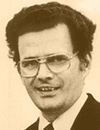
Don Wilkerson teaches that bearing the witness of Christ requires humility and surrender, exemplified by John the Baptist's willingness to decrease so that Jesus may increase.
In this powerful teaching, Don Wilkerson explores the life and ministry of John the Baptist as a model for bearing the witness of Christ. He highlights the humility and surrender required to allow Jesus to increase in our lives and ministries. Wilkerson challenges believers to avoid possessiveness and jealousy, embracing instead a spirit of freedom and faithfulness to God's greater plan. This sermon encourages listeners to reflect on their own attitudes toward ministry and God's work.
Full Transcript
This message is one of the Times Square Pulpit series. It was recorded in the sanctuary of Times Square Church in Manhattan, New York City. Other tapes are available by writing to World Challenge P.O. Box 260, Lindale, Texas 75771 or calling 214-963-8626.
None of these messages are copyrighted and you are welcome to make copies for free distribution to your friends. I know I'm growing in the Lord. And I tell you, as a speaker, as a preacher, one of the things I appreciate is being among a people who give time and have a hunger for the Word, that I don't have to feel rushed.
I can't tell you what it's been like over the years of ministry traveling. All three of us as pastors in the past, we've traveled a lot and spoke and, you know, some services I would have 20 minutes, 20 minutes to deliver a message. You can hardly make an introduction in 20 minutes.
And or, you know, other times they would say, we'll give you plenty of time. But they don't. And of course, you go into a church and it's in at 11 and out at 12.
And they have a big clock in the back, no less staring you in the face, or sometimes it would sit on the right on the platform, or right on the pulpit, and I wanted to take it and throw it, throw it aside many times. But more than that is seeing a hunger. Thank God for the hunger of God's people in this church.
And it challenges us, it humbles us, but all that God is doing, we just rejoice in the Lord. You know, I thought, Sister Gwen, maybe tonight, if we would have thought of it, we would have had a night when you sang all the pastor's favorite songs and courses only, but I didn't suggest it or I knew I wouldn't get to preach. But maybe thank God for the choir and the musicians and all those that work faithfully in the church.
Praise the Lord. All right. Now, John chapter 3, beginning at verse 22, and of course, you'll notice what I'm doing right now.
I'm taking my watch off and putting it down in front of me. As you know what that means in this church, it means absolutely nothing. I see Bob do that all the time.
I don't know why he does it. I do it. I don't know why I do it.
John chapter 3, beginning at verse 22, after these things, Jesus and his disciples came into the land of Judea and there he was spending time with them and baptizing. John also was baptizing in Adon near Salem because there was much water there and they were coming and were being baptized for John had not yet been thrown into prison. There arose therefore a discussion on the part of John's disciples with a Jew about purification and they came to John and said to him, Rabbi, he who was with you beyond the Jordan to whom you have borne witness, behold, he is baptizing and all are coming to him.
John answered and said, a man can receive nothing unless it has been given him from heaven. You yourselves bear me witness that I said, I am not the Christ, but I have been sent before him. He who has the bride as the bridegroom, but the friend of the bridegroom who stands and hears him rejoices greatly because of the bridegroom's voice.
And so this joy of mine has been made full. He must increase, but I must decrease. He who comes from heaven is above all.
He who is of the earth is from the earth and speaks of the earth. He who comes from heaven is above all. What he has seen and heard of that he bears witness and no man receives his witness.
He who has received his witness has set his seal to this, that God is true. I want to talk to you tonight about bearing the witness of Christ. Bearing the witness of Christ, shall we pray? Lord, we do thank you for this occasion tonight, a special time of looking back and giving a special thank, particular thanks to you tonight for all that you've done in our lives.
Lord, we do thank you. We rejoice, Lord, in your many blessings unto us. And Lord, we thank you for the faithfulness of your word.
Lord, thank you. Thank you that your word is a lamp unto our feet and a light unto our pathway. Lord, that you're ever teaching us, you're ever moving us on, you're ever, Lord, speaking to our needs and thank you, Lord, that you always have a word in season.
Do it again tonight, Lord, anoint thy servant, anoint thy people, in Jesus' name, amen. Few who are called to serve the Lord can so powerfully do what John the Baptist was called upon to do, and I don't mean losing his head. Losing his head was easier than another thing that he lost.
John lost his job, and the job that John lost and the way he lost it, I believe, is one of the tests that we also face, but we may be very unaware of when we face such a similar test as he did. Now let me give you the background leading up to John losing his job and liking it. And not only liking it, but giving us some wonderful lessons in the process.
And we'll find in this account, when John the Baptist gives way to the Christ, we'll find out why Jesus said that there was none greater than him. And yet, Jesus also said that we are to be like John. You see, there was a spirit, there was a godly character revealed in John that shines forth like a rare, precious gem.
And it's the spirit that ought to characterize the church of Jesus Christ today. There are characteristics in John that I would want to emulate. Now note the title of my message.
It is not entitled, Being a Witness for Christ, as in evangelism, but rather, Bearing the Witness of Christ. Now this is what John did. He bore the witness of Christ and paid a price for that.
And what a mighty witness it was. And let's see what it was and what it required. Now John was born with a calling and a job.
He was born for a divine purpose. His birth was accompanied by signs and wonders. Zacharias, his father, a priest, received a visit, an angelic visit, and was told that his wife Elizabeth would give birth to a son, and you shall give him the name John.
But this was no ordinary John or no ordinary lad or baby. Luke 1, 14 and 15 says, And you will give joy and gladness, and many will rejoice at his birth. For he will be great in the sight of the Lord, and he will turn back many of the sons of Israel to the Lord their God.
You see, after 300 years of silence, when there was no open vision, and God had no prophet to which he could speak, suddenly God rends the heavens and he comes down to do something that the world had been waiting for for centuries. Now, because of this promise given to Zacharias, the birth of this child was watched by many. Zacharias and Elizabeth's neighbors, when John was born, knowing the angelic visitor had come, knowing the pronouncement about him, when he was born they asked the question, What shall become of this boy? And great expectations were placed upon him.
And as he grew, it became apparent that John was no ordinary child or teenager or young lad or young man. He spent his adult years much of the time alone or in the desert. He didn't act like other young men.
He was close to the earth. He ate health foods. Occasionally, I picture John coming out of the desert and visiting his parents.
His neighbors maybe had invited him over, invited him to take a drink, but he refused to do so. He'd stay a few days and then I see him disappearing back into the desert again. And I'm sure that the neighbors thought that there was something different, even strange, about John.
He probably didn't smile a lot. He dressed like a hippie. And I believe that there was an intensity about him that may have scared some people.
If he had lived today and gone to our schools, the school counselor would want him to see a therapist or his teacher would have wanted him to see the guidance counselor. At the age of 30, John started his work and his mission in life. And what a mission it was.
The angel prophesied it to Zacharias and said, and it is he who will go as a forerunner before him in the spirit and power of Elijah to turn the hearts of the fathers back to the children and though disobedient to the attitude of the righteous, so as to make ready a people prepared for the Lord. Now that was John's job description and what a job, what a task, what a calling it was. And one day John comes bursting out of the desert and he began preaching to a few passersby.
His voice thundered, his eyes riveted the hearers. The people were riveted by his words. And yet he had one simple message, repent, repent for the kingdom of God is drawing nigh.
And then word began to spread about this long bearded camel clothed prophet preaching at the edge of the desert. And soon crowds began to flock, began to follow him. Curiosity seekers made their way to his desert church.
And without the use of advertising or anything else, John became the biggest attraction in the whole land of Judea. They flocked not only to hear him, but to see him. And the VIPs came to listen.
He had the whole population listening to his thunderous message about repentance and requiring of them that they show forth the fruit of repentance by going down in the waters of baptism and also confessing their sins. Even King Herod came out with his entourage, came riding out in his chariot with his entourage in order to listen to John, perhaps even to amuse themselves. John the Baptist became a household name.
His followers multiplied by the hundreds and by the thousands. It says in Matthew 3, 6, and 7, then Jerusalem was going out to him and all Judea and all the district around Jordan. And they were being baptized by him in the Jordan River as they confessed their sins.
But then one day, John's job was finished almost as quickly as it had begun and he was no longer needed. And here's how it happened. One day as John is baptizing, suddenly he's baptizing some of his followers.
And by the way, even though he preached a hard message, he had a big crowd and he had a lot of followers and he had a lot of people that were being baptized. And one day as he was baptizing, he suddenly looks and he sees Jesus of Nazareth and he knows immediately what he must do and what he must say. And he momentarily stops baptizing and he points to the visitor.
He points to the one in the crowd. And you see, because John was so popular, because he was so powerful, because he was so devoted to by his followers, anything that he says, anything that he does carries weight. And so the crowd looks at who John is looking at and they look as well.
And then he says those immortal words, behold the Lamb of God that's taken away the sins of the world. And with that one powerful statement, two things happen. The Jewish Messiah is introduced to the world and to John's followers.
And secondly, and of course, Jesus then began his ministry. But secondly, this was also the beginning of the end of John's work and John's calling and John's job. It took some time for it to happen, but slowly the crowds began to follow Jesus.
And fewer followed John except for a small loyal core group. Now I want to examine how John's disciples handled the appearance of Jesus and the disappearance of John. And then we'll look at how John handled the very same situation.
Look again at verses 22 and 23. It says, after these things, Jesus and his disciples came into the land of Judea. And there he was spending time with them and baptizing.
And John also was baptizing. Now you see, there are two baptizers. Once it was just John.
Now there are two baptizers. There's two lines of disciples waiting to go into the waters of baptism. Some going to Jesus and some going to John.
But this disturbed the followers and disciples of John. They got upset. They were miffed and jealous.
You see, Jesus had come into the land of Judea. That was John's territory. They felt that the waters were reserved for their leader to be baptizing the people.
Jesus was from Galilee. He was an outsider and all of a sudden he's come down. This country boy.
And now he's baptizing. You see, it was like a pastor coming into town and stealing John's sheep. Or it was like a new face in the church taking over somebody else's position.
John was not popular anymore. The new guy on the block was getting all the attention. And John's devotees witnessed all of this.
And they rose up to defend John. And they came complaining to him. And listen to their complaint.
John, you've got to do something, they say in verse 26. Go through it with me, step by step. And they came to John.
And they came to John. I call it the delegation of the miffed. The hot under the collar crowd.
And I've seen that type of committee in the church more than once. They came to John. And they said, Rabbi, Rabbi, we've got to do something about this new pastor and church in town.
Do you realize what he's doing and what he's saying? He who was with you beyond Jordan to whom you bore witness. In other words, you gave him his start in the ministry. If it wasn't for you, you gave him his start in the ministry.
And now look what he's doing. Behold, they said, this new Christ, he's stealing your sheep. He's stealing your thunder.
And if it keeps up, you're going to lose your job and so are we. They said he's baptizing. And furthermore, he doesn't baptize like you.
He doesn't preach like you. He doesn't do it just like you. But he's baptizing and they're all coming to him.
Now, what John said in answer to these petty, jealous disciples is one of the most remarkable and eloquent statements in the Word of God or that John ever made. In verse 30, he says, he must increase, but I must decrease. In verse 33, he says, he who has received his testimony has set his seal on this, that God is true.
It was these statements that prompted Jesus to say later, a greater man has never been born of woman. But before looking at the wonderful attitude of John, let's look closer at the reaction of John's disciples. And what it reveals about them and what it reveals about disciples today.
There are three things that I see in this attitude. First of all, here was a spirit and an attitude of possessiveness. A spirit and attitude of possessiveness.
They said, he is baptizing. In other words, John, you're the baptizer. Everybody knows that.
Even your name is John the Baptist. And these disciples thought Jesus had intruded on their ministry. They said, this is Baptist country and Jesus is baptizing too.
In other words, John, this is the job God gave you to do. Tell Jesus to quit baptizing altogether or to go somewhere else. Now, have you ever run into these kind of disciples in the church? Have you ever been one of them yourself? You see, it's when we get the spirit of possessiveness and pride or protectiveness about our church or our position in the church.
And then when somebody else comes along or we're asked to step down or step aside or make way for another person or make way for another move of God. That possessive spirit rises up. And oh, I've seen it rise up.
And I've seen people in effect say, I shall not be, I shall not be moved. Just like a mule, I shall not be moved. But you know, sometimes this attitude does not have to do with a position we hold in the church.
But a position that we have taken in our hearts and in our minds. And when somebody else comes along with a new and different position, we dig in our heels and refuse to see that God may want us to give up that position. And if you're not careful, you can end up taking a stand against the Lord himself.
You see, I don't, for one, I don't want to be in opposition to a move of God in which an angel of the Lord came down and said, this is my beloved son in whom I am well pleased, hear ye him. That's what John was giving way to. That's what John's disciples were standing in the way of.
Jesus coming and moving in a new way across the land. And I've seen a possessive spirit take a hold of a people. I've seen it in deacons.
I've seen it in members of the church. I've seen it take hold of people and they have held back the move of God in churches for years because of a possessive spirit. I just, a few weeks ago, traveled to a certain part of the country to preach for a Sunday, a brother that's in association with us.
He wanted me to go down for the first anniversary of his church in the town that he had to start out of another church. He had been in this other church for years, for three years. Every other pastor in the long history of that church had been there two years and after two years had to leave because the deacons made it very clear, this is our church.
And this brother lasted more than two years, he lasted three years. But finally they kicked him out because he was preaching a strong message of righteousness and holiness. And they told him to go and he said, well, God's called me to this city.
He called Brother Dave and asked him what he should do and Dave said, well, if God's called you to stay there, stay. He left the church on a Wednesday. On Sunday he opened his new church and two thirds of the people came with him.
I visited him as I spoke and he drove me by the other church. I saw a sign on it, it wasn't a literal sign but I saw it on the spirit, it said Ichabod. Ichabod because of a possessive spirit that had taken over a people.
And if you have a possessive controlling spirit regarding a ministry or position or doctrinal theological position that is akin to the disciples of John. What will happen is that the move of God will come along and it will just bypass you. Because God's always going to have a people that has a heart for him.
God's always going to have a John the Baptist, God's always going to have someone who gives way to God's move. If you're involved in a relationship or a friendship or a business partnership. Or you're on a ministry team where you encounter a person with a possessive controlling spirit.
I warn you tonight, beware. There is danger there. You see the spirit of Christ is not a controlling spirit but rather it is a spirit of freedom.
Christ controls us to free us from the bondage and even people bondage. And he frees us from that possessiveness that takes over people. And so here was the spirit and attitude of possessiveness.
But then there was another attitude I see manifested in the disciples of John. In verse 26 they said he is baptizing and all are coming to him. They were not glad about this, they were complaining.
They didn't like to see their leader taking second place or playing second fiddle. They didn't like to see John abandoned while the crowds flocked out to hear the new teacher. But do you know what was behind this complaint of John's disciples? I'll tell you what it was, it was a spirit of envy and jealousy.
Envy and jealousy will also hold back the move of God in your life. I've seen the spirit of envy and jealousy rule in a person. I've seen it possess leaders and denominations and pastors and workers in the church.
I've seen it possess a husband or wife in a marriage. Or jealousy sometimes to be the hidden vice that's destroying family relationships. Did you know that God had a very unusual lie detector test in the Old Testament? Its purpose was to protect an innocent wife who had been unjustly accused of adultery by a jealous husband.
Listen to it in Numbers 5.11. It says, if the spirit of jealousy comes over him, the husband, and he is jealous of his wife when she has defiled herself, or if he is jealous of his wife when she has not defiled herself, there was a provision made that in that case the husband would bring her to the priest and he would take holy water out of the temple and then take some dust and mix it in with that water and she would be required to drink it. She would then have to take an oath before the Lord that she was clean and then drink the water. Now if she were innocent and thus her conscience clean, she would be immune from what was called the water of bitterness.
If she were guilty, the water would go into her stomach, make her abdomen swell and she would become a curse among the people and it would be evident that she had sinned. And this unique lie detector test was called the law of jealousy. The law of jealousy.
And I want to tell you, I've encountered in my counseling sessions, I've encountered some wives and husbands who would like to take some similar type of test because they have had to face the anger and hostility of a jealous spouse. And let me tell you something, jealousy can ruin a marriage or a relationship. A jealous spirit is a deadly sin.
Among the seven deadly sins, envy or jealousy is the most ancient and universal. Webster explains jealousy as unpleasant fear, suspicion or resentment arising from the mistrust of another. One who is jealous exacts exclusive devotion to himself or herself and is intolerant of rivalry.
And you see the thing about jealousy or envy, it does not so much want things for itself, it merely wants to take away from the other person. The Stoics defined it as this, grief, they called it grief at someone else's good. In other words, somebody else was blessed, somebody else had something good happen to them and you feel very bad about it.
You see, it's a quality, not so much of jealousy, but rather of an embittered mind. In Proverbs 3, 34 and 35, you know what it says? That you can do very little to satisfy or pacify a jealous man or woman. Listen to what it says.
It says, for jealousy enrages a man and he will not spare in the day of vengeance. He will not accept any ransom, nor will he be content though you give him any gifts. And listen also where envy is placed in a list of deadly sins in Romans 1, 29.
It speaks of those who are full of envy, murder, debate and deceit. In other words, envy keeps a lot of bad company. Murder, full of envy, murder, debate and deceit.
Have you ever heard on the news about a husband who killed his wife? And they will say on the news report, it was a crime of passion, it was a murder of passion. Do you know what the passion was? The passion was jealousy. You see, jealousy is dangerous to both one's physical and spiritual health.
If you don't believe that, just ask Moses' sister Miriam. Numbers 12, 10 says, but when the cloud, listen to what happened. Here's a description of what happened.
It says, but when the cloud had withdrawn from over the tent, behold, Miriam was leprous as white as snow. As Aaron turned towards Miriam, behold, she was leprous. And verse 9 tells us that it was the Lord's doing, because the anger of the Lord burned against them, against Miriam and against Aaron.
And in the same chapter, verse 2, it tells us that Miriam and Aaron complained against Moses and the Lord, saying, in effect, they said to Moses, you know, God speaks to us, just like he speaks to you. Why do you think you're the only one that God speaks to? Why can't he speak to us? Here's what they said, and they said, has the Lord indeed spoken only through Moses? This is the end of, spoken through us as well. And then it says, it adds this, and the Lord heard it.
Now, I believe that Moses and Aaron were not really jealous of Moses' gift or the fact that he was a spokesperson of the Lord. Verse 1 tells us what was the root, the very root cause of it all, the root of their jealousy. It says, Miriam and Aaron spoke against Moses because of the Cushite woman whom he married.
You see, they were like the firstborn of the family, who's had his parents all to himself until the new kid is born, and then there's some jealousy. Miriam and Aaron had Moses all to themselves until another woman came into his life. And oh, what jealousy arises when we feel that we have had someone else's exclusive friendship, and then somebody else comes along, and we feel like it's being stolen from us.
Beware of the spirit of jealousy. It can eat away at your spiritual and physical health. It caused Miriam to be afflicted with leprosy.
Romans 13, excuse me, Proverbs 13 and 40 says, The life of the whole body is a tranquil mind, but a decay of the bones is jealousy. A decay of the bones is jealousy. The Puritans had an interesting saying.
They said, Envy shooteth at others, but woundeth itself. Envy shooteth at others, but woundeth itself. And so I see in this a spirit, here's a spirit of possessiveness, here's a spirit of jealousy.
And then one more thing I see in the attitude of John's disciples, as they see the popularity of Jesus intruding in upon their territory. I see a group who feels unappreciated, forgotten, neglected, and overlooked. Look at verse 26 again.
In this one statement, volumes are revealed as to what is going on in their hearts. And they said to John, and they came to John and said to him, He that was with you beyond the Jordan, to whom you have borne witness. In other words, they seem to be saying, he was a nobody before you introduced him to the crowd.
They were your crowds, John. Now look, he is baptizing and all are coming to him. And now what about us? What about our work? Are we to be discarded like used merchandise? What about our role? What about my position? And I hear in their complaint a group who are saying, Hey, our work is not being appreciated.
Our interests are not being protected. And you see, I can identify with the feelings of those disciples because I can remember earlier in my ministry, this is the very thing that I used to struggle against. I feared, at times I'd feel very down at myself.
I'd feel very persecuted or whatever you want to call it. Because I felt I wasn't being recognized or appreciated for all the things that I was doing for the Lord. And I can remember my arm used to get tired a lot.
My arm used to get tired a lot. Yours would too. If you try to reach back and pat yourself on the back all the time or go like this, your arm would get tired as well.
I felt like, you know, people weren't patting me on the back. I'll never forget one time I heard David talking. This was in the early days of Ministry of Teen Challenge.
And we were working together and he was gone a lot preaching and so forth. And I was home minding the store. And one of the occasions when he was home, I heard him over say to somebody else, I said, you know something, Don does all the work around here and I get all the credit.
And I said, yeah, I didn't say it out loud, but I said to myself, yeah, yeah. And I said to myself, you can say that again. Some years later, some years later, I was being interviewed on a television program.
Never forget it. I'm sitting there. It hasn't even started yet.
But the host is introducing me. And he's telling everybody what a great work that I'm doing, reaching all kinds of drug addicts and saying all kinds of nice things about me. And it goes on and on.
And I'm sitting there listening and I'm embarrassed. Because I picture my staff back watching this on television. And they're saying to themselves, boy, isn't this something? We're here doing all the work and he's there getting all the credit.
It comes around. Yes, it comes around. Romans 2.29 says, but he is a Jew who is one inwardly.
And circumcision is that which is of the heart by the spirit, not by the letter. And his praise is not from men, but from God. Man looketh on and for the outward appearance of love and recognition and appreciation.
But God looks upon the motive of a heart. And that's what God judges is your heart. But I want you to see something.
How did John answer his disciples? John shows us the measure of his character and what is required to bear the witness of Christ. You see, there is a price to be paid to be the friend of the bridegroom. And to be in that position where your primary work is to point other people to Jesus.
Then step aside. And here's how John answered the attitude of possessiveness and jealousy and the hurt feelings of disciples. First of all, John knew clearly what his role was.
It was not to protect his job or his reputation. But it was to accept his role as a forerunner. John answered and said, a man can receive nothing unless it has been given him from heaven.
He did not try to be anything or do anything more than what God gave him to do. He claimed no position, no authority, no territory to protect. The Lord giveth and the Lord taketh away.
If I can quote a verse out of context, but I believe it applies. Jesus tells his disciples and he tells us that he was not the leading man. But he was merely sent as a herald, a forerunner, the preparer for the greater one to come.
And you see, whatever we're given to do, it is to make way for Jesus. John's message was, prepare ye the way of the Lord. Don't get in his way.
Prepare whatever God's called you to do. It's to prepare for Jesus. You see, a lot more would get done for God if people didn't care who got the credit.
And a lot more would get done if we were more prepared to take a subordinate position. And to do the less glamorous or unpopular, even unappreciated tasks. So many look for great things to do.
But John was not like that. He knew that God had given him a subordinate role. And he did not even try to protect or defend that role.
He said, for yourselves, bear me witness that I said, I am not the Christ, but I have been sent before him. Oh, sometimes it's difficult to let go of your dreams. Or your visions of grandeur.
Or of doing great things. And to have to serve in roles where you're always making the other guy look good. I was preaching in a church one time.
Shaking hands with a line of people. I came to the very last lady, almost passed her by. A frail, little, elderly lady.
Unassuming lady. And I shook her hand and she said to me, she said, oh, I'm so pleased to meet you. She said, would you tell David that when I first read the cross and the switchblade some 20, I don't know how many years prior to that.
She said, the first day that I, the time that I read it. She said, I made a vow, I made a dedication to the Lord. That I would never lose one day without praying for you gentlemen.
And for your ministry. And she said, I've prayed faithfully for you every day. And I thanked her and I went on my way.
And I had just gone a few steps away from her when the Holy Spirit stopped me dead in my tracks. He said, look back at that woman. And I looked back at her.
And as I looked back at her, the words of the scripture came to my mind. The first shall be last and the last shall be first. And what the Holy Spirit was saying to me is that she's going to be at the head of the line.
When I give out my rewards in heaven. Oh, are we ever going to be surprised when we get to heaven? The Lord keeps records, hallelujah. Whatever we're called to do has to be a calling of God.
If it's from heaven, then do it with quiet dignity. And if it's from heaven, don't worry about protecting it. If God gave you a work to do, it's his work and you don't own it.
You don't own it, we don't own this church. Secondly, there was not a bit of jealousy in John. As he sees his job disappearing and his role is overshadowed.
He said, he must increase, but I must decrease. And when he said that, there was no regret. There was no self-pity, no sullenness in John's voice.
He was not thinking of himself, but he was thinking of his master. He had given up everything for his glory. And I picture John as he disappears out of the scene.
I picture John rejoicing every single day as Jesus and his work gets bigger and greater and more glorious. Even as John himself was going sinking deeper and deeper into the shadows. And one of the reasons that John was not jealous is that he accepted his role as from God.
And he knew what it was in relationship to Christ. John saw himself no more or no less than what God intended him to do and to be. And there would be a lot less jealousy or envy in the church if we would take on that spirit, that humility of John the Baptist.
Let me quote to you 1 Corinthians 12th chapter. Don't turn there, let me quote it to you. It says, now there are varieties of gifts, but the same spirit.
And there are a variety of ministries and the same Lord. And there are varieties of effects, but the same God who works all things in all persons. Then verse 11 and 12 says, but one in the same spirit works all these things, distributing to each individually just as he wills.
Oh yes, we're all different and we have different callings in life. But one and the same spirit works all these things. That spirit is the spirit of Christ and it is not a spirit of jealousy or envy.
Hebrews 5 verse 4 says, and no one takes the honor to himself, but receives it when he is called of God. We are of necessity constantly depending on the grace of God for all the manifestations. All the gifts, all the ministries, all the variety of effects.
That is why we should not envy those who have a larger share of the gifts or effects than we have. Or if they move in a larger sphere of usefulness than we do. Listen to this verse.
Listen to Matthew 20, 18 and 19. Jesus said, is it not lawful for me to do what I wish with what is my own? Is it not lawful for me to do what I wish with what is my own? Or is your eye envious because I am generous? Is your eye envious because he has been more generous to somebody in your family, somebody in your job, somebody in your circle? Is your eye envious because I am generous? Thus the last shall be first and the first last. You see John went from first to last and he rejoiced in it.
And he reminds his disciples that if his burning and shining light had to disappear like a star when the morning sun arose. And if Jesus was to outshine it, it was only because he had received it from heaven. And if God gave him the spirit without measure, then he nor his disciples should begrudge it.
And the same attitude should apply to us. If God is pleased to promote another, if he is pleased to give another more ability or more success than us. Let us not be displeased and think the Lord is unjust or partial or unfair.
What we receive from heaven we must take it as it is given. Take it as it is given. That's what John said.
You see once John got a glimpse of Jesus, he didn't worry anymore about his role or his popularity or his position. Everything else disappeared because he had that vision of Jesus. Do you recall when John was in prison? John got a little discouraged when he was in prison.
And he sent his disciples to ask Jesus this question. The reason that John was confused about Jesus is that he believed he was the Christ. But he also believed that he was going to be not only a spiritual Christ but a political Christ.
He was into the dominion theology. And he believed that Jesus was going to take over, the Messiah was going to come and kick the Romans out and take over the kingdom. And that wasn't happening.
And so he sent some of his disciples to Jesus with this question. He said, you asked Jesus this, are thou the Christ or should we look for another? In other words, he was saying, I'm not giving up. If you're not Jesus, I'm going to still look for him.
But then when the report came back that John had said the blind see and the deaf hear and the dead are raised, he knew it was Jesus. And once he knew it was Jesus, he didn't care about the fact that he was in prison or that he had been renegated or anything else. He had a glimpse of Jesus.
And then finally John says, there is joy in being and serving as a friend of the bridegroom. Look at verse 29. It says, he who has the bride is the bridegroom.
But the friend of the bridegroom who stands and hears him rejoices greatly because of the bridegroom's voice. And so this joy of mine has been full. And what he was saying is that I have been like a friend of the bridegroom.
Now, when John quoted that, said that, his disciples understood what he meant when he said the friend of the bridegroom. You see, the friend of the bridegroom was called the Shoshben, S-H-O-S-H-B-E-N. And the Shoshben had a very unique place at a Jewish wedding.
He acted as a liaison between the bride and the bridegroom. He arranged the wedding. He sent out the invitations.
He presided at the wedding feast. He brought the bride and the bridegroom together. And then he had another very special, unique role and duty.
It was his job to guard the bridal chamber and to let no fake lovers into the bridal chamber. He would open the door only when, in the dark, he heard the bridegroom's voice and recognized it. And when he heard the bridegroom's voice, he let him in.
And then his job was over. Then he went away rejoicing for his part was complete. And now he knew that the two lovers were together.
He knew what his job was. His only task was to bring bride and bridegroom together. And once his task was complete, he willingly and gladly faded out of the center of the picture.
And this is what John was telling his disciples what it was like to be in the position that he was in. This is why he said, He must increase, but I must decrease. He said, I brought the bride, Israel, together with the bridegroom, Christ.
And having done this, John says, and so this joy of mine has been full. It would have been easy for John, in answer to his disciples' complaints, to feel injured. To feel neglected or unjustly forgotten.
But he refused to listen to the voice of self-pity and those who felt injured by their lack of recognition. And let me tell you something, beware of John's disciples. Because sometimes a friend's sympathy can be the worst possible thing for us.
It can make us feel sorry for ourselves and encourage us to think that we didn't get a fair deal. But John would have no part of that petty thinking. You know, there's an interesting conversation that Paul gives us in 1 Corinthians 12.
About the foot and the hand. And the foot is feeling sorry for itself. Because it's such an uncommonly part.
Well, let me read it to you. 1 Corinthians 12, 15, it says, If the foot should say, because I'm not a hand, I am not a part of the body. Nobody recognizes me around here.
I'm not going to come back anymore. I'm treated like a foot. Because I'm not a hand, I'm not part of the body.
Is it not for this reason any less a part of the body? You see, this to me is an example of jealousy, self-pity and hurt feelings. But you see, I have my own version of a conversation between the foot and the hand. I'd like to share with you.
The foot says to the hand, look at you. Always trying to get recognition. Your hands are always raised up there.
You're always clapping, trying to make noise. You're always pointing this way or that way. You're always putting out your hand to shake hands and lop up all the love and fellowship you can get.
And then you're always reaching for food. Always reaching for food. And so the hand says, listen, you're just jealous and you're upset because you're always at the bottom.
In fact, you're slow, you stink and you're ugly. And your owner is even afraid to show you off in public. And finally the mouth speaks up.
And says the two of you ought to be ashamed of yourself. Listen, Mr. Foot, if the hand did not feed me, you'd never be able to walk around or do your job. And Mr. Hand, if it weren't for the foot, your hand would be useless.
Why don't you thank God for each other and get on with your jobs. I like the way Paul says it. 1 Corinthians 12 But God hath so composed the body, giving more abundant honour to that member which lacked, that there should be no division in the body, but that the members should have the same care for one another.
And if one member suffers, all the members suffer with it. If one member is honoured, all the members rejoice with it. Now ye are Christ's body and individual members of it.
Hallelujah. Listen, you may feel like an unloved, unnoticed or unappreciated foot. But listen, the Lord knows who you are and where you are.
Listen, the head knows where the foot is. The head knows where the foot is. And even if you feel like the little toe on the foot, the head knows you're there.
He knows if you're hurting and He knows if you're doing your job. Oh God, help us to have the Spirit of Christ, not jealous spirit or not feel unappreciated. You see, to bear the witness of Christ, there is a price to be paid.
And that price means that we own nothing, we possess nothing. We must give way always for Jesus. Let's not protect anything.
Let's not try to protect anything but to have Jesus have His way in our lives and in our church. And then may we realize the destructive power of envy and lay it down. And thirdly, to bear the witness of Christ.
We serve not for praise. We serve not for recognition. But we serve for the joy of bringing the bride and the bridegroom together.
And then we move on. We move on. Hallelujah.
Bearing the witness of Christ. Tonight we come, may the Holy Spirit come against a spirit of possessiveness, a spirit of envy or jealousy. Or a spirit that feel, I call it the syndrome of the insignificant.
Always feeling I'm not important. Always feeling I'm insignificant. And the devil has lied to some of you about that.
He's lied to you about that. Ye are members in particular. Hallelujah.
Oh thank God for the body of Christ. What a beautiful occasion to talk about it on this, our anniversary. We are the body of Christ.
Hallelujah. All together. And it goes on.
Paul goes on and he says, I show you a much better way. He said, oh yes, we've got all of these positions. But he said, in the midst of it all, he said there must be love.
Love is patient. Love is kind. It is not jealous.
Does not brag. Is not arrogant. Does not act unbecomingly.
It does not seek his own. Is not provoked. It does not take into account a wrong suffering.
Does not rejoice in unrighteousness but rejoices with the truth. Bears all things. Believes all things.
Hopes all things. Endures all things. Love never fails.
John was in love with Jesus. Just the beauty of being able to serve him. And everything else grew dim in the light of that role that he had.
Praise the Lord. Let's stand together. Thank you Jesus.
Sermon Outline
-
I
- Introduction and setting of the message
- Reading and explanation of John 3:22-36
- The importance of bearing witness to Christ
-
II
- The life and calling of John the Baptist
- John's unique character and mission
- John's ministry and popularity
-
III
- The transition from John's ministry to Jesus’ ministry
- The reaction of John's disciples to Jesus’ growing influence
- John’s humble response: 'He must increase, but I must decrease'
-
IV
- The dangers of possessiveness and jealousy in ministry
- Lessons on humility and surrender to God's greater plan
- Application for the church today
Key Quotes
“He must increase, but I must decrease.” — Don Wilkerson
“He who has received his testimony has set his seal to this, that God is true.” — Don Wilkerson
“If you're involved in a relationship or a friendship or a business partnership... beware. There is danger there.” — Don Wilkerson
Application Points
- Embrace humility by allowing Christ to increase in your life and ministry above your own ambitions.
- Guard against possessiveness and jealousy that can hinder God's work in your church or community.
- Support and rejoice in the moves of God, even when they require you to step aside or change roles.