
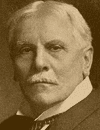
Christ Forgives Sin
The sermon emphasizes the importance of faith in linking human need with God's power and inspiring effort to achieve great things.
C.I. Scofield preaches on the lessons learned from the account in Mark 2:1-12. The sermon delves into the qualities of effective Christian service demonstrated by the four men who brought the palsied man to Jesus, emphasizing harmony, willingness to bear burdens, loving sympathy, and unwavering faith in Jesus. It also explores the correlation between sin and suffering, highlighting that all disease and death stem from sin, necessitating the need to address sin first. The sermon further discusses the primary and secondary purposes of miracles, emphasizing that miracles authenticate divine authority and are always connected to present needs, showcasing God's wisdom and love. Lastly, the sermon focuses on the power of faith, illustrating how faith inspires effort in divine matters and serves as the bridge between human needs and God's power.
Text
(Mark ii:1-12.)
I. The Analysis.
1. A Lesson in Christian Service (verses 3-5).--The four men who brought the palsied man to Jesus had great and necessary qualities for effective service. They could work together in harmony; each was willing to bear his share of the burden; they were moved by loving sympathy for the unfortunate man; they were willing to take great pains to accomplish his cure, and they had unquestioning faith in the power and willingness of Jesus to heal.
2. A Lesson in Cause and Effect (verses 5-12).--Jesus looked back of the palsy to its cause, sin (Comp. John v:14). All disease, all death, is but a result of sin. Not, it should be needless to say, necessarily of the personal sin of the sufferer. Babes are born in an inheritance of sin and sin's consequences (Psa. li:5; Rom. v:12-14; John ix:1-3). So our Lord deals first with the sin.
3. A Lesson in the Primary Use of Miracle (verses 9-11.) --The primary use of miracle is not beneficent, but evidential. It required nothing less than divine authority to heal the palsied man; it required nothing more than the divine authority of Him who was to expiate human guilt, to forgive that guilt. Every dispensation is ushered in by miracle, because miracle is the divine method of authentication.
4. A Lesson in the Secondary Use of Miracle (verses II, 12).--Though the divine power manifested in miracle is primarily for the authentication of a message, yet the wisdom and love of God so orders the miracle that it is beneficent. True miracle is never spectacular, but always connected in some way with a present need. It is not merely an exhibition of power, but an exhibition of power in the doing of some actual good. "Lying wonders" always break down at this point. The revelations of demons in spiritism are always foolish and useless. The false prophet will do "wonders," but of a purely dramatic kind (Rev. xiii:15).
II. The Heart of the Lesson.
The power of faith is, from the human side, the heart of this lesson. Here, as ever, faith is shown in its two great uses. It inspires to effort in divine as in human things, and it furnishes the means by which divine power may link itself with human need.
It inspires to effort. Doubt never brought a palsied man to Christ, even though a roof must be broken up to accomplish it. Doubt, indeed, never effects any good thing. Doubt, unbelief, disbelief and misbelief all belong to Satan's kingdom, and are the offspring of the father of lies. They enfeeble and discourage. Even in the affairs of men all great things are wrought by men who believe. Cyrus W. Field believed that an electric current could be sent under the Atlantic through a wire cable. At first no one else believed, but faith is contagious; it invariably gathers to itself strong, aggressive souls. So others came to believe, and now, under every sea, nation talks to nation. Probably the effort which brought the palsied man to Christ was born first in the faith of one of this immortal four. Probably this saving enterprise began with one convinced and believing man. At any rate, it commonly is so. When Paul, on the corn ship of Alexandria, stood forth after long abstinence, the one man of faith on that ship, it was he, the Jew prisoner, who instantly became the real commander. He had the word of the Lord that not a soul aboard should perish, though the ship must, and his faith made him supreme. And how his faith inspired them all to work! No, faith, not doubt, is the mother of effort. Among all the shallow sayings of Henry Drummond none was shallower than his statement that all advancement had its origin in a doubt. Apparently he was unable to distinguish between a doubt and a question. The longing to know is of God, as is also faith to believe that more knowledge may be had by patient and noble effort, but a doubt is a poor, negative, devil-born thing, infertile and apathetic.
And then faith links man and his needs with God and His power. It is the only capacity godward left of sin in the natural man--God's last unsquandered gift. By it, if he will (John v:40), he may return to God. And faith in the saint is still the bridge over which heaven's fulness comes into his life. Absolutely all things are possible to faith, absolutely nothing is possible to unbelief.
Sermon Outline
-
The Analysis
- A Lesson in Christian Service
- Qualities for Effective Service
- Harmony, Sympathy, Faith
-
The Analysis
- A Lesson in Cause and Effect
- Sin as the Cause of Disease and Death
- Babes Born in Sin's Inheritance
-
The Analysis
- A Lesson in the Primary Use of Miracle
- Miracle as Evidential
- Authentication of Divine Authority
-
The Analysis
- A Lesson in the Secondary Use of Miracle
- Miracle as Beneficent
- Power for Present Need
-
The Heart of the Lesson
- The Power of Faith
- Inspiring Effort and Linking Human Need with God's Power
Key Quotes
“Absolutely all things are possible to faith, absolutely nothing is possible to unbelief.” — C.I. Scofield
“Faith is the only capacity godward left of sin in the natural man--God's last unsquandered gift.” — C.I. Scofield
Application Points
- Faith is essential for effective Christian service and achieving great things.
- Doubt never brings about good things, while faith inspires effort and achieves great things.
- Faith is the bridge over which heaven's fulness comes into human life.