
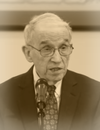
Luke's last look at Christ: Luke 22:39-71
A.J. Higgins explores Luke 22:39-71 to reveal Christ's holy habits, agonizing obedience, betrayal, denial, and the profound humanity and deity of Jesus in His final hours before the cross.
In this expository sermon, A.J. Higgins delves into Luke 22:39-71, providing a rich exploration of Christ's final hours before His crucifixion. Higgins highlights Jesus' holy habits, His agonizing prayer in Gethsemane, the betrayal by Judas, Peter's denial, and the profound interplay of Christ's humanity and deity. Through careful study, listeners are encouraged to develop their own spiritual disciplines and to trust in the unwavering obedience of Jesus as a model for their faith journey.
Full Transcript
Now, a very sincere thank you for all that have ventured out tonight. We're going to be looking again at Luke's Gospel and we'll continue in chapter number 22. As intimated, we're looking at Luke's last look at Christ in chapters 22 through chapter 24, and tonight we'll consider the second half of chapter number 22, beginning at verse number 39.
Now, there are outlines that hopefully will be a little bit helpful. If you have one, if not, get it at the end of the meeting, just to help organize your thoughts. Luke 22 and verse 39, He came out and went as he was want to the Mount of Olives.
His disciples also followed him. When he was at the place, he said unto them, Pray that ye enter not into temptation. And he was withdrawn from them about a stone's cast, and kneeled down and prayed, saying, Father, if thou be willing, remove this cup from me.
Nevertheless, not my will, but thine, be done. And there appeared an angel unto him from heaven, strengthening him. And being in an agony, he prayed more earnestly.
And his sweat was as it were great drops of blood falling down to the ground. And when he rose up from prayer and was come to his disciples, he found them sleeping for sorrow. And said unto them, Why sleep ye? Rise and pray, lest ye enter into temptation.
And while he had spake, behold, a multitude, and he that was called Judas, one of the twelve, went before them and drew near unto Jesus to kiss him. Jesus said unto him, Judas, Betrayest thou the son of man with a kiss? When they which were about saw what would follow, they said unto him, Lord, shall we smite with the sword? And one of them smote the servant of the high priest and cut off his right ear. And Jesus answered and said, Suffer ye thus far.
And he touched his ear and healed him. Jesus said unto the chief priests and captains of the temple and elders which were come to him, Be ye come out against the thief with swords and staves. When I was daily with you in the temple, you stretched forth no hands against me.
But this is your hour and the power of the darkness. Then took they him and led him and brought him into the high priest's house. And Peter followed afar off.
When they had kindled a fire in the midst of the hall and were set down together, Peter sat down among them. But a certain maid beheld him as he sat by the fire and earnestly looked upon him and said, This man was also with him. But he denied, saying, Woman, I know him not.
After a little while another saw him and said, Thou art also of them. Peter said, Man, I am not. About the space of one hour after another confidently affirmed, saying, Of a truth, this fellow also is with him, for he is a Galilean.
And Peter said, Man, I know not what thou sayest. And immediately, while he yet spake, the cock crew. And the Lord turned and looked upon Peter.
And Peter remembered the word of the Lord, how he had said unto him, Before the cock crew thou shalt deny me thrice. And Peter ran out and wept bitterly. And the men that held Jesus mocked him and smote him.
When they had blindfolded him, they struck him on the face and asked him, saying, Prophesy, who is it that smote thee? And many other things blasphemously spake they against him. And as soon as it was day, the elders of the people and chief priests and scribes came together, led him into their council, saying, Art thou the Christ? Tell us. And he said, If I tell you, you will not believe.
And if I ask you, you will not answer me nor let me go. Hereafter shall the Son of Man sit on the right hand of the power of God. Then said they all, Art thou the Son of God? And he said unto them, Ye say that I am.
And they said, What need we any further witness? We ourselves have heard from his own mouth. And we know that God will bless reading of these very, very precious and familiar words to each of us this evening. Just as a way of introduction again, just as you have in your outline, some general themes that can be traced in Luke's gospel, some seen as well in this chapter.
Unique that Luke gives us the godly remnant. What makes that especially interesting is that Luke is writing for Gentiles. He is a Greek.
He's writing to the Greek world. And yet he tells us about a group of faithful, godly Jews who awaited the coming of the Lord Jesus into the world. You recall that he tells us of that group, Zacharias and Elizabeth, Simeon and Anna, and he tells us of Mary and Joseph.
So the gospel that was written for Gentiles tells us about faithful Jews. In contrast, the gospel written for Jews, the gospel of Matthew tells us about Gentiles. The king, the Magi from the east who came to worship so that each gospel balances any thought that anyone might have that we have an inside corner on the Lord Jesus.
Jews would have to admit they were indifferent when he came. The chief priests and the Pharisees knew exactly where he was to be born, but they did not move a muscle to go find him. It was the wise men who went.
Whereas Luke, who's writing to Gentiles, lest they should think they are somehow special, have to remember, they're indebted to the Jews for the coming of the Lord Jesus Christ into the world. So it is the gospel of the perfect man and the godly remnant. It's the gospel about his growth as well.
It's the only gospel that tells us about his birth in detail. It's the only gospel that tells us about his growth. It is the only gospel that says the child grew.
It says that about John the Baptist. It says that about the Lord Jesus Christ and the child grew. Actually, that expression, the child grew was found six times in your Bible, beginning with Isaac and going ending with the Lord Jesus Christ.
The child grew. He increased, we're told, and so on. It's also the gospel that shows us the goodness of this man.
In fact, when Luke is going to summarize his life in the book of the Acts, Luke will say he went about doing good and healing all that were oppressed. So he's telling us about how good this man was in all of his ways. It's the gospel of his gentleness.
It's the gospel where he is a guest. Seven different times he sits at tables with men, and whenever he sits at a table with men, he's faithful. He's gracious.
He's kind, and yet he is able to both deal with flattery and deal with the frowns of men and to deal with it faithfully, whatever the case may be. We'll end with the Lord Jesus in chapter 24 as a guest at a table in the home in Emmaus, and we'll see him there as well in his activity at that particular table. It's the gospel of joy and gladness.
In fact, the word rejoicing, joy, gladness is punctuated throughout the gospel. It begins with joy. Glory to God in the highest on earth.
Peace, goodwill towards men. And there was great joy and so on, and it ends with joy in chapter 24. As we will see, they returned daily in the temple, rejoicing and praising God.
So it's the gospel of joy in a very, very special way. You have the references there about the gospel of glory and the gospel of his greatness, the gospel of his graces. It's the gospel as well of his genuine humanity.
The Lord Jesus is seen praying in Luke's gospel more than any other gospel. In fact, there are seven unique prayers in Luke's gospel that are not found in Matthew, Mark or in John. It's only Luke that tells us that while he was praying, he was that he baptized.
And as he was praying, heaven was opened. This is my beloved son. Tells us he was praying on the Mount of Transfiguration time and again.
It accentuates the fact that as a dependent man, as man ought to hear as man, as God intended man to be dependent, obedient, submissive. He prays. And he has seen seven different times praying in this gospel that is not found in other gospels.
It is actually the gospel that is most clearly the gospel. You would be surprised. I think you would be if you thought of this and checked it out.
The word Savior or the word salvation is not found in Matthew. It's not found in Mark. It's not until you come to Luke that you find the word salvation and Savior.
Unto you was born this day in the city of David a Savior, which is Christ the Lord. The word peace occurs in Luke more times than in Matthew and Mark and John combined. It is the gospel, especially peace on earth, goodwill towards men.
So it's the gospel where the Lord Jesus Christ comes announcing peace. So I think that a moment's reflection probably will prove this true, that when someone comes here for a series of gospel meetings, probably the book they preach from the most is the gospel of Luke, full of parables that tell of the gospel, full of illustrations, full of texts that are so useful in the gospel. So it is very, very much the book that gives us the gospel.
It's the book that tells us why he came, tells us what he was going to do. The Son of Man has come to seek and save that which is lost. So it is the gospel, especially of the good news of salvation.
But it's the gospel as well, which shows us grief and tears. We've read of two of them in our meeting tonight. We've read of the Lord Jesus in the garden and his deep agony, and we have read of Peter and his tears.
He wept bitterly. Back in chapter seven of this gospel, there's a widow who is weeping, and the Lord Jesus Christ says, weep not. In chapter eight, there are a group of people weeping in the home of Jairus, and the Lord Jesus Christ says, weep not.
There are a group of women in the next chapter who are lining the Via Doloroso as the Lord Jesus carries his cross out to Calvary, and they are weeping for him, and he tells them, weep not. Here in our section, we read together of his tears. It doesn't say it, but we know from elsewhere, his weeping, and we read about Peter weeping bitterly.
It's the gospel where human emotion is highlighted. Again, it's the gospel that is giving us humanity and giving us human feeling in a very, very unique way. So it is the gospel then of his grief and the gospel of tears throughout.
But then coming to what we have read tonight, you have in your outline, so it'll be very easy just to mention the demands of the will of God, as we have in the garden scene. We have the deceit of a companion, Judas and his treachery. We have the denial by a friend.
We have the desertion by the many. And then we have, of course, his defamation, his mockery and scorn by the nation. So with that before us, just some very practical and very devotional thoughts concerning the person of the Lord Jesus.
I want you to notice how this section begins that we're looking at. We read these words and we would likely just gloss over them unless our attention were drawn to them. We read that he came out and went as he was want, as he was want.
Now that may seem very insignificant, but I want you just to think of what I will call holy habits of the Lord Jesus. You recall in Luke chapter two that they went up to the feast or rather they went up to Jerusalem after the custom of the feast. Year by year, the Lord Jesus Christ went up to Jerusalem.
Holy habits to meet with the people of God at appointed seasons. From the age of 12 onward, he would go up. He would meet with the nation as they would remember the Passover and carry out the feast as God had instructed.
You remember as well in Luke chapter four that he went into the synagogue on the Sabbath day as was his custom, his custom. He went in to the synagogue on the Sabbath as was his custom. It was his custom to be present on the Sabbath in the synagogue.
Mark chapter 10 tells us that. He taught the people as he was want. Same words we have here as he was want, as was his custom, as was what was normal for him.
John chapter 18, which is a parallel passage to what we're reading here. It tells us that he went over the brocade run into a garden and it says Judas knew the place for Jesus off times resorted thither. He went as he was want.
He went away to a place for prayer. So you put all that together. Going up was his custom.
Being in the synagogue was his custom. Teaching the people of God was his custom. A place alone for prayer was his custom.
So all of these things remind us of holy habits. And every believer needs to develop holy habits. We can't just decide when we feel like reading the word of God, when we feel like praying, when we feel like being at the meetings.
There is something about holy habits that preserve us. Now, I'm not suggesting that we just live on the basis of habits, but there are times when you're you don't feel like reading. Let's face it.
Times you don't feel like praying, but because it's your habit, you do and you find as you do it, you're warmed and restored. And times you don't feel like being at a meeting. And yet you come and God speaks to you.
I think it's remarkable the benefit of one meeting on a believer. In fact, just comes to mind in John chapter 20. You recall that Thomas missed a gathering of the disciples.
He wasn't there when the Lord came, when the Lord was present in the upper room. And Thomas is saying to his fellow believers, unless I see the print of the nails in his hand and thrust my hand into his side, I won't believe. So Thomas is a stubborn, bickering, hardheaded man who is at odds with his brethren.
But the next Lord's day, he's there. And one sight of Christ changed him entirely. One meeting when Christ was present totally changed him.
And from a man who was causing problems with his brethren, he becomes a worshiper, my Lord and my God. So I'm reminded of the value of just one meeting when Christ is present and we get a sight of him. What a tremendous blessing it can be to all of us.
So holy habits have a value. We don't want to just get into ruts and do things out of routine, but the habits preserve us and keep us in a situation where God is able to speak to us and able to warm us and able to communicate with us and able to restore us. So holy habits that begin this section.
But as we think of the Lord Jesus in Gethsemane, we see here the demands of the will of God. What I noticed, first of all, is that he was alone, alone. Peter, James and John are not really mentioned here as being taken with him.
He's withdrawn the word there. In fact, there are if we were just looking at word studies, it's very interesting because there are words here that are unique, that only Luke uses, only uses once the word here for agony, being in an agony and being and the word here more earnestly. These are words that only Luke the doctor uses.
He's telling us of the reality of the depth of his prayer. But the word really that he uses here, first of all, he was withdrawn from them. The word really means to be torn away.
He was torn away from everyone else. He was alone in the will of God. It is significant that many times when individuals in the word of God were in the will of God, they were alone.
They were alone. Elijah standing alone for God. Moses alone.
People in the will of God frequently have to go it alone. It can be a lonely path to obey the will of God. You'll notice it when he says here he was withdrawn from them about a stone's cast.
Only Luke tells us. In fact, there are details here. If you were to compare the accounts, only Luke tells us about a stone's cast.
And you have to ask yourself, why does Luke use that particular measurement? Remember the people that had to be stoned in the Old Testament? A son who would not listen to his father. A man who would not obey God and gathered sticks. The immoral person who defiled.
The blasphemer who blasphemed God. About a stone's cast. How far you could cast a stone.
Men that had to be stoned. And here is one, not a disobedient son. Not a rebellious man.
Not a blasphemer against God. The exact opposite. And he's torn away a stone's cast.
And he's alone facing the dark tomorrow that lay before him. He is alone doing the will of God. He's aware of all that is coming.
He's aware of everything that lay ahead of him. And he is in agony as he faces what the cross will mean. Now, I need to be very, very careful.
We cannot allow our imaginations or our speculation. But I can say this. The Lord Jesus was not struggling to submit to the will of God.
When I see the agony of the Lord Jesus Christ in the garden. It is the agony of the entire Godhead. Wishing there were some other way.
The Lord Jesus never, never struggled with his father's will. They were always in absolute accord. So the agony in the garden is not somehow him trying to rest his will.
And submit it to his father's will. It is rather the entire Godhead struggling with this tremendous reality. If there be any other way.
But there wasn't. So we see his agony here in the garden. His deep grief over what is going to soon envelop him.
Totally aware of all that lay ahead of him. And totally in agreement with the will of God. Did you notice the Lord Jesus Christ says to his disciples.
Pray that you enter not into temptation. Now, there are little things. Little things that give us gleams of the deity of Christ.
I mean, there are clear statements about his deity. But then there are gleams of that come through from the word of God. That give us indications of his deity.
And here is one. Just think about this for just a moment. The Lord Jesus Christ never asked his disciples to pray for him.
Paul does. Paul asks believers to pray for him. Paul requests prayer for his movements.
Paul requests prayer for his ministry. Paul requests prayer for the gospel that he is preaching. The Lord Jesus never asked anyone to pray for him.
He prayed for them. He did not need the prayers of men. Now, there is no other person in the word of God.
Above needing to be prayed for. Except Christ. Pray that you do not enter into temptation.
Didn't say pray for me in this tremendous trial I am facing. Didn't say pray for me that I will not fail when I go to the cross. There was no thought of failure.
No thought of somehow coming short of what lay ahead of him. But he tells them to pray for themselves. He is thinking about them again.
Never requests prayer for himself. He is found here in agony and yet he is telling them. And instead of praying they fell asleep.
Now it is Luke who tells us. On the mount of transfiguration when his glory was seen. They slept.
It is Luke who tells us in the garden where his suffering was seen. They slept. So they slept in the scene of his suffering.
They slept in the scene of his glory. And we would say what failures. Except we do the same.
We are insensitive to his suffering. We are insensitive to his glory. They don't really impact this as they ought to.
And we find here their failure on that occasion. And of course only Luke tells us of the angelic visitor. And again this we can't speculate here.
Was it physical strength? Was it bringing to him the word of God? Of the promises of God of resurrection? And we don't know. I would take it more physical. But we are not told.
We are told he was in an agony. And he prayed more earnestly when the angel came. That word for more earnestly has the idea of something stretched to its limit.
Something that is taken as far as it can go. I cannot explain to you how the Lord Jesus could pray more earnestly. That ever there was anything less than earnest sincere prayer.
But somehow he prayed more earnestly. And he is here faced with the tremendous reality of all that the will of God is going to entail. There are two scriptures that come to mind that bear upon this.
Hebrews chapter 5 verse 8. Now it doesn't say he learned to obey. Lord Jesus Christ never needed to learn to obey. But he learned what obedience would cost.
The context there of Hebrews chapter 5 and verse 8. Is that he is going to become able to be a faithful high priest to those who obey him. So he knows what it costs to obey. Because he paid a price to obey.
So when you have to obey God. And maybe it means difficulty in the family. Maybe it means a problem at work.
Maybe it means difficulty with friends. And you have to obey. You choose to obey God rather than just do the easy thing.
He knows what it costs. Because he learned what it costs to obey. Now I don't think that just refers to Gethsemane.
But at least where it is mentioned in Hebrews chapter 5. It speaks there of his strong cryings and tears. When he cried to him that was able to save him out of death. And was heard in that he feared.
So Hebrews chapter 5 is linking us with Gethsemane. But throughout his life. He learned the price of obedience.
He never paid a price to obey when he was in heaven. He never paid a price to obey when he carried out the will of God in creation. He never paid a price to obey when he controlled the cosmos.
But here as a man. Here in the days of his flesh. As reverently the Hebrew writer speaks of.
He learned the tremendous cost of obedience. So there is nothing. There is no situation.
There is no sacrifice. There is no suffering that you will ever endure. Because of obeying the will of God.
That the Lord Jesus Christ does not know the price you're paying. But also 1st Peter chapter 4. Now it's a very difficult scripture. But let me just quote you the beginning of 1st Peter chapter 4. And then show you the relevance to what we're looking at.
For in as much as Christ also has suffered in the flesh. Arm yourselves likewise with the same mind. For he that has suffered in the flesh hath ceased from sin.
And he speaks there of not living the rest of your days. To the will of men. But to the will of God.
What is he saying in 1st Peter chapter 4? Actually just for those of you that want to jot this down and follow that. There are three mentions of the mind of Christ. In the word of God.
1st Corinthians chapter 2. Referring to the apostles and the scriptures. We have the mind of Christ. It's found in this book.
This is the mind of Christ that you hold in your hand. Philippians chapter 2. Let this mind be in you which was also in Christ Jesus. Not now in the book.
But in a bond slave. A bond slave's mind. He was the mind of Christ.
And 1st Peter chapter 4. The mind of Christ. In as much as Christ has suffered in the flesh. Arm yourselves with that very same mind.
What was the mind of Christ? That is referred to in 1st Peter chapter 4. When faced with the option of sin. Or the will of God. It was always the will of God.
And he suffered for it. You recall that when Satan came. Make these stones into bread.
He chose to suffer hunger. Rather than hearken to Satan's voice. When Satan said cast yourself down.
Don't live in anonymity. Don't allow people to not know who you are. Show yourself for who you are.
He chose to be misunderstood. He chose to suffer defamation. Rather than listen to the word of Satan.
When Satan says I'll give you the kingdom of this world. Christ said I will accept the cross. Rather than the crown from you.
He chose to suffer. Rather than to disobey the will of God. He chose the will of God.
Over the will of Satan. And 1st Peter chapter 4. Peter is reminding us. Choose the will of God.
The past days of your life. Have sufficed to live in the will of the Gentiles. You've lived according to their will.
All of your past unsaved life. You said of the rest of your days. Live to the will of God.
It is going to cost you something. It is going to mean reproach. It is going to mean shame.
For believers that he was writing to. For some it would mean death. For the very next verse he says.
For this cause was the gospel preached to them that are dead. Not when they were dead. Preach them while they were alive.
And they were put to death for being Christians. He says Christ chose the will of God. Regardless of the suffering.
Regardless of the cost. So we are reminded how. Important.
How primary the will of God should be. The demands of the will of God. In our life.
The Lord Jesus knows what it will cost. Then there is the deceit of a companion. Never think.
Never think that the fact. The Lord Jesus Christ knew all this. Ahead of time.
Somehow softened the blow. And never think that. Because he is God.
That somehow it softened the blow. It increased. It increased the grief he felt.
In fact if we. Were looking at the parallel portion. In John's gospel.
In John chapter 13. The Lord Jesus Christ says. Said there concerning being betrayed.
That the scripture might be fulfilled. That he that eateth bread with me. Hath lifted up his heel against me.
So I want you to think of what that. The implications of that. It says the Lord Jesus Christ.
Lived with a man. Whose heart. Increasingly.
Developed malice. And hatred towards him over three years. So that he could fulfill.
One verse of scripture. There was one verse that had to be fulfilled. He that eateth bread with me.
Hath lifted up his heel against me. Mine own familiar friend. And the Lord Jesus Christ.
Brought Judas into that company. Now Judas did not have to betray. The Lord Jesus that was his choice.
But he was brought into that group. Not only was he brought into that group. But he was given a favorite place.
If you would have asked me. Who should be treasurer. I would have said.
No brainer Matthew. He knows how to handle money. He's handled it all his life for Rome.
He's the man that should be treasurer. Judas got the special place. Not only did Judas get the special place.
But Judas must have had power. To cast out demons. To cure.
To perform miracles. Because otherwise the disciples would have realized right away. He's different from the rest of us.
Wherever he went. He must have passed for genuine. All the time.
So the Lord Jesus Christ. Gave this man tremendous favor. Tremendous privilege.
Tremendous honor. And all the while. There was rising in the heart of Judas.
A growing hatred. Malice. And greed.
In fact the word that is used in John's gospel. In our authorized version. Says he bare the bag.
The idea really was. He was taking out of the bag. He was constantly pilfering from the bag.
And I would think from Acts chapter 1. He was purchasing a farm. He had his eye upon a piece of land. And he was covetous.
And wanted it. And he was just stealing constantly. And John tells us he was a robber.
He was a robber. He was robbing from the Lord Jesus. And the Lord Jesus Christ.
Bore with that. Just to fulfill. One verse of scripture.
So it comes. As a challenge to my heart. How much does one verse of scripture.
Mean to me. Now I know we can twist verses. We can sometimes make verses.
Say what we want them to say. But if something is clear. Unambiguous.
Understood in it's context. Am I willing to obey it. Even if it's very.
Inconvenient for me. The Lord Jesus obeyed. One verse of scripture.
And it cost him tremendously. The traitor. The token.
A kiss. And then we have the thrust of the spear. Peter.
Impetuous. Cutting off the servant's ear. And then we have this incredible.
Touch of the Lord Jesus. Now we're not. It's not really clear.
Whether the Lord Jesus Christ. Reached down and picked up the ear. And put it back on.
But I would tend to think. No. I would tend to think the Lord Jesus touched him.
And created an ear. And despite that. Despite that.
Creatorial act. In their very presence. They still took him.
And bound him. And carried him away. Get a. An insight into how blind.
The human heart can be. Now I think this also shows us. That not every miracle.
Meant the salvation of the person. Who received the miracle. And I often pondered.
Why did the Lord Jesus Christ. Heal that man. Was it a sign to the crowd.
But I think rather really. What he was doing was this. He was making sure.
That there would be no sign. That anyone could ever point to. Of resistance.
In the garden. He would do away with every sign. That there could have been.
Could have been pointed to. That there was resistance to him. Surrendering and giving himself over.
To what men would do. And so even though Peter. Acted rashly and acted foolishly.
And acted unscripturally. The Lord Jesus Christ. In a sense.
Overcame his. Error. And healed that man.
On that occasion. And then he tells us about the. The hour that lay before him.
And this is your hour. And the power of darkness. As we mentioned last night.
When Satan wanted to attack Job. God set up a perimeter. A boundary.
Thus far. And no further. Satan is a limited.
Foe. Now I. Am not challenging Satan. But you'll understand that he is not all powerful.
God still can limit. What he does. But here.
God took the limits off. And Satan was able to inspire. And incite men.
To do their very worst. Imaginable to the Lord Jesus Christ. There never will be the opportunity.
For Satan to say. If only I could have. I could have destroyed him.
If only I could have. I could have made him fall. This was the only time.
And I say this reverently. The only time. Satan was able to get his hands on God.
And attack him. In every conceivable way. Physically.
Mentally. Psychologically. Every way.
Satan was able to attack God. And he still walked away. A defeated foe.
In this hour. There's a hymn we have in our hymn book. By weakness and defeat.
He won the meeting crown. Trod all his foes beneath his feet. By being trodden down.
In apparent weakness. He overcomes the mighty power of Satan. In apparent loss.
He gains the victory. That's our savior. In this dark hour.
Notice as well then. The denial by a friend. It's one thing to be.
To have the deceit of a companion. But then to have. A friend.
A friend and I. Is even worse. David knew something of that. Others knew something of it.
Just as a way of. Just mention this in passing. It's not really what I want to come to.
But Peter is known by his link. By his loyalty. And by his language.
His link with Christ. His loyalty to the group. His language as a Galilean.
It gave him away. The fire that he sat by. Revealed who he was.
And he's seen denying. But I want you to think of this. I want you to think of the.
The denial despite the warnings. The over confidence that marked Peter. We are in danger at times of over confidence.
Paul could say. When I am weak. Then am I strong.
There is not. One of us here who was a match for Satan. You may think you're spiritual.
You may think you're strong. Or you may think that I'm at the end of my life. I'm in my seventies.
I'm in my eighties. And certainly. You know there are some believers in the Bible.
Who made shipwreck at the end. At the end. After a life that was sterling in every way.
They wreck things at the end. By their foolishness. None of us.
At any stage in life. Is a match for Satan. Never be confident in yourself.
Never be over confident. He was ignorant of his own heart. He thought.
He thought his heart was strong and steadfast. He had to learn. The tragedy.
Of his own heart. He denied him despite the warnings. He denied him as well.
Despite the repetition. The Lord warned him several times. And yet he.
You would have thought that. You would have thought that. When he denied him the first time.
It would have dawned on him. Wait a minute. This is what the Lord said was going to happen.
But no he kept going. There is a hymn in our Bible that we sometimes sing. Written by.
A man by the name of Robert Robinson. Come thou fount of every blessing. Tune my heart to sing thy praise.
Streams of mercy ever flowing. Call for songs of loudest praise. Jesus sought me when a stranger.
Wandering from the fold of God. And so on. The incident is told that a woman was.
This goes back now into the 1800s. A woman was riding in a coach. Across from her was a gentleman.
And she was. She was humming the hymn. And she.
Looked across at the man. Who seemed very depressed. Very discouraged.
And she said what do you think of this hymn. And she read it to him. And he said my dear woman.
I wrote that hymn. And I would give worlds. I would give worlds.
If I could know the joy that I once had. Because there is a hymn. There is a line in that hymn.
That is not in our hymn book. Prone to wander. Lord I feel it.
Prone to leave the one I love. Take my heart. Take and seal it.
Seal it for the courts above. He was prone to wander. And he did wander.
Got away from God later in life. Now I don't know how he ended. But his own hymn rebuked him.
As another one sang it and was enjoying it. Never be over confident. Never never never assume.
That you are beyond. The reach of temptation or failure. Here was a man who was over confident.
But again. I want to just point out to you. The grace.
Tenderness and kindness of the Lord Jesus. Again only Luke adds these words. That the Lord turned.
And looked upon Peter. Seven times in Luke's gospel. The Lord Jesus Christ turns.
Now. Any of you that have taken courses. In communication.
Or any of you that have. Active brains. Know that the body language.
Is an essential part of communication. In fact words are probably the least important part of communication. It's.
How we say them. It's our tone of voice. And it's our body language.
That really conveys. So much of what we really mean. You know.
I could tell my wife I care. But if I'm not looking at her. If I'm looking at something else.
Or looking in a journal and reading away. Yes dear I love you I care. It really doesn't communicate much right.
The Lord Jesus turned. His full attention. Now he's.
He's a captive. In the courts of the high priest. And.
He's being buffeted he's being questioned. He's being harangued. And yet.
His attention. Is on someone who needs to be restored. He turns.
Again seven different times. Only Luke records this. That he gives himself.
It tells me there's a whole Christ. Interested in restoration. It's not just a glance.
It's not just a moments thought. He turns and gives his entire attention to Peter. To begin the work of restoration.
Now we don't have time you can look at them yourself. The occasions when the Lord Jesus Christ turns and looks upon others and gives them his full attention. But I think also another thing that we need to notice here.
Before the cock crow thou shalt deny me thrice. This is before the days of alarm clocks. Some of you don't know what alarm clocks are.
This is before the days of cell phones. When your cell phone would wake you up at the appointed time of the morning. Okay.
You would wake up to a crowing cock. So every morning when Peter would wake up. And hear the cock crowing.
Peter would remember. Peter don't trust yourself. Don't trust yourself.
I think that's gracious of the Lord. That in the very sign of his failure. He was providing him with strength for the future.
Every morning he would hear the cock crowing. Now I have something like that in my life. I have something that's just equivalent to the cock crowing to remind me.
Never trust yourself. Never trust yourself. And don't ever think too highly of yourself.
You're only a wicked sinner saved by divine grace. Peter would remember. Another day.
There was a day I failed him but from now on by the grace of God I will try independence upon him not to deny him. Every morning he'd be reminded. How gracious and tender and kind of the Lord.
That amidst his failure he would provide the very means to strengthen him for all the days that lie ahead. One other thing to draw your attention to. I know we won't get to everything tonight.
One other thing to draw your attention to. You'll notice that in verse number 61. When the Lord turned and looked upon Peter.
Peter remembered the word of the Lord. And again not in Luke but if you take the Gospels together seven different times individuals remembered the word of the Lord. Remember Luke John chapter 2 when the Lord Jesus spoke of destroy this temple in three days I'll raise it again.
After his resurrection then the disciples remembered he had said. We'll come to chapter 24 and we'll be reminded that after the resurrection then they remembered his word that he said he would. And the word of God coming to people at crucial times that would remind them of what he had said.
If we are not learning the word of God we'll not be reminded of the word of God when we need it. Now just allow me a soapbox for just a minute. Just give me a minute on the soapbox.
You've all got your cell phones and you've all got your computers and I've got them too. I probably use it as much or more than any of you. And I've got Bible programs on my computer.
We all have Bible programs on our cell phones and it is so easy to find a verse. All I need is one or two words and I can find a verse quickly. A nanosecond it pops up on the screen and because of that I have stopped memorizing verses.
One of the greatest problems of Bible technology is the ease with which we can find things has kept us from memorizing the word of God. Our minds are no longer programmed to memorize. Technology does rewire your brain whether you believe it or not.
It does. We think differently, we act differently because we're rewired. We're wired by technology.
Just ask anyone, ask any millennial whether they read every word or they scan things. People that are used to computers no longer read, they scan quickly for what they're looking for. I make myself read hard copy books so that I will continue to read and not just scan.
Make sure you memorize the word, especially young believers, make sure you get the word of God in your mind, in your heart so that when the moment comes and you need it, you can remember the word of the Lord. Peter remembered the word of the Lord and it led to restoration, the denial of our friends, the desertion by many, and then the defamation by all. I was going to talk to you about how God trains us.
I'll just mention them quickly. He trains us by the discipline of delay. You can think of Joseph as an example.
Years of delay before God's will was carried out for him. The discipline of delay. The discipline of disappointment.
We'll come in chapter 24 to two people walking on the way through who said, we thought, I mean, we are totally devastated and disappointed. We thought, Moses thought that God was going to deliver the children of Israel and things got worse before they got better. And when he comes out from Pharaoh, the elders of Israel meet him and say, if you'll allow me to paraphrase, why did you bother coming? Things have gotten worse ever since you got here.
Discipline of disappointment. Discipline of denial. Remember Paul said, I besought the Lord three times to take away the thorn in the flesh.
The Lord said, not negotiable. Not negotiable. I'll give you grace instead.
The discipline of defection. The discipline of defamation. Moses knew that as well, didn't he? When Miriam and Aaron speak against him and he just maintains his character, his integrity.
All those things, all those disciplines teach us. Here the Lord Jesus is enduring the defamation. He was blindfolded, buffeted, beaten, blasphemed, berated.
All of that heaped upon him and yet marked by dignity and majesty and grace. So what we have looked at reminds us of the costliness of the will of God. If you do like to read, there is a biography called the Cambridge Seven.
Seven young men from Cambridge University back in the late 1800s and among them was a man named C.T. Studd. He would be the equivalent of our all-American football player. He was an all-English cricketeer.
I can't understand a game of cricket but they do play it in these far away lands. He was also very, very wealthy. He gave it all up to serve the Lord in China as a missionary.
He said the hardest thing he had to do was not give up his millions, not give up his career, not give up his fame. The hardest thing he had to do was to go and tell his mother that he had to obey the will of God and go to China rather than stay in England and run the family fortune. The hardest thing, the will of God so demanding, the costliness of the will of God, the loneliness of the will of God, the deceitfulness of our own hearts and the importance of Scripture in our recovery.
Now we do trust God all that. His blessing to the reading of His Word. The will of the Lord tomorrow night, we'll look at the cross, the trial in the tree, and all the events surrounding it in the first portion of Luke chapter 23.
Shall we pray?
Sermon Outline
-
I. Holy Habits of Christ
- Jesus' consistent practices of prayer, synagogue attendance, and teaching
- The importance of developing holy habits for believers
- The sustaining power of routine spiritual disciplines
-
II. The Agony and Obedience in Gethsemane
- Jesus' withdrawal and solitary prayer in deep agony
- The unity of the Godhead in facing the cross
- Submission to the Father's will without struggle
-
III. Betrayal, Denial, and Desertion
- Judas' treachery and the kiss of betrayal
- Peter's denial and subsequent remorse
- The desertion by many disciples and the mockery by the nation
-
IV. The Humanity and Deity of Christ
- Jesus' genuine human emotions including grief and tears
- Gleams of Christ's deity in His words and actions
- The gospel of peace and salvation uniquely emphasized in Luke
Key Quotes
“He was withdrawn from them about a stone's cast, and kneeled down and prayed, saying, Father, if thou be willing, remove this cup from me.” — A.J. Higgins
“The Lord Jesus Christ never asked his disciples to pray for him... He prayed for them. He did not need the prayers of men.” — A.J. Higgins
“Holy habits preserve us and keep us in a situation where God is able to speak to us and able to warm us and able to communicate with us and able to restore us.” — A.J. Higgins
Application Points
- Develop consistent holy habits such as prayer and worship to sustain your spiritual life.
- Trust in God's will even when facing trials, following Jesus' example of submission.
- Remember that failure and weakness can lead to repentance and restoration through Christ.