
The preachers quoted here say that the law of God is holy and good, that it makes sin known, silences every excuse and cannot justify, and that it was given to lead sinners to Christ. They describe how Christ fulfilled the law and bore its curse, how the believer is under grace with the law written on the heart, and where they differ about the law as a rule of life.
The law was given to show what God requires, to make sin known, and to lead sinners to Christ. It was never given as a way for sinners to earn life. Paul wrote, "So the law became our guardian to lead us to Christ, that we might be justified by faith." (Galatians 3:24). Martyn Lloyd-Jones wrote, "The whole object and purpose of the Law is to show man that he can never save himself."1 John Wesley wrote of the law, "It justifies none, but only brings them to Christ"2.
Why then was the law given?
Paul asks this question himself and answers it. "Why then was the law given? It was added because of transgressions, until the arrival of the seed to whom the promise referred." (Galatians 3:19). The promise of grace to Abraham came first, and the law that followed did not cancel it. "What I mean is this: The law that came 430 years later does not revoke the covenant previously established by God, so as to nullify the promise." (Galatians 3:17). Martin Luther wrote, "God did well in giving the promise so many years before the Law, that it may never be said that righteousness is granted through the Law and not through the promise."3 C.H. Spurgeon said, "The law was never intended to save men: it was only designed to be a hand-maid to the covenant of grace."4 The law serves the promise. It does not replace it.
The law is holy and good
The fault is never in the law. "So then, the law is holy, and the commandment is holy, righteous, and good." (Romans 7:12). David wrote, "The Law of the LORD is perfect, reviving the soul; the testimony of the LORD is trustworthy, making wise the simple." (Psalm 19:7). Wesley called the law a likeness of God Himself: "Now, this law is an incorruptible picture of the High and Holy One that inhabiteth eternity."2 Robert Haldane wrote, "The law is a transcript of His character, proclaiming His holiness, His justice, and His goodness; in one word, His love, for God is love."5 John Owen wrote, "The law is therefore good, holy, and perfect, because it represents the holiness of God which is impressed on it."6 A.W. Pink drew the conclusion: "To slight and resist the divine law is to hold God Himself in contempt, for the law is an expression of His goodness, the transcript of His righteousness, the image of His holiness."7 Spurgeon held both truths together: "It is true that the law cannot save; and yet it is equally true that the law is one of the highest works of God, and is deserving of all reverence, and extremely useful when applied by God to the purposes for which it was intended."8
The law makes sin known
The law defines sin. "Everyone who practices sin practices lawlessness as well. Indeed, sin is lawlessness." (1 John 3:4). Paul says that he learned what sin was from the commandment. "I would not have been mindful of sin if not for the law." (Romans 7:7). He states it as a rule: "For the law merely brings awareness of sin." (Romans 3:20). Spurgeon said, "The first use of the law is to manifest to man his guilt."8 Luther wrote, "The Law is a mirror to show a person what he is like, a sinner who is guilty of death, and worthy of everlasting punishment."9 Jonathan Edwards said, "It is the law which makes men sensible of their sin; and it is the law, attended with its awful threatenings and curses, which gives a sense of the awful greatness, the authority, the power, the jealousy of God."10 Paul Washer said, "The purpose of the law is to point out our sin, and the purpose of pointing out our sin is to cause us to see that we are broken."11 Charles Finney taught that the Spirit must apply it: "The Spirit of God must wake and rouse the moral and spiritual consciousness: the Spirit must take God's holy law and hold it up as a molten looking-glass."12 John Calvin described the result: "He, then, who is schooled by the Law, lays aside the arrogance which formerly blinded him."13
The law reaches the heart
The commandments are not kept by outward conduct alone. "We know that the law is spiritual; but I am unspiritual, sold as a slave to sin." (Romans 7:14). Jesus applied the seventh commandment to the look and the desire: "But I tell you that anyone who looks at a woman to lust after her has already committed adultery with her in his heart." (Matthew 5:28). Matthew Henry wrote, "The law is spiritual, and takes knowledge of the secret thoughts, desires, and dispositions of the heart."14 Henry Law wrote, "The law requires perfect love at every moment of time, in every movement of the mind, in every thought, and word, and work."15 Pink wrote, "The standard which God has set before men is the moral law which demands perfect and perpetual obedience; being spiritual it enjoins holiness of character as well as conduct, purity of heart as well as acts."16 Thomas Watson wrote, "The least evil thought is a breach of the royal law; and if there be defection, there cannot be perfection."17 When Paul saw this, his good opinion of himself ended. "Once I was alive apart from the law; but when the commandment came, sin sprang to life and I died." (Romans 7:9).
The law silences every mouth
The law leaves no one with an excuse. "Now we know that whatever the law says, it says to those who are under the law, so that every mouth may be silenced and the whole world held accountable to God." (Romans 3:19). One failure is enough. "Whoever keeps the whole law but stumbles at just one point is guilty of breaking all of it." (James 2:10). Spurgeon said, "The law demands that we should obey every command, and one of them broken, the whole of them are injured."8 Paris Reidhead said, "The Law was given that every mouth might be stopped and all the world might become guilty before God."18 He added, "The Law was given that our rebellion might be revealed for the crime it is, and that we might stand before God the criminals that He says we are."18 Robert Murray M'Cheyne described the awakened sinner: "The Spirit of God arouses his conscience to see that the law condemns every part of his life."19 Bolton showed where this leads: "It is when the law has accused and sentenced us, when it has stopped our mouths and we become guilty, that the sinner comes to make his appeal from the law as a covenant to Christ as a Saviour."20
The law pronounces a curse
The law has a penalty as well as a precept. "All who rely on works of the law are under a curse." (Galatians 3:10). Paul also writes, "the law brings wrath" (Romans 4:15). John Flavel wrote, "The curse of the law is its condemning sentence, whereby a sinner is bound over to death, even the death of soul and body."21 Spurgeon said, "The law can do nothing else but reveal sin and pronounce condemnation upon the sinner, and yet we cannot get men away from it, even though we show them how sweetly Jesus stands between them and it."22 Luther wrote, "The Law is the hammer of death, the thunder of hell, and the lightning of God's wrath to bring down the proud and shameless hypocrites."23
The law cannot justify
Because all have broken it, the law can declare no one righteous. "by works of the law no one will be justified" (Galatians 2:16). Paul gives the reason: "For if a law had been given that could impart life, then righteousness would certainly have come from the law." (Galatians 3:21). Charles Hodge wrote, "To say that a man is a sinner, is to say that the law condemns him; and of course it cannot justify him."24 John Bunyan wrote, "For if all stand guilty of sin by the law, then that law that judgeth them sinners cannot justify them before God."25 Luther wrote, "If the Law itself cannot justify, much less can imperfect performance of the Law or the works of the Law, justify."26 Bolton wrote, "The law shows us what is good, but gives us no power to do it."27 J.C. Philpot said, "The sinner being unable to render that love, to yield that obedience, the law is weak, for as a human law requires obedience and punishes for disobedience, yet gives no power to obey it, so it is with the law of God."28 Spurgeon said, "The Law points out the malady, but it never brings any medicine with which to cure it!"29 J.R. Miller wrote, "We cannot be saved by the law; it is but a schoolmaster to bring us to Christ."30 To seek righteousness by the law is to make the cross needless. "I do not set aside the grace of God. For if righteousness comes through the law, Christ died for nothing." (Galatians 2:21).
The law stirs up sin
The law does not make the heart better. In a fallen nature the commandment provokes what it forbids. "But sin, seizing its opportunity through the commandment, produced in me every kind of covetous desire. For apart from the law, sin is dead." (Romans 7:8). Paul also writes, "The law came in so that the trespass would increase; but where sin increased, grace increased all the more" (Romans 5:20). Spurgeon said, "The Law does not sweetly incline us to holiness, but, through the weakness, or, rather, wickedness of our flesh, it often stirs up the obstinate and rebellious propensities which are in our nature."29 George Lawson wrote, "The law is indeed every way worthy of its Divine Giver, but it was never designed to give life to men dead in trespasses and sins; on the contrary, the law meeting with our corrupt nature, rather strengthens than destroys our corruptions."31 Calvin wrote, "For there cannot be a doubt that the clearer the consciousness of guilt, the greater the increase of sin; because then to transgression a rebellious feeling against the Lawgiver is added."32 Spurgeon explained the purpose: "God gave his law that the offence might seem to be an offence; ay, and that the offence might abound exceedingly more than it could have done without its coming."33 The fault lies in us. "For what the law was powerless to do in that it was weakened by the flesh, God did by sending His own Son in the likeness of sinful man, as an offering for sin." (Romans 8:3).
A guardian to lead us to Christ
The law shuts the sinner up so that he will look to Christ alone. "Before this faith came, we were held in custody under the law, locked up until faith should be revealed. So the law became our guardian to lead us to Christ, that we might be justified by faith. Now that faith has come, we are no longer under a guardian." (Galatians 3:23-25). Luther wrote, "The Law is a prison to those who have not as yet obtained grace."34 He named one abuse of it: "the Law is abused by those who do not understand that the Law is meant to drive us to Christ."35 Spurgeon said, "The law is meant to lead the sinner to faith in Christ, by showing the impossibility of any other way."22 Edwards wrote, "The law, from the beginning, is made use of as a schoolmaster to bring men to Christ."36 Catherine Booth said that the soul must be brought to see its sin, and added, "God's great means of doing this is the law, as the schoolmaster, to drive sinners to receive Christ as their salvation."37 Henry wrote, "The knowledge of the spirituality and excellency of the holy law of God, is suited to show sinful man his need of a Saviour, and to prepare his heart to welcome a free salvation."38 Richard Sibbes distinguished the ceremonies from the commandments: "The law ceremonial aimed at Christ; the law moral is to drive us to Christ."39 The sacrifices and ceremonies were pictures of the Saviour to come. "For the law is only a shadow of the good things to come, not the realities themselves." (Hebrews 10:1). Finney said, "The ceremonial law was nothing but a set of types pointing to the Savior, and was set aside, of course, when the great ante-type appeared."40 Haldane wrote, "The Gospel is contained in figure in every part of the law."41
The law restrains evil
The law also holds back wickedness in the world. "We realize that law is not enacted for the righteous, but for the lawless and rebellious, for the ungodly and sinful, for the unholy and profane" (1 Timothy 1:9). Luther wrote, "The first purpose of the Law, accordingly, is to restrain the wicked."42 Calvin wrote, "The second office of the Law is, by means of its fearful denunciations and the consequent dread of punishment, to curb those who, unless forced, have no regard for rectitude and justice."43 Watson wrote, "The law of God is a hedge to keep us within the bounds of sobriety and piety."44 Restraint is not renewal. Bolton wrote, "The law may chain up the wolf, but it is the Gospel that changes the wolfish nature; the one stops the streams, the other heals the fountain; the one restrains the practices, the other renews the principles."45
Christ fulfilled the law and bore its curse
Jesus did not set the law aside. "Do not think that I have come to abolish the Law or the Prophets. I have not come to abolish them, but to fulfill them." (Matthew 5:17). He came under it for us. "But when the time had fully come, God sent His Son, born of a woman, born under the law, to redeem those under the law, that we might receive our adoption as sons." (Galatians 4:4-5). Paul writes, "For Christ is the end of the law, to bring righteousness to everyone who believes." (Romans 10:4). Thomas Brooks wrote, "Christ fulfilled the moral law, not for himself, but for us; therefore Christ doing it for believers, they fulfil the law in Christ."46 Haldane wrote of Christ, "By Him is accomplished for all such the whole purpose and object of the law — all its demands being fulfilled, and the end for which it was given attained."47 Spurgeon said, "The law claims complete obedience without one spot or speck, failure, or flaw, and Christ has brought in such a righteousness as that, and gives it to his people."22 Luther wrote, "Christ is the end or finish of the Law to all who believe in Him."48 Christ also took the penalty. "Christ redeemed us from the curse of the law by becoming a curse for us." (Galatians 3:13). Pink wrote, "Christ was able not only to perfectly keep the law, but to suffer the full extent of its unabated curse."49 Andrew Bonar wrote, "The law proclaims that the wages of sin is death; the Gospel proclaims, through that blood not only that wages of sin is, but has been, death."50 Henry described how a sinner now fulfils the law: "The gospel manner of fulfilling the law is, to believe in Christ who fulfilled the law for us, and to endeavour in the whole man to obey God in all his precepts."51
Not under law but under grace
The believer does not stand before God on the ground of the law. "For sin shall not be your master, because you are not under law, but under grace." (Romans 6:14). Paul says that this release came through death with Christ. "Therefore, my brothers, you also died to the law through the body of Christ, that you might belong to another, to Him who was raised from the dead, in order that we might bear fruit to God." (Romans 7:4). He adds, "But now, having died to what bound us, we have been released from the law, so that we serve in the new way of the Spirit, and not in the old way of the written code." (Romans 7:6). Thomas Boston wrote, "The sentence of condemnation is reversed, the believer is absolved, and set beyond the reach of the condemning law."52 Bunyan wrote, "To live by doing works is the doctrine of the law and Moses; but to live by faith and grace, is the doctrine of Christ, and the gospel."53 Andrew Murray contrasted the two: "The law may break the heart with fear; it is only grace that works that sweet humility which becomes a joy to the soul as its second nature."54 This freedom is not leave to sin. Finney said, "The liberty of the gospel does not consist in being freed from doing what the law requires, but in a man's being in such a state of mind that doing it is itself a pleasure, instead of a burden."40
The law written on the heart
What the law could not produce from outside, God works within. He promised, "I will put My law in their minds and inscribe it on their hearts." (Jeremiah 31:33). Paul says that God sent His Son "so that the righteous standard of the law might be fulfilled in us, who do not walk according to the flesh but according to the Spirit." (Romans 8:4). Bolton wrote, "The law shows us what is holy, but cannot make us holy, as long as it is a rule outside of us."55 Spurgeon said, "God's Law can never be written upon the old natural heart—there must be a new and spiritual nature given—and then, upon the center of that new life, upon the throne of that new power within our life, God will set up the proclamation of His blessed will and what He commands shall be done."56 Owen wrote, "The law which God writes in our hearts by his grace, corresponds to the law that is written in the word which is given to us."57 Boston wrote, "The whole law is impressed on the gracious soul: every part of it is written on the renewed heart."58 M'Cheyne wrote of the heart that has come to Christ, "The Holy Spirit is no more frightened away from that heart; He comes and softens it; He takes out the stony heart and puts in a heart of flesh; and there He writes the holy, holy, holy law of God."59 Murray wrote, "Faith believes implicitly in the new heart, with the law written in it, because it believes in the promise, and in the God who gave and fulfils the promise."60
Love fulfils the law
Jesus summed up the commandments as love to God and love to our neighbour. He said, "All the Law and the Prophets hang on these two commandments." (Matthew 22:40). Paul writes, "Love does no wrong to its neighbor. Therefore love is the fulfillment of the law." (Romans 13:10). Brooks wrote, "Love is the sum of the law, love is the perfection of the law; and were love perfect in us, it would make us perfect keepers of the law."61 Edwards said, "To love our neighbor as ourselves is the sum of the moral law respecting our fellow creatures."62 Miller wrote, "Love is the fulfilling of the law, and love drives away all evil passion, all bitterness, all hatred."63 A.B. Simpson said of the law of love, "It is a blessed law of spontaneous love, your second nature a law of liberty, as God puts it in us by His Holy Spirit and makes it a part of our being."64
Faith upholds the law
The gospel does not lower what God requires. "Do we, then, nullify the law by this faith? Certainly not! Instead, we uphold the law." (Romans 3:31). Spurgeon said, "The Law is, in the Gospel, not only vindicated by the Sacrifice of Christ, but it is honored by the work of the Spirit of God upon the hearts of men."56 Horatius Bonar rejected the idea that the gospel brings an easier law: "A milder law must mean an imperfect one; a law that makes God's one law unnecessary; a law that gives countenance to sin."65 At the cross the law received its full due, and in the believer it begins to be obeyed from the heart.
Where preachers differ
The preachers quoted here agree that no one is justified by the law, that the believer is free from its curse, and that grace never permits sin. They differ on whether the Ten Commandments remain the believer's rule of life.
Many say that they do. Watson wrote, "Though a Christian is not under the condemning power of the law, yet he is under its commanding power."66 J.C. Ryle wrote, "There is no greater mistake than to suppose that a Christian has nothing to do with the Law and the ten Commandments, because he cannot be justified by keeping them."67 Flavel wrote, "Though believers are no more under its curse, yet they are still under its conduct: The law sends us to Christ to be justified, and Christ sends us to the law to be regulated."68 Pink wrote, "The prohibitions of the Law are not unreasonable restraints on Christian liberty, but the just and wise requirements of love."69 Spurgeon wrote, "We are not under the law, but under grace; yet still there is a gospel rule which we are bound to follow, and the law in the hand of Christ is a delightful rule of life to the believer."70
Others say that the believer is not under the law in any sense, and that he walks by the Spirit with Christ as his pattern. C.H. Mackintosh wrote, "The apostle declares, in the most distinct and positive manner, that we are not under law, either for justification or as a rule of life."71 J.N. Darby wrote, "The law is practically fulfilled, while we are not under the law, but under the guidance of the Spirit."72
Both sides appeal to Scripture. Paul writes, "But if you are led by the Spirit, you are not under the law." (Galatians 5:18). He also describes himself in these words: "I am not outside the law of God but am under the law of Christ" (1 Corinthians 9:21). And he says, "For in my inner being I delight in God's law." (Romans 7:22). Both sides hold that the believer's life must not contradict the commandments of God.
Using the law rightly
The law does good when it is put to the use God intended. "Now we know that the law is good, if one uses it legitimately." (1 Timothy 1:8). Luther wrote, "The doctrine of the Law must therefore be studied carefully lest we either reject the Law altogether, or are tempted to attribute to the Law a capacity to save."73 Henry wrote, "The law of God is holy, just, and good; and we should make the proper use of it."74 Spurgeon said, "Many preachers of God's gospel have forgotten that the law is the schoolmaster to bring men to Christ."75 He used a picture: "The Law is the needle and you cannot draw the silken thread of the Gospel through a man's heart unless you first send the needle of the Law through the center, to make way for it."76 D.L. Moody said, "Jesus never condemned the law and the prophets, but He did condemn those who did not obey them."77 The law shows us our need, and the gospel meets it. "For the law was given through Moses; grace and truth came through Jesus Christ." (John 1:17).
- Martyn-Lloyd Jones, "Purpose of the Law" (sermon).
- John Wesley, "Original, Nature, Property, and Use of Law" (sermon).
- Martin Luther, Writings of Martin Luther - Volume 1, "Galatians 3:10-19".
- C.H. Spurgeon, Spurgeons Sermons Volume 2 1856, "The Allegories of Sarah and Hagar".
- Robert Haldane, Exposition on the Epistle to the Romans, "Chapter 10".
- John Owen, Owen Pneumatologia - Part 1, "Chapter IV".
- A.W. Pink, "The Total Depravity of Man Chapter 8 ENORMITY" (sermon).
- C.H. Spurgeon, "The Uses of the Law" (sermon).
- Martin Luther, Writings of Martin Luther - Volume 1, "Galatians 3:10-19".
- Jonathan Edwards, "God Makes Men Sensible of Their Misery Before He Reveals His Mercy and Love" (sermon).
- Paul Washer, "What Is the Gospel? - Part 2" (sermon).
- Charles Finney, "Alive Without the Law, Slain Thereby" (sermon).
- John Calvin, Writings of John Calvin - Volume 1, "Chapter 07".
- Matthew Henry , Matthew Henrys Concise Commentary On The Bible, "Exodus Chapter 20".
- Henry Law, Writings of Henry Law - Volume 1, "The PRICE of Forgiveness (part 1)".
- A.W. Pink, "THE DOCTRINE OF MAN'S IMPOTENCE Chapter 11 EXPOSITION" (sermon).
- Thomas Watson, The Ten Commandments, "Man's Inability to keep the Moral Law".
- Paris Reidhead, "Christ for Us, Christ as Us, Christ in Us" (sermon).
- Robert M. Mccheyne, Writings of Robert M Mccheyne, "S. The Conviction of Sin".
- Samuel Bolton, 51.The True Bounds of Christian Samuel Bolton, "True Christian Freedom".
- John Flavel, Writings of John Flavel, "S. A Vindication of the Satisfaction of".
- C.H. Spurgeon, "Christ the End of the Law" (sermon).
- Martin Luther, Writings of Martin Luther - Volume 1, "Galatians 3:10-19".
- Charles Hodge, Writings of Charles Hodge - Volume 1, "Justification".
- John Bunyan, The Works Of John Bunyan Volumes 1-3, "Justification by an imputed righteousness;".
- Martin Luther, Writings of Martin Luther - Volume 1, "Galatians 3:20-29".
- Samuel Bolton, 51.The True Bounds of Christian Samuel Bolton, "Law and Grace".
- J.C. Philpot, "Sin Condemned and Righteousness Fulfilled" (sermon).
- C.H. Spurgeon, "The Law's Failure and Fulfillment" (sermon).
- James R. Miller, Writings of James R Miller - Volume 1, "Volume 2".
- George Lawson, Writings of George Lawson, "Of the Duties we Owe the Lord Jesus Christ".
- John Calvin, Writings of John Calvin - Volume 1, "Chapter 07".
- C.H. Spurgeon, "Law and Grace" (sermon).
- Martin Luther, Writings of Martin Luther - Volume 1, "Galatians 3:20-29".
- Martin Luther, Writings of Martin Luther - Volume 1, "Galatians 3:20-29".
- Jonathan Edwards, Writings of Jonathan Edwards - Volume 1, "Period 1 Part 3 Calling of Abraham to Moses".
- Catherine Booth, "Saving Faith" (sermon).
- Matthew Henry , Matthew Henrys Concise Commentary On The Bible, "Deuteronomy Chapter 6".
- Richard Sibbes, Glorious Freedom, "Introduction".
- Charles Finney, "Religion of the Law and Gospel" (sermon).
- Robert Haldane, Exposition on the Epistle to the Romans, "Chapter 10".
- Martin Luther, Writings of Martin Luther - Volume 1, "Galatians 3:10-19".
- John Calvin, Writings of John Calvin - Volume 1, "Chapter 07".
- Thomas Watson, The Ten Commandments, "Preface to the Commandments".
- Samuel Bolton, 51.The True Bounds of Christian Samuel Bolton, "Law and Grace".
- Thomas Brooks, Writings of Thomas Brooks, "Volume 5".
- Robert Haldane, Exposition on the Epistle to the Romans, "Chapter 10".
- Martin Luther, Writings of Martin Luther - Volume 1, "Galatians 3:20-29".
- A.W. Pink, "The Satisfaction of Christ Studies in the Atonement 4. Its Pre-requisites" (sermon).
- Andrew Bonar, "The Mercy Seat" (sermon).
- Matthew Henry , Matthew Henrys Concise Commentary On The Bible, "Kings Chapter 15".
- Thomas Boston, Writings of Thomas Boston, "b MYSTICAL UNION between Christ and Believers1".
- John Bunyan, The Works Of John Bunyan Volumes 1-3, "A defence of the doctrine of justification, by faith in jesus christ;".
- Andrew Murray, "Humility and Sin" (sermon).
- Samuel Bolton, 51.The True Bounds of Christian Samuel Bolton, "Law and Grace".
- C.H. Spurgeon, "The Law Written in the Heart" (sermon).
- John Owen, Owen Pneumatologia - Part 1, "Chapter VI".
- Thomas Boston, Writings of Thomas Boston, "a Regeneration".
- Robert M. Mccheyne, Writings of Robert M Mccheyne, "S. The Inward Experience of Believers".
- Andrew Murray, The Two Covenants, "NOTE B.--CHAP. IV The Law written in the Heart".
- Thomas Brooks, Writings of Thomas Brooks, "Volume 5".
- Jonathan Edwards, "Christian Charity (Or the Duty of Charity to the Poor, Explained and Enforced)" (sermon).
- James R. Miller, Writings of James R Miller - Volume 1, "Volume 8".
- A.B. Simpson, "James Chapter 4 Practical Love" (sermon).
- Horatius Bonar, "Jesus Only" (sermon).
- Thomas Watson, The Ten Commandments, "The Right Understanding of the Law".
- J.C. Ryle, "Are We Sanctified?" (sermon).
- John Flavel, Writings of John Flavel, "The Liberty of Believers".
- A.W. Pink, The Law And The Saint, "The Positive Side".
- C.H. Spurgeon, Words of Counsel For Christian Workers, "Chapter 6:"Only Be Thou Strong and Very Courageous"".
- C.H. Mackintosh, Writings of C H Mackintosh - Volume 1, "Not under law".
- J.N. Darby, Collected Writings of J.N. Darby Miscellaneous 2, "On the Epistle to the Romans 8".
- Martin Luther, Writings of Martin Luther - Volume 1, "Galatians 3:20-29".
- Matthew Henry , Matthew Henrys Concise Commentary On The Bible, "John Chapter 1".
- C.H. Spurgeon, Spurgeons Sermons Volume 17 1871, "The Withering Work of the Spirit".
- C.H. Spurgeon, "A Plain Man's Sermon" (sermon).
- D.L. Moody, "The Ten Commandments" (sermon).
In their own words
Each line below is quoted exactly from a sermon on this site. Follow the link to hear or read it where it was said.
The whole object and purpose of the Law is to show man that he can never save himself.
 Martyn-Lloyd Jones
in Purpose of the Law
Read in context
Now, this law is an incorruptible picture of the High and Holy One that inhabiteth eternity.
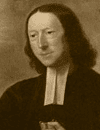 John Wesley
in Original, Nature, Property, and Use of Law
Read in context
To slight and resist the divine law is to hold God Himself in contempt, for the law is an expression of His goodness, the transcript of His righteousness, the image of His holiness.
 A.W. Pink
in The Total Depravity of Man Chapter 8 ENORMITY
Read in context
It is true that the law cannot save; and yet it is equally true that the law is one of the highest works of God, and is deserving of all reverence, and extremely useful when applied by God to the purposes for which it was intended.
 C.H. Spurgeon
in The Uses of the Law
Read in context
The first use of the law is to manifest to man his guilt.
C.H. Spurgeon
in The Uses of the Law
Read in context
The law demands that we should obey every command, and one of them broken, the whole of them are injured.
C.H. Spurgeon
in The Uses of the Law
Read in context
It is the law which makes men sensible of their sin; and it is the law, attended with its awful threatenings and curses, which gives a sense of the awful greatness, the authority, the power, the jealousy of God.
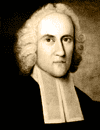 Jonathan Edwards
in God Makes Men Sensible of Their Misery Before He Reveals His Mercy and Love
Read in context
The purpose of the law is to point out our sin, and the purpose of pointing out our sin is to cause us to see that we are broken.
 Paul Washer
in What Is the Gospel? - Part 2
Listen at 1:25
The Spirit of God must wake and rouse the moral and spiritual consciousness: the Spirit must take God's holy law and hold it up as a molten looking-glass.
 Charles Finney
in Alive Without the Law, Slain Thereby
Read in context
The standard which God has set before men is the moral law which demands perfect and perpetual obedience; being spiritual it enjoins holiness of character as well as conduct, purity of heart as well as acts.
A.W. Pink
in THE DOCTRINE OF MAN’S IMPOTENCE Chapter 11 EXPOSITION
Read in context
The Law was given that every mouth might be stopped and all the world might become guilty before God.
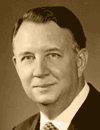 Paris Reidhead
in Christ for Us, Christ as Us, Christ in Us
Read in context
The Law was given that our rebellion might be revealed for the crime it is, and that we might stand before God the criminals that He says we are.
Paris Reidhead
in Christ for Us, Christ as Us, Christ in Us
Read in context
The law can do nothing else but reveal sin and pronounce condemnation upon the sinner, and yet we cannot get men away from it, even though we show them how sweetly Jesus stands between them and it.
C.H. Spurgeon
in Christ the End of the Law
Read in context
The law is meant to lead the sinner to faith in Christ, by showing the impossibility of any other way.
C.H. Spurgeon
in Christ the End of the Law
Read in context
The law claims complete obedience without one spot or speck, failure, or flaw, and Christ has brought in such a righteousness as that, and gives it to his people.
C.H. Spurgeon
in Christ the End of the Law
Read in context
The sinner being unable to render that love, to yield that obedience, the law is weak, for as a human law requires obedience and punishes for disobedience, yet gives no power to obey it, so it is with the law of God.
 J.C. Philpot
in Sin Condemned and Righteousness Fulfilled
Read in context
The Law points out the malady, but it never brings any medicine with which to cure it!
C.H. Spurgeon
in The Law's Failure and Fulfillment
Read in context
The Law does not sweetly incline us to holiness, but, through the weakness, or, rather, wickedness of our flesh, it often stirs up the obstinate and rebellious propensities which are in our nature.
C.H. Spurgeon
in The Law's Failure and Fulfillment
Read in context
God gave his law that the offence might seem to be an offence; ay, and that the offence might abound exceedingly more than it could have done without its coming.
C.H. Spurgeon
in Law and Grace
Read in context
God's great means of doing this is the law, as the schoolmaster, to drive sinners to receive Christ as their salvation.
 Catherine Booth
in Saving Faith
Read in context
The ceremonial law was nothing but a set of types pointing to the Savior, and was set aside, of course, when the great ante-type appeared.
Charles Finney
in Religion of the Law and Gospel
Read in context
The liberty of the gospel does not consist in being freed from doing what the law requires, but in a man's being in such a state of mind that doing it is itself a pleasure, instead of a burden.
Charles Finney
in Religion of the Law and Gospel
Read in context
Christ was able not only to perfectly keep the law, but to suffer the full extent of its unabated curse.
A.W. Pink
in The Satisfaction of Christ Studies in the Atonement 4. Its Pre-requisites
Read in context
The law proclaims that the wages of sin is death; the Gospel proclaims, through that blood not only that wages of sin is, but has been, death.
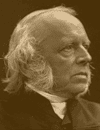 Andrew Bonar
in The Mercy Seat
Read in context
The law may break the heart with fear; it is only grace that works that sweet humility which becomes a joy to the soul as its second nature.
 Andrew Murray
in Humility and Sin
Read in context
God's Law can never be written upon the old natural heart—there must be a new and spiritual nature given—and then, upon the center of that new life, upon the throne of that new power within our life, God will set up the proclamation of His blessed will and what He commands shall be done.
C.H. Spurgeon
in The Law Written in the Heart
Read in context
The Law is, in the Gospel, not only vindicated by the Sacrifice of Christ, but it is honored by the work of the Spirit of God upon the hearts of men.
C.H. Spurgeon
in The Law Written in the Heart
Read in context
To love our neighbor as ourselves is the sum of the moral law respecting our fellow creatures.
Jonathan Edwards
in Christian Charity (Or the Duty of Charity to the Poor, Explained and Enforced)
Read in context
It is a blessed law of spontaneous love, your second nature a law of liberty, as God puts it in us by His Holy Spirit and makes it a part of our being.
 A.B. Simpson
in James Chapter 4 Practical Love
Read in context
A milder law must mean an imperfect one; a law that makes God's one law unnecessary; a law that gives countenance to sin.
 Horatius Bonar
in Jesus Only
Read in context
There is no greater mistake than to suppose that a Christian has nothing to do with the Law and the ten Commandments, because he cannot be justified by keeping them.
 J.C. Ryle
in Are We Sanctified?
Read in context
The Law is the needle and you cannot draw the silken thread of the Gospel through a man's heart unless you first send the needle of the Law through the center, to make way for it.
C.H. Spurgeon
in A Plain Man's Sermon
Read in context
Jesus never condemned the law and the prophets, but He did condemn those who did not obey them.
 D.L. Moody
in The Ten Commandments
Read in context
What Scripture says
- Galatians 3:24 the law became our guardian to lead us to Christ
- Romans 3:20 the law brings awareness of sin and justifies no one
- Romans 7:7 sin is known through the commandment
- Romans 7:12 the law is holy, righteous and good
- Galatians 3:19 it was added because of transgressions
- Galatians 3:10 those who rely on works of the law are under a curse
- Galatians 3:13 Christ redeemed us from the curse of the law
- Romans 8:3-4 what the law could not do, God did by sending His Son
- Romans 10:4 Christ is the end of the law for righteousness
- Romans 6:14 not under law, but under grace
- Romans 13:10 love is the fulfilment of the law
How this page is made: the quotes are taken word for word from sermons on SermonIndex and checked against them by program before the page is published. The transcripts of audio and video sermons are machine-made, so follow the link to hear the words as they were spoken. The answer above the quotes is an overview with its sources listed; it is not a statement of doctrine by SermonIndex.