
Personal revival is God giving new life to a believer whose own spiritual life has run low. The preachers quoted here say that it begins with one person, that only God can give it, that He gives it through His word to the humble and contrite, and that the believer seeks it by asking, returning and repenting.
Personal revival is God giving new life to a believer whose own spiritual life has run low. It is the same work as revival in a church, done in one heart. The psalmist asked for it in a single line: "My soul cleaves to the dust; revive me according to Your word." (Psalm 119:25). Roy Hession wrote, "Revival simply means New Life, and that implies that there is already Life there, but that the Life has ebbed."1
It is for those who already have life
Only what has lived can be revived. Hession wrote, "The unconverted do not need revival, for there is not any life there to revive."2 In his own words, "Revival is just the life of the Lord Jesus poured into human hearts."3 Thomas Manton wrote on the psalmist's word quickened, "There is a double quickening, when from dead we are made living, or when from cold and sad and heavy we are made lively."4 Richard Sibbes wrote, "We need not only grace to put life into us at the first, but likewise grace to quicken and draw forth that grace that we have."5 Charles Spurgeon said that the Lord who gave life at the first can give it again: "Restoration is not a more difficult work—no, it is but a secondary work compared with the new creating of the soul."6
The awakening of the unconverted and the revival of a whole church or district are dealt with on the page on revival, linked below. This page is about the believer's own heart and how he seeks its reviving.
It begins with one person
A.W. Tozer said, "And no church has ever been revived until individuals in that church have been revived."7 He said, "God can't pour His Spirit out on His church, except as He pours it on individuals within the church."7 Spurgeon said, "When individuals fall from their steadfastness, the church is tossed to and fro; when personal faith is steadfast, the church abides true to her Lord."8 Leonard Ravenhill said, "My hope is that as we go on here we are not just going to gather information and statistics about revival, but that we are going to individually seek personal revival."9 No believer has to wait for others. Tozer said, "The story of revival down the years has been the story of lone men meeting God; going out and finding God all alone."7 He said to his own congregation, "You can have a revival, whether the rest of us ever get it or not, whether you accept it or not, in this or any other church."7
How a believer comes to need it
Spiritual life does not keep itself. John Owen wrote that "believers, especially in a long course of profession, are subject to decays"10 and he named a common cause: "The most of our spiritual decays and barrenness arise from an inordinate admission of other things into our minds; for these are they that weaken grace in all its operations."11 Manton wrote, "We are apt to languish and loiter, as well as to step aside and turn out of the way; and therefore we need that God should excite us and quicken us by his repeated calls."12 Spurgeon wrote, "We need quickening every hour of the day, for we are so sadly apt to become slow and languid in the ways of God."13 He said in a sermon on reviving, "All plants are not always in flower—they have their springs, their summers, their autumns and their winters—and it is just so with God's people."14
Often there is a plainer cause. The Lord said to the church at Ephesus, "But I have this against you: You have abandoned your first love." (Revelation 2:4). G. Campbell Morgan wrote of that letter, "Christ stands confronting this great church, and He says in effect, There is much of excellency, but I miss the first love."15 He wrote, "He who has lost his first love cannot satisfy with work and labour and patience, and hatred of sin and orthodoxy."16 Ravenhill wrote, "Revival is the act of the Spirit upon believers who have lost their first love."17 The pages on backsliding and on leaving the first love treat that decline more fully.
Knowing that you need it
The first difficulty is to see it. Owen wrote, "Besides, it is almost as difficult to convince men of their spiritual decays as it is to recover them from them; but without this, healing is impossible."18 He warned against being at ease in such a state: "Peace in a spiritually-decaying condition, is a soul-ruining security; better be under terror on the account of surprise into some sin, than be in peace under evident decays of spiritual life."19 Ravenhill said, "I am sure that the main reason we do not have a national revival beginning with personal revival is that we are content to live without it."20
A believer who suspects his state should ask God to show him the truth. David prayed, "Search me, O God, and know my heart; test me and know my concerns." (Psalm 139:23) and he went on, "See if there is any offensive way in me; lead me in the way everlasting." (Psalm 139:24).
The psalmist's prayer
Psalm 119 asks for reviving again and again. The psalmist prays, "I am severely afflicted, O LORD; revive me through Your word." (Psalm 119:107). He prays, "Great are Your mercies, O LORD; revive me according to Your ordinances." (Psalm 119:156). And again, "Revive me according to Your loving devotion, that I may obey the testimony of Your mouth." (Psalm 119:88). The older Bibles have the word quicken where the newer have revive. Thomas Goodwin wrote, "There goes an infinite deal of mercy to quicken the dead heart of a believer; nay, to quicken his graces, which are not dead in sin, but they are dead of themselves, without the quickening of the Holy Ghost."21 Spurgeon wrote on the prayer of the twenty-fifth verse, quoted at the head of this page, "It is well to know what to pray for—David seeks quickening: one would have thought that he would have asked for comfort or upraising; but he knew that these would come out of increased life, and therefore he sought that blessing which is the root of the rest."22 He noted that the psalmist pleads God's word for it: "It is an implied if not an expressed promise, that the Lord will quicken his people."23 He wrote on another verse, "David prayed for a sound heart in the closing verse of the last octave, and here he seeks a revived heart; this is going to the root of the matter, by seeking that which is the most needful of all things."24
This is how personal revival is sought. The believer asks for it, plainly and often.
Only God can give it
The sons of Korah prayed, "Will You not revive us again, that Your people may rejoice in You?" (Psalm 85:6). The preachers quoted in this section stress that the work is God's. Spurgeon said on that text, "Not a soul is saved, not a saint is quickened and made to grow except by the work of God."14 He wrote, "God alone can give this quickening; but to the Lord and Giver of life the work is easy enough, and he delights to perform it."25 Manton wrote, "God can quicken us when we are as good as dead, because he is the well-spring of life and comfort."26
Spurgeon said, "The way to get your soul restored is not to try to restore it yourself, nor to undergo any processes by which it may work itself right."6 Owen wrote, "The work of recovering backsliders or believers from under their spiritual decays is an act of sovereign grace, wrought in us by virtue of divine promises."27 He wrote, "The immediate efficiency of the revival of our souls is from and by the Holy Spirit."28
Preachers differ on how God's giving and our seeking fit together. Some stress, as these do, that reviving is God's sovereign gift. Others press the duty of prayer and say that the blessing waits on it. This page does not settle the question. The page on travailing prayer, linked below, quotes those who press the duty of prayer.
God revives through His word
The psalmist says how the life came to him: "I will never forget Your precepts, for by them You have revived me." (Psalm 119:93). David says, "The Law of the LORD is perfect, reviving the soul" (Psalm 19:7). Spurgeon wrote on the first of these, "Remark that the Psalmist does not say that the precepts quickened him, but that the Lord quickened him by their means: thus he traces the life from the channel to the source, and places the glory where it is due."29 He said in a sermon, "The Word of the Lord is perfect and its effect is continually to restore and revive the soul of the Christian."30
A believer who wants reviving goes back to his Bible. David Wilkerson wrote, "The surest evidence of revival in a soul or a church or a city is a great hunger for God's Word."31
The humble and contrite
God has said whom He revives. He dwells "with the oppressed and humble in spirit, to restore the spirit of the lowly and revive the heart of the contrite." (Isaiah 57:15). Edward Payson said, "The high and holy One, who inhabits eternity, condescends, as he himself informs us, to dwell with those who are of a humble and contrite spirit, to revive the heart of the contrite ones."32 Jonathan Edwards said, "The gracious soul, when convinced of sin after great declensions, and recovered out of them, is deeply humbled; for it is brought to the dust before God."33 Spurgeon wrote, "It is the excellence of holy sorrow that it works in us the quickening for which we seek, and then we show the sincerity of our grief and the reality of our revival by being zealous in the ways of the Lord."34
Pride is the opposite state. The believer who is sure that he is well will not ask, and the promise is not made to him.
Return to the Lord
Hosea called a wandering people back: "Come, let us return to the LORD. For He has torn us to pieces, but He will heal us; He has wounded us, but He will bind up our wounds." (Hosea 6:1). He added, "After two days He will revive us; on the third day He will raise us up, that we may live in His presence." (Hosea 6:2). Alexander Maclaren wrote that the road back has three halting-places. "The first of them is the consciousness of the fall, the second is the resort to the Master for forgiveness; and the last is the deepened consecration to Him."35 He wrote, "No man that wanders into the wilderness but comes back by the King's highway, if he comes back at all."36 He added, "Sin which is forgiven knits us to Christ with deeper and more fervid love, and results in a larger consecration."37
The Lord promises through Hosea, "I will heal their apostasy; I will freely love them, for My anger has turned away from them." (Hosea 14:4). Spurgeon said on that verse, "He has not promised that their backsliding shall be healed by unknown means, but that He, Himself, will heal it."38 He said, "If sin returns upon you, child of God, that Fountain filled with blood, which washed you once, has by no means lost its power."38 John Wesley said of believers who had sunk under temptation, "Surely He is able to heal all their backslidings"39.
Remember, repent and do the first works
The risen Lord gave the church at Ephesus three things to do. "Therefore, keep in mind how far you have fallen. Repent and perform the deeds you did at first." (Revelation 2:5). To Laodicea He said, "Those I love, I rebuke and discipline. Therefore be earnest and repent." (Revelation 3:19). Morgan wrote of the counsel to Ephesus, "The injunction may be expressed in three words, Remember, Repent, and Repeat."40 William Gurnall wrote, "Grace in a decay is like a man pulled off his legs by sickness; if some means be not used to recover it, little service will be done by it, or comfort received from it."41 and he pointed to the Lord's counsel to Ephesus.
Repentance has to reach the real cause. T. Austin-Sparks said, "You can always have a little revival in your own heart on any one point where the Lord has a controversy with you."42 Tozer said, "And if there's anything you own that God can't have, you never can have a revival, sir."7 Hession wrote in his own terms, "If we are to know continuous Revival, we must learn the way to keep our cups clean."43
John gives the promise that goes with confession: "If we confess our sins, He is faithful and just to forgive us our sins and to cleanse us from all unrighteousness." (1 John 1:9). After his sin David asked for more than pardon. He prayed, "Create in me a clean heart, O God, and renew a right spirit within me." (Psalm 51:10). He prayed again, "Restore to me the joy of Your salvation, and sustain me with a willing spirit." (Psalm 51:12).
Affliction is often the means
The psalmist joins his trouble and his reviving in one verse: "Though You have shown me many troubles and misfortunes, You will revive me once again." (Psalm 71:20). J.C. Philpot compared the state of a declining believer to a deep sleep. He wrote, "The usual beginning of a revival of the soul from this deep sleep, as well as the means of its accomplishment, is a stroke of AFFLICTION."44 Thomas Brooks wrote, "Afflictions they serve to revive and recover decayed graces; they inflame that love that is cold, and they quicken that faith that is decaying, and they put life into those hopes that are withering, and spirits into those joys and comforts that are languishing."45 Spurgeon said, "It very frequently happens that by Divine Grace the healing of backsliding is brought about in God's Providence by severe afflictions."38
This does not mean that trouble revives by itself. It sends the believer to God, and God revives him.
Christ the restorer
David says of his Shepherd, "He restores my soul" (Psalm 23:3). Spurgeon said, "The Psalmist puts it in the present tense, as if the Lord were in the habit of doing so, and were even at this moment in the act of restoring his soul."6 The Lord's word to the lukewarm is an offer of Himself: "Behold, I stand at the door and knock. If anyone hears My voice and opens the door, I will come in and dine with him, and he with Me." (Revelation 3:20). The believer who wants reviving is to go to Christ as he is. Spurgeon said, "The way to get the revival is to begin at the Master's feet!"46
What follows
The first fruit is joy in God. The prayer of the psalm is "that Your people may rejoice in You" (Psalm 85:6). Spurgeon said, "So, therefore, if God will be pleased to send a revival, His people will rejoice in Him because they are revived."14
Strength follows. Spurgeon wrote, "If we are revived in our own personal piety we shall be out of reach of our assailants."47
The life has to be lived on. Hession, writing of a daily walk with the Lord in the light, put it in his own way: "To start to live this life now will mean revival in our lives."48 Among Ravenhill's descriptions of revival is this: "Revival is the willingness to forsake all, that God might be all in all to the individual and to the Church."49 Spurgeon told his students of one help: "Rejoice with those who are finding the Savior: this is a grand means of revival for your own soul."50 The revived believer then has something to bring to his church. Habakkuk's prayer for God's work can be his prayer for himself and for others: "Revive them in these years; make them known in these years. In Your wrath, remember mercy!" (Habakkuk 3:2).
- Roy Hession, The Calvary Road, "Introduction".
- Roy Hession, The Calvary Road, "Introduction".
- Roy Hession, The Calvary Road, "Chapter i brokenness".
- Thomas Manton, The Works of Thomas Manton, D.D. Vol. VII, "Sermon xcviii".
- Sibbes, Union with Christ, "Sermon i".
- C.H. Spurgeon, "My Restorer" (sermon).
- A.W. Tozer, "'How We Can Have a Personal Revival'" (sermon).
- C.H. Spurgeon, "The Kind of Revival We Need" (sermon).
- Leonard Ravenhill, Writings of Leonard Ravenhill, "S. Revival Series".
- John Owen, The Glory of Christ, "Chapter II The Way and Means of the Recovery of Spiritual Decays, and...".
- John Owen, The Glory of Christ, "Chapter II The Way and Means of the Recovery of Spiritual Decays, and...".
- Thomas Manton, The Works of Thomas Manton, D.D. Vol. XX, "Sermon xl".
- C.H. Spurgeon, The Golden Alphabet, "Exposition of Psalm 119:33-40".
- C.H. Spurgeon, "A Prayer for Revival" (sermon).
- G. Campbell Morgan, Writings of G Campbell Morgan - Volume 1, "The ephesus letter".
- G. Campbell Morgan, Writings of G Campbell Morgan - Volume 1, "The ephesus letter".
- Leonard Ravenhill, Writings of Leonard Ravenhill, "Excerpt20 - The Imperatives - Revival".
- John Owen, The Glory of Christ, "Chapter II The Way and Means of the Recovery of Spiritual Decays, and...".
- John Owen, The Glory of Christ, "Chapter II The Way and Means of the Recovery of Spiritual Decays, and...".
- Leonard Ravenhill, Writings of Leonard Ravenhill, "Excerpt20 - The Imperatives - Revival".
- Thomas Goodwin, Works of Thomas Goodwin - Volume 1, "Sermon XV: Eph_2:5".
- C.H. Spurgeon, The Golden Alphabet, "Exposition of Psalm 119:25-32".
- C.H. Spurgeon, The Golden Alphabet, "Exposition of Psalm 119:153-160".
- C.H. Spurgeon, The Golden Alphabet, "Exposition of Psalm 119:81-88".
- C.H. Spurgeon, The Golden Alphabet, "Exposition of Psalm 119:153-160".
- Thomas Manton, The Works of Thomas Manton, D.D. Vol. VI, "Sermon xxvi".
- John Owen, The Glory of Christ, "Chapter II The Way and Means of the Recovery of Spiritual Decays, and...".
- John Owen, The Glory of Christ, "The Second Difference Between our Beholding the Glory of Christ by...".
- C.H. Spurgeon, The Golden Alphabet, "Exposition of Psalm 119:89-96".
- C.H. Spurgeon, "Revelation and Conversion" (sermon).
- David Wilkerson, A Large Collection of Sermons By Pastor David Wilkerson - Volume 1, "PRE-005-02. A Booth On The Roof".
- Edward Payson, "Fellowship With the Father and With the Son" (sermon).
- Jonathan Edwards, "Hope and Comfort Usually Follow Genuine Humiliation and Repentance" (sermon).
- C.H. Spurgeon, The Golden Alphabet, "Exposition of Psalm 119:25-32".
- Alexander Maclaren, Expositions Of Holy Scripture The Acts, "John mark".
- Alexander Maclaren, Expositions Of Holy Scripture The Acts, "John mark".
- Alexander Maclaren, Expositions Of Holy Scripture The Acts, "John mark".
- C.H. Spurgeon, "Backsliding Healed" (sermon).
- John Wesley, "The Wisdom of God's Counsels" (sermon).
- G. Campbell Morgan, Writings of G Campbell Morgan - Volume 1, "The ephesus letter".
- William Gurnall, "The Christian in Complete Armour - Part 6" (sermon).
- T. Austin-Sparks, "The Exaltation of God's Son" (sermon).
- Roy Hession, The Calvary Road, "Chapter 2 cups running over".
- J.C. Philpot, "New Years' Address, January 1869" (sermon).
- Thomas Brooks, Writings of Thomas Brooks, "Volume 1".
- Charles Haddon Spurgeon, Spurgeon's Sermons Volume 16: 1870, "Martha And Mary".
- C.H. Spurgeon, The Golden Alphabet, "Exposition of Psalm 119:81-88".
- Roy Hession, The Calvary Road, "Chapter 4 the highway of holiness".
- Leonard Ravenhill, Writings of Leonard Ravenhill, "Excerpt20 - The Imperatives - Revival".
- Charles H. Spurgeon, Lectures to my students by charles spurgeon (4 Volumes), "Vol 03 - LECTURE 8 - GARNESTNESS: ITS MARRING AND MAINTENANCE".
In their own words
Each line below is quoted exactly from a sermon on this site. Follow the link to hear or read it where it was said.
Restoration is not a more difficult work—no, it is but a secondary work compared with the new creating of the soul.
 C.H. Spurgeon
in My Restorer
Read in context
The way to get your soul restored is not to try to restore it yourself, nor to undergo any processes by which it may work itself right.
C.H. Spurgeon
in My Restorer
Read in context
The Psalmist puts it in the present tense, as if the Lord were in the habit of doing so, and were even at this moment in the act of restoring his soul.
C.H. Spurgeon
in My Restorer
Read in context
And no church has ever been revived until individuals in that church have been revived.
 A.W. Tozer
in 'How We Can Have a Personal Revival'
Read in context
God can't pour His Spirit out on His church, except as He pours it on individuals within the church.
A.W. Tozer
in 'How We Can Have a Personal Revival'
Read in context
The story of revival down the years has been the story of lone men meeting God; going out and finding God all alone.
A.W. Tozer
in 'How We Can Have a Personal Revival'
Read in context
You can have a revival, whether the rest of us ever get it or not, whether you accept it or not, in this or any other church.
A.W. Tozer
in 'How We Can Have a Personal Revival'
Read in context
And if there's anything you own that God can't have, you never can have a revival, sir.
A.W. Tozer
in 'How We Can Have a Personal Revival'
Read in context
When individuals fall from their steadfastness, the church is tossed to and fro; when personal faith is steadfast, the church abides true to her Lord.
C.H. Spurgeon
in The Kind of Revival We Need
Read in context
All plants are not always in flower—they have their springs, their summers, their autumns and their winters—and it is just so with God's people.
C.H. Spurgeon
in A Prayer for Revival
Read in context
Not a soul is saved, not a saint is quickened and made to grow except by the work of God.
C.H. Spurgeon
in A Prayer for Revival
Read in context
So, therefore, if God will be pleased to send a revival, His people will rejoice in Him because they are revived.
C.H. Spurgeon
in A Prayer for Revival
Read in context
The Word of the Lord is perfect and its effect is continually to restore and revive the soul of the Christian.
C.H. Spurgeon
in Revelation and Conversion
Read in context
The high and holy One, who inhabits eternity, condescends, as he himself informs us, to dwell with those who are of a humble and contrite spirit, to revive the heart of the contrite ones.
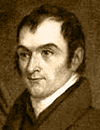 Edward Payson
in Fellowship With the Father and With the Son.
Read in context
The gracious soul, when convinced of sin after great declensions, and recovered out of them, is deeply humbled; for it is brought to the dust before God.
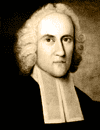 Jonathan Edwards
in Hope and Comfort Usually Follow Genuine Humiliation and Repentance
Read in context
He has not promised that their backsliding shall be healed by unknown means, but that He, Himself, will heal it.
C.H. Spurgeon
in Backsliding Healed
Read in context
If sin returns upon you, child of God, that Fountain filled with blood, which washed you once, has by no means lost its power.
C.H. Spurgeon
in Backsliding Healed
Read in context
It very frequently happens that by Divine Grace the healing of backsliding is brought about in God's Providence by severe afflictions.
C.H. Spurgeon
in Backsliding Healed
Read in context
Grace in a decay is like a man pulled off his legs by sickness; if some means be not used to recover it, little service will be done by it, or comfort received from it.
 William Gurnall
in The Christian in Complete Armour - Part 6
Read in context
You can always have a little revival in your own heart on any one point where the Lord has a controversy with you.
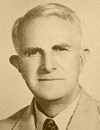 T. Austin-Sparks
in The Exaltation of God's Son
Read in context
The usual beginning of a revival of the soul from this deep sleep, as well as the means of its accomplishment, is a stroke of AFFLICTION.
 J.C. Philpot
in New Years' Address, January 1869
Read in context
What Scripture says
- Psalm 119:25 my soul cleaves to the dust; revive me according to Your word
- Psalm 85:6 will You not revive us again, that Your people may rejoice in You
- Psalm 119:93 by Your precepts You have revived me
- Psalm 51:12 restore to me the joy of Your salvation
- Isaiah 57:15 God revives the heart of the contrite
- Hosea 6:1 come, let us return to the LORD
- Hosea 14:4 I will heal their apostasy
- Revelation 2:5 remember, repent and do the first works
- Revelation 3:20 I stand at the door and knock
- Psalm 23:3 He restores my soul
- Habakkuk 3:2 revive Your deeds in these years
How this page is made: the quotes are taken word for word from sermons on SermonIndex and checked against them by program before the page is published. The transcripts of audio and video sermons are machine-made, so follow the link to hear the words as they were spoken. The answer above the quotes is an overview with its sources listed; it is not a statement of doctrine by SermonIndex.