
The preachers quoted here follow the story of Jericho in Joshua 5 to 7: the Commander of the LORD's army, God's strange plan, the silent march for seven days, the shout of faith and the walls that fell by God's power. They also take up Rahab, saved by faith, the judgment on the city as Scripture records it, and Achan's theft of the devoted things.
The fall of Jericho teaches that God's battles are won by God, and that His people take part in them by faith and obedience. Israel did not storm the city. They marched round it as they were told, in silence, for seven days, then shouted at His word, and the walls fell. Hebrews says, "By faith the walls of Jericho fell, after the people had marched around them for seven days." (Hebrews 11:30). Adolph Saphir wrote, "Israel is before Jericho, a walled and fenced city; it is not by power and might, but by faith, that they are to take it."1
A shut city
Israel had just crossed the Jordan. The first city in their way was a walled fortress. Scripture says, "Now Jericho was tightly shut up because of the Israelites. No one went out and no one came in." (Joshua 6:1). Alexander Maclaren wrote, "The army of Israel was just beginning a hard conflict under an untried leader."2
John Calvin wrote, "The Lord, therefore, that they might not sit down despondently before one city, assisted them by an extraordinary miracle, and opened up an entrance to them by throwing down the walls, that they might thereafter have the greater confidence in attacking other cities."3
The Commander of the LORD's army
Before Joshua received any orders, he met his Lord. "Now when Joshua was near Jericho, he looked up and saw a man standing in front of him with a drawn sword in His hand." (Joshua 5:13). Joshua asked whether he was for Israel or for their enemies. The answer was, "I have now come as Commander of the LORD's army." (Joshua 5:14). Older versions read Captain of the LORD's host.
Many preachers have taken this Commander to be the Son of God Himself. W.G. Blaikie wrote, "This soldier is no other than the Angel of the Covenant, the same who came to Abraham under the oak at Mamre"4. Calvin wrote, "Accordingly, he is indiscriminately called an angel, and distinguished by the title of the eternal God."5 He added a caution: "We must beware, however, of imagining that Christ at that time became incarnate, since, first, we nowhere read that God sent his Son in the flesh before the fullness of the times; and, secondly, Christ, in so far as he was a man, behooved to be the Son of David."6
The drawn sword was a promise. Blaikie wrote, "A long course of fighting lay before the Israelites ere they could get possession of their land, and the sword in the hand of the Angel was an assurance that He would fight with them and for them."7 Calvin wrote, "It is therefore just as if he were offering his assistance in the combats which were about to be waged, and promising by his arrival that the war would have a happy issue."8 Blaikie also wrote, "It is neither for reproof nor correction but simply for blessing that He is there."9
Joshua had asked whose side the stranger was on. Maclaren drew the lesson: "We have the right to be sure that God is on our side, when we have made sure that we are on God's."10 He also wrote of Christ as the Leader in every fight against evil, "He is not like a general who, on some safe knoll behind the army, sends his soldiers to death, and keeps his own skin whole."11
Holy ground
The Commander gave no battle plan first. He said, "Take off your sandals, for the place where you are standing is holy." (Joshua 5:15). These are the words God spoke to Moses at the bush: "Take off your sandals, for the place where you are standing is holy ground." (Exodus 3:5). Blaikie wrote, "And it is simply to remind Joshua of the Divine presence that this command is given; and being given it is no sooner uttered than obeyed."12 Calvin wrote, "For one place cannot have a greater sanctity than another, except God deigns specially to make it so."13
Joshua bowed before he marched. Blaikie wrote, "The moment that Joshua understood with whom he was conversing, he fell on his face, and offered to his visitor not only obeisance but worship, which the visitor did not decline."14 The victory at Jericho began with worship.
God's strange plan
Then the LORD gave His orders. "Behold, I have delivered Jericho into your hand, along with its king and its mighty men of valor." (Joshua 6:2). "March around the city with all the men of war, circling the city one time. Do this for six days." (Joshua 6:3). "Have seven priests carry seven rams' horns in front of the ark. Then on the seventh day, march around the city seven times, while the priests blow the horns." (Joshua 6:4). "And when there is a long blast of the ram's horn and you hear its sound, have all the people give a mighty shout. Then the wall of the city will collapse and all your people will charge straight into the city." (Joshua 6:5).
Blaikie wrote, "The course to be followed seemed to human wisdom the very essence of silliness."15 Calvin wrote, "The whole looked like nothing else than child's play, and yet was no improper test, for trying their faith, as it proved their acquiescence in the divine message, even when they saw in the act itself nothing but mere disappointment."16 He also wrote, "Meanwhile, though the circulatory movement round the walls might have excited derision, it was afterwards known, by its prosperous result, that God commands nothing in vain."17
John Bunyan wrote, "The world understood not, nor believed, that the walls of Jericho should fall at the sound of rams' horns; but when God will work, the means must be effectual."18 Blaikie noted what the plan cost the people: "The plan no doubt exposed them to two things which men do not like, ridicule and danger."19
Obedience without explanation
God told Israel what to do but not how He would do His part. Maclaren wrote, "The command comes to the people, through Joshua's lips, unaccompanied by any explanation or reasons."20 He went on, "But whatever some of them may have thought, there is nothing recorded now but prompt submission."21 He also wrote, "Then here again is faith manifesting itself by an obedience which was altogether ignorant of what was coming."22
Joshua did not argue. Blaikie wrote, "It is a first principle with Joshua that when the mind of God is once indicated there is nothing for him but to obey."23 He also wrote, "True faith is blind to everything except the Divine command."24 He wrote of the people, "The instructions of Joshua to the priests and the people are promptly obeyed."25 G.W. North wrote, "The miracle of Jericho was outstanding: God did it all, but only because everyone involved in it, and for whom it was done, did exactly as He said."26
Silence
For six days not a voice was raised. Joshua had commanded the people, "Do not give a battle cry or let your voice be heard; do not let one word come out of your mouth until the day I tell you to shout. Then you are to shout!" (Joshua 6:10). Blaikie wrote of the first day, "Not a sound is heard, save that of the trumpets of the seven priests."27
The people were silent, but the horns sounded. The armed men went first, then the priests with the horns, then the ark, then the rear guard. "And the seven priests carrying seven rams' horns kept marching ahead of the ark of the LORD and blowing the horns. The armed troops went in front of them and the rear guard followed the ark of the LORD, while the horns kept sounding." (Joshua 6:13). Maclaren wrote, "So the Ark is the centre; and it is not only Israel that is marching round the city, but rather it is God who is circling the walls."28 He explained the trumpets: "The blast of the trumpet was, in the Jewish feasts, the solemn proclamation of the presence of God."29
Patience through seven days
The march went on day after day. "So on the second day they marched around the city once and returned to the camp. They did this for six days." (Joshua 6:14). Maclaren wrote, "A week was not long, but it was a long while during which to do that one apparently useless thing and nothing else."30 He added, "Little progress in reducing Jericho was made by the progress round it, and it must have got rather wearisome about the sixth day."31
Nothing seemed to happen until the last circuit of the last day. "Then on the seventh day, they got up at dawn and marched around the city seven times in the same manner. That was the only day they circled the city seven times." (Joshua 6:15). Blaikie wrote, "The other and not less valuable lesson is, that in many good enterprises, all that is done may appear for a long time to be labour lost, and not to advance us by one step nearer to the object in view."32 He went on, "Nay, the seventh perambulation on the seventh day appeared to be equally unsuccessful, until the very last moment; but when that moment came, the whole defences of the city came tumbling to the ground."33 He drew the lesson: "It is often God's method to do a great deal of work unseen, and then on a sudden effect the consummation."34
The shout of faith
On the seventh time round Joshua gave the word: "Shout! For the LORD has given you the city!" (Joshua 6:16). The people shouted before a single stone had moved. Calvin wrote, "Here the people are praised for obedience, and the faithfulness of God is, at the same time, celebrated."35 He went on, "They testified their fidelity by shouting, because they were persuaded, that what God had commanded would not be in vain, and he, in not allowing them to lose their labor, vindicated the truth of what he had said."36
The walls fell by God's power
"So when the rams' horns sounded, the people shouted. When they heard the blast of the horn, the people gave a great shout, and the wall collapsed. Then all the people charged straight into the city and captured it." (Joshua 6:20). No battering ram touched them. Blaikie wrote, "The act of faith lay in the conviction that God, who had prescribed the method of attack, foolish though it seemed, would infallibly bring it to a successful issue."37 A.W. Pink wrote, "The capture of Jericho and the conquest of Canaan are not attributed to the brilliance of Joshua and the bravery of his men, but to the Lord's showing Himself strong in their behalf."38
T. Austin-Sparks said that Jericho set the pattern for the whole conquest: "God intended that what was true of Jericho should be true of every other conquest, that the basis should be one of sheer faith; victory through faith, possession through faith."39 Maclaren warned against thinking God is absent when there is no miracle: "We are not to argue that, because there is no miracle, God is not present or active."40 He went on, "God is as much with you and me in our fights as He was with the Israelites when they marched round Jericho, and as certainly will He help."41
Not the weapons of the world
Paul writes, "The weapons of our warfare are not the weapons of the world. Instead, they have divine power to demolish strongholds." (2 Corinthians 10:4). The weapons that took Jericho were a march, a trumpet of ram's horn and a shout. Spurgeon said, "Ours is a spiritual kingdom, and the weapons of our warfare are not carnal, but spiritual, and mighty through God, to the pulling down of strongholds."42 Austin-Sparks said, "To overcome the carnal, you must have something more than carnal weapons, and the weapons of our warfare are not carnal, but mighty through God."43 G. Campbell Morgan said, "Not by any carnal weapons are we to fight this warfare, not by any means which men employ for the establishment and the strengthening of earthly kingdoms, will this Kingdom be brought in and established."44
Blaikie wrote, "When we have clear indications of the Divine mind as to any course of action, we are to advance to it promptly and without fear, even though the means at our disposal appear utterly inadequate to the object sought to be gained."45 He added, "The resources of infinite power avail for that service, and they are sure to be brought into play if it be undertaken for God's glory, and in accordance with His will."46
Rahab's faith
One household in Jericho was spared. Before the siege Joshua had sent two spies, and they lodged in the house of a prostitute named Rahab. She hid them and told them, "I know that the LORD has given you this land" (Joshua 2:9). She had heard of the Red Sea and of the kings across the Jordan, and she said, "When we heard this, our hearts melted and everyone's courage failed because of you, for the LORD your God is God in the heavens above and on the earth below." (Joshua 2:11). Blaikie wrote, "It would have been nothing had she been willing to give to the Hebrew God a place, a high place, or even the highest place among the gods."47
Maclaren wrote, "She knew nothing of even the Mosaic revelation, nothing of its moral law or of its sacrifices."48
Her faith stood alone in her city. Blaikie wrote, "She was utterly without support or sympathy from those among whom she lived, for with the exception of her own relations, who seem to have been influenced by herself, not a creature in Jericho shared her faith, or showed the slightest regard for the God of Israel."49 Spurgeon said, "It is the easiest thing in the world to believe as every body else believes, but the difficulty is to believe a thing alone, when no one else thinks as you think; to be the solitary champion of a righteous cause when the enemy mustereth his thousands to the battle."50
A sinner saved
Scripture does not hide what Rahab was. Spurgeon said, "I am persuaded that nothing but a spirit of distaste for free grace would ever have led any commentator to deny her sin."50 Maclaren wrote, "It is a strange instance of blindness that attempts have been made to soften down the Bible's plain speaking about Rahab's character."51 He went on, "The bond which unites to Him is not blamelessness of life but simple trust."52 Maclaren also wrote of her story, "There is much about it that is beautiful and striking, but the main thing is that it teaches the universality of God's mercy, and the great truth that trust in Him unites to Him and brings deliverance, how black soever may have been the previous life."53
Rahab also deceived the king's men. "But the woman had taken the two men and hidden them." (Joshua 2:4). She told them that the men had gone out at dusk and she did not know where. "(But Rahab had taken them up to the roof and hidden them among the stalks of flax that she had laid out there.)" (Joshua 2:6). Blaikie did not excuse her falsehoods. He wrote, "All falsehood, especially what is spoken to those who have a right to trust us, must be offensive to the God of truth, and the nearer men get to the Divine image, through the growing closeness of their Divine fellowship, the more do they recoil from it."54 He went on, "That she was wholly blameless in the way in which she went about this, in favouring the spies against her own nation in this underhand way, we will not affirm; but one cannot look for a high sense of honour in such a woman."55 He added, "Still, whatever may be said against her, the fact of her remarkable faith remains conspicuous and beyond dispute, all the more striking, too, that she is the last person in whom we should have expected to find anything of the kind."56 He also wrote, "It is interesting and instructive to think of her as exemplifying that law of grace by which the door of heaven is flung open even to the vilest sinner."57 She is named in the line of Christ: "Salmon was the father of Boaz by Rahab" (Matthew 1:5). Spurgeon said, "And, without doubt, her salvation was not merely of a temporal nature, not merely a deliverance of her body from the sword, but redemption of her soul from hell."50
Faith that acts
The spies told Rahab to tie a scarlet cord in her window, and when they had gone, "she tied the scarlet cord in the window." (Joshua 2:21).
Hebrews and James both speak of her. "By faith the prostitute Rahab, because she welcomed the spies in peace, did not perish with those who were disobedient." (Hebrews 11:31). "In the same way, was not even Rahab the prostitute justified by her actions when she welcomed the spies and sent them off on another route?" (James 2:25). Maclaren wrote, "The faith that saves is not a barren intellectual process, nor an idle trust in Christ's salvation, but a practical power."58 Blaikie wrote, "It was her taking up the cause of the spies, protecting them, endangering her life for them, and then devising and executing a scheme for their safety, that showed her faith to be living, and therefore real."59 Spurgeon said, "That faith which saves the soul is a real faith, and a real faith sanctifies men."50
When the city fell, the promise was kept. "And Joshua spared Rahab the prostitute, with her father's household and all who belonged to her, because she hid the men Joshua had sent to spy out Jericho. So she has lived among the Israelites to this day." (Joshua 6:25). Calvin wrote, "Joshua, therefore, judged wisely, that a woman who had voluntarily gone over to the Church, was rescued thus early, not without the special grace of God."60
The judgment on Jericho
Scripture states plainly what happened to the rest of the city. "At the edge of the sword they devoted to destruction everything in the city—man and woman, young and old, oxen, sheep, and donkeys." (Joshua 6:21). This is one of the hardest passages in the Bible, and Scripture gives its own account of it. God told Abraham that his descendants would wait four hundred years, "for the iniquity of the Amorites is not yet complete." (Genesis 15:16). Moses told Israel that they were not given the land for their own goodness. "Rather, the LORD is driving out these nations before you because of their wickedness." (Deuteronomy 9:4). "Even the land has become defiled, so I am punishing it for its sin, and the land will vomit out its inhabitants." (Leviticus 18:25).
Blaikie wrote, "A more serious objection in the eyes of many is that which is founded on the promiscuous massacre of the people of Jericho, which, according to the narrative, the Israelites were ordered to make."61 He wrote that Jericho was no better than Sodom had been, and went on, "The country as a whole, which had now filled up its cup of iniquity, was no better."62 He went on, "The longsuffering of the righteous God was exhausted, and Joshua and his people were the instruments by whom the judicial punishment was to be inflicted."63
Calvin wrote, "The indiscriminate and promiscuous slaughter, making no distinction of age or sex, but including alike women and children, the aged and decrepit, might seem an inhuman massacre, had it not been executed by the command of God."64 He went on, "But as he, in whose hands are life and death, had justly doomed those nations to destruction, this puts an end to all discussion."65 He added, "We may add, that they had been borne with for four hundred years, until their iniquity was complete."66
Blaikie summed up the two sides of the story: "The two great lessons of Providence from Jericho are, the certainty of the reward of faith and obedience on the one hand, and of the punishment of wickedness on the other."67
The devoted things
All of Jericho was devoted to the LORD. Israel was to take nothing for themselves. "But keep away from the things devoted to destruction, lest you yourself be set apart for destruction. If you take any of these, you will set apart the camp of Israel for destruction and bring disaster upon it." (Joshua 6:18). "For all the silver and gold and all the articles of bronze and iron are holy to the LORD; they must go into His treasury." (Joshua 6:19). Calvin explained the word: "When it refers to sacred oblations, it becomes, in respect of men, equivalent to abolitions, since things devoted in this manner are renounced by them as completely as if they were annihilated."68 He also wrote, "God was contented with this pledge of gratitude, provided the people thereby quickly learned that everything they called their own was the gift of his free liberality."69
Austin-Sparks said, "The judgment of Achan's sin showed that God had first rights, and the flesh must not appropriate what belongs to God, must not take God's place."70
Achan
One man disobeyed. "The Israelites, however, acted unfaithfully regarding the things devoted to destruction. Achan son of Carmi, the son of Zabdi, the son of Zerah, of the tribe of Judah, took some of what was set apart. So the anger of the LORD burned against the Israelites." (Joshua 7:1). Israel then went up against the small town of Ai and fled before it. God told Joshua, "Israel has sinned; they have transgressed My covenant that I commanded them, and they have taken some of what was devoted to destruction. Indeed, they have stolen and lied, and they have put these things with their own possessions." (Joshua 7:11). "This is why the Israelites cannot stand against their enemies. They will turn their backs and run from their enemies, because they themselves have been set apart for destruction. I will no longer be with you unless you remove from among you whatever is devoted to destruction." (Joshua 7:12). Achan confessed, "When I saw among the spoils a beautiful cloak from Shinar, two hundred shekels of silver, and a bar of gold weighing fifty shekels, I coveted them and took them." (Joshua 7:21).
Maclaren wrote, "Observe, then, that the sin is laid at the doors of the whole nation, while yet it was the secret act of one man."71 He wrote of the words God used: "The first three of the six point out its heinousness in reference to God, as sin, as a breach of covenant, and as an appropriation of what was specially His."72 He went on, "The second three describe it in terms of ordinary morality, as theft, lying, and concealment; so many black sides has one sin when God's eye scrutinises it."73
Nothing is hidden from God. Stephen Charnock wrote, "Achan's wedge of gold is discerned by him, though buried in the earth, and hooded with a tent."74 Maclaren wrote, "God's judgments may be long in being put on our tracks, but, once loose, they are sure of scent, and cannot be baffled."75
Maclaren drew the lesson for the church: "The conditions of God's help are the same to-day as when that panic-stricken crowd ignominiously fled down the rocky pass, foiled before an insignificant fortress, because sin clave to them, and God was gone from them."76 He went on, "It is true to-day, and will always be true, that the victories of the Church are won by its holiness far more than by any gifts or powers of mind, culture, wealth, eloquence, or the like."77 He added, "When God is with us, Jericho is not too strong to be captured; when He is driven from us by our own sin, Ai is not too weak to defeat us."78 He went on, "Fortifications that reach to heaven fall flat before us when God is at our side."79
A ruin left as a witness
Joshua laid a curse on anyone who rebuilt the city. "Cursed before the LORD is the man who rises up and rebuilds this city, Jericho" (Joshua 6:26). Centuries later the word came true. "In Ahab's days, Hiel the Bethelite rebuilt Jericho. At the cost of Abiram his firstborn he laid its foundation, and at the cost of Segub his youngest he set up its gates, according to the word that the LORD had spoken through Joshua son of Nun." (1 Kings 16:34). Calvin wrote, "This adjuration, then, was not merely to have effect for one day, but to warn posterity through all ages that that city had been taken only by divine power."80 He went on, "He wished, therefore, that the ruins and devastation should exist for ever as a kind of trophy; because the rebuilding of it would have been equivalent to an erasure effacing the miracle."81
Jericho was left as a sign that the LORD gives the victory. "So the LORD was with Joshua, and his fame spread throughout the land." (Joshua 6:27).
- Adolph Saphir, The Epistle to the Hebrews - Vol 1-2, "Heb_11:30-40".
- Alexander Maclaren, Expositions Of Holy Scripture F, "The captain of the lord's host".
- John Calvin, Commentary On Joshua, "Joshua 6:1-19".
- W. G. Blaikie, The Expositor's Bible: The Book of Joshua, "Chapter xi: the captain of the lord's host".
- John Calvin, Commentary On Joshua, "Joshua 5:10-15".
- John Calvin, Commentary On Joshua, "Joshua 5:10-15".
- W. G. Blaikie, The Expositor's Bible: The Book of Joshua, "Chapter xi: the captain of the lord's host".
- John Calvin, Commentary On Joshua, "Joshua 5:10-15".
- W. G. Blaikie, The Expositor's Bible: The Book of Joshua, "Chapter xi: the captain of the lord's host".
- Alexander Maclaren, Expositions Of Holy Scripture F, "The captain of the lord's host".
- Alexander Maclaren, Expositions Of Holy Scripture F, "The captain of the lord's host".
- W. G. Blaikie, The Expositor's Bible: The Book of Joshua, "Chapter xi: the captain of the lord's host".
- John Calvin, Commentary On Joshua, "Joshua 5:10-15".
- W. G. Blaikie, The Expositor's Bible: The Book of Joshua, "Chapter xi: the captain of the lord's host".
- W. G. Blaikie, The Expositor's Bible: The Book of Joshua, "Chapter xi: the captain of the lord's host".
- John Calvin, Commentary On Joshua, "Joshua 6:1-19".
- John Calvin, Commentary On Joshua, "Joshua 6:1-19".
- John Bunyan, 09. Come and Welcome to Jesus Christ, "Second, The Text Treated By Way Of Observation".
- W. G. Blaikie, The Expositor's Bible: The Book of Joshua, "Chapter xi: the captain of the lord's host".
- Alexander Maclaren, Expositions Of Holy Scripture F, "The siege of jericho".
- Alexander Maclaren, Expositions Of Holy Scripture F, "The siege of jericho".
- Alexander Maclaren, Expositions Of Holy Scripture F, "The siege of jericho".
- W. G. Blaikie, The Expositor's Bible: The Book of Joshua, "Chapter xi: the captain of the lord's host".
- W. G. Blaikie, The Expositor's Bible: The Book of Joshua, "Chapter xi: the captain of the lord's host".
- W. G. Blaikie, The Expositor's Bible: The Book of Joshua, "Chapter xii: the fate of jericho".
- G.W. North, "Of Whom the World Is Not Worthy" (sermon).
- W. G. Blaikie, The Expositor's Bible: The Book of Joshua, "Chapter xii: the fate of jericho".
- Alexander Maclaren, Expositions Of Holy Scripture F, "The siege of jericho".
- Alexander Maclaren, Expositions Of Holy Scripture F, "The siege of jericho".
- Alexander Maclaren, Expositions Of Holy Scripture F, "The siege of jericho".
- Alexander Maclaren, Expositions Of Holy Scripture F, "The siege of jericho".
- W. G. Blaikie, The Expositor's Bible: The Book of Joshua, "Chapter xii: the fate of jericho".
- W. G. Blaikie, The Expositor's Bible: The Book of Joshua, "Chapter xii: the fate of jericho".
- W. G. Blaikie, The Expositor's Bible: The Book of Joshua, "Chapter xii: the fate of jericho".
- John Calvin, Commentary On Joshua, "Joshua 6:20-27".
- John Calvin, Commentary On Joshua, "Joshua 6:20-27".
- W. G. Blaikie, The Expositor's Bible: The Book of Joshua, "Chapter xi: the captain of the lord's host".
- A.W. Pink, "THE DOCTRINE OF REVELATION Chapter 9 THE HOLY BIBLE IS UNIQUE" (sermon).
- T. Austin-Sparks, "A Man After God's Heart" (sermon).
- Alexander Maclaren, Expositions Of Holy Scripture F, "The siege of jericho".
- Alexander Maclaren, Expositions Of Holy Scripture F, "The siege of jericho".
- C.H. Spurgeon, "War! War! War!" (sermon).
- T. Austin-Sparks, "The Governing Law of the House of God" (sermon).
- G. Campbell Morgan, "The Redemptive Processes - the Conflict" (sermon).
- W. G. Blaikie, The Expositor's Bible: The Book of Joshua, "Chapter xii: the fate of jericho".
- W. G. Blaikie, The Expositor's Bible: The Book of Joshua, "Chapter xii: the fate of jericho".
- W. G. Blaikie, The Expositor's Bible: The Book of Joshua, "Chapter vii: the spies in jericho".
- Alexander Maclaren, Expositions Of Holy Scripture F, "Rahab".
- W. G. Blaikie, The Expositor's Bible: The Book of Joshua, "Chapter xiii: rahab saved".
- C.H. Spurgeon, "Rahab's Faith" (sermon).
- Alexander Maclaren, Expositions Of Holy Scripture F, "Rahab".
- Alexander Maclaren, Expositions Of Holy Scripture F, "Rahab".
- Alexander Maclaren, Expositions Of Holy Scripture F, "Rahab".
- W. G. Blaikie, The Expositor's Bible: The Book of Joshua, "Chapter vii: the spies in jericho".
- W. G. Blaikie, The Expositor's Bible: The Book of Joshua, "Chapter vii: the spies in jericho".
- W. G. Blaikie, The Expositor's Bible: The Book of Joshua, "Chapter vii: the spies in jericho".
- W. G. Blaikie, The Expositor's Bible: The Book of Joshua, "Chapter xiii: rahab saved".
- Alexander Maclaren, Expositions Of Holy Scripture F, "Rahab".
- W. G. Blaikie, The Expositor's Bible: The Book of Joshua, "Chapter xiii: rahab saved".
- John Calvin, Commentary On Joshua, "Joshua 6:20-27".
- W. G. Blaikie, The Expositor's Bible: The Book of Joshua, "Chapter xii: the fate of jericho".
- W. G. Blaikie, The Expositor's Bible: The Book of Joshua, "Chapter xi: the captain of the lord's host".
- W. G. Blaikie, The Expositor's Bible: The Book of Joshua, "Chapter xi: the captain of the lord's host".
- John Calvin, Commentary On Joshua, "Joshua 6:20-27".
- John Calvin, Commentary On Joshua, "Joshua 6:20-27".
- John Calvin, Commentary On Joshua, "Joshua 6:20-27".
- W. G. Blaikie, The Expositor's Bible: The Book of Joshua, "Chapter xii: the fate of jericho".
- John Calvin, Commentary On Joshua, "Joshua 6:1-19".
- John Calvin, Commentary On Joshua, "Joshua 6:1-19".
- T. Austin-Sparks, "The Waters of Jericho" (sermon).
- Alexander Maclaren, Expositions Of Holy Scripture F, "Achan's sin, israel's defeat".
- Alexander Maclaren, Expositions Of Holy Scripture F, "Achan's sin, israel's defeat".
- Alexander Maclaren, Expositions Of Holy Scripture F, "Achan's sin, israel's defeat".
- Stephen Charnock, Writings of Stephen Charnock, "On God's Knowledge".
- Alexander Maclaren, Expositions Of Holy Scripture F, "Achan's sin, israel's defeat".
- Alexander Maclaren, Expositions Of Holy Scripture F, "Achan's sin, israel's defeat".
- Alexander Maclaren, Expositions Of Holy Scripture F, "Achan's sin, israel's defeat".
- Alexander Maclaren, Expositions Of Holy Scripture F, "Achan's sin, israel's defeat".
- Alexander Maclaren, Expositions Of Holy Scripture F, "Achan's sin, israel's defeat".
- John Calvin, Commentary On Joshua, "Joshua 6:20-27".
- John Calvin, Commentary On Joshua, "Joshua 6:20-27".
In their own words
Each line below is quoted exactly from a sermon on this site. Follow the link to hear or read it where it was said.
The miracle of Jericho was outstanding: God did it all, but only because everyone involved in it, and for whom it was done, did exactly as He said.
 G.W. North
in Of Whom the World Is Not Worthy
Read in context
The capture of Jericho and the conquest of Canaan are not attributed to the brilliance of Joshua and the bravery of his men, but to the Lord's showing Himself strong in their behalf.
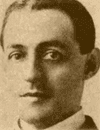 A.W. Pink
in THE DOCTRINE OF REVELATION Chapter 9 THE HOLY BIBLE IS UNIQUE
Read in context
God intended that what was true of Jericho should be true of every other conquest, that the basis should be one of sheer faith; victory through faith, possession through faith.
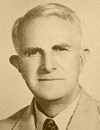 T. Austin-Sparks
in A Man After God's Heart
Read in context
Ours is a spiritual kingdom, and the weapons of our warfare are not carnal, but spiritual, and mighty through God, to the pulling down of strongholds.
 C.H. Spurgeon
in War! War! War!
Read in context
To overcome the carnal, you must have something more than carnal weapons, and the weapons of our warfare are not carnal, but mighty through God.
T. Austin-Sparks
in The Governing Law of the House of God
Read in context
Not by any carnal weapons are we to fight this warfare, not by any means which men employ for the establishment and the strengthening of earthly kingdoms, will this Kingdom be brought in and established.
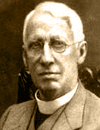 G. Campbell Morgan
in The Redemptive Processes - the Conflict
Read in context
It is the easiest thing in the world to believe as every body else believes, but the difficulty is to believe a thing alone, when no one else thinks as you think; to be the solitary champion of a righteous cause when the enemy mustereth his thousands to the battle.
C.H. Spurgeon
in Rahab’s Faith
Read in context
I am persuaded that nothing but a spirit of distaste for free grace would ever have led any commentator to deny her sin.
C.H. Spurgeon
in Rahab’s Faith
Read in context
And, without doubt, her salvation was not merely of a temporal nature, not merely a deliverance of her body from the sword, but redemption of her soul from hell.
C.H. Spurgeon
in Rahab’s Faith
Read in context
That faith which saves the soul is a real faith, and a real faith sanctifies men.
C.H. Spurgeon
in Rahab’s Faith
Read in context
The judgment of Achan's sin showed that God had first rights, and the flesh must not appropriate what belongs to God, must not take God's place.
T. Austin-Sparks
in The Waters of Jericho
Read in context
What Scripture says
- Hebrews 11:30 by faith the walls of Jericho fell, after the people had marched around them for seven days
- Joshua 5:14 I have now come as Commander of the LORD's army
- Joshua 5:15 take off your sandals, for the place where you are standing is holy
- Joshua 6:2 I have delivered Jericho into your hand
- Joshua 6:10 do not let one word come out of your mouth until the day I tell you to shout
- Joshua 6:16 Shout! For the LORD has given you the city
- Joshua 6:20 the people gave a great shout, and the wall collapsed
- Hebrews 11:31 by faith the prostitute Rahab did not perish with those who were disobedient
- 2 Corinthians 10:4 the weapons of our warfare have divine power to demolish strongholds
- Joshua 7:12 I will no longer be with you unless you remove from among you whatever is devoted to destruction
How this page is made: the quotes are taken word for word from sermons on SermonIndex and checked against them by program before the page is published. The transcripts of audio and video sermons are machine-made, so follow the link to hear the words as they were spoken. The answer above the quotes is an overview with its sources listed; it is not a statement of doctrine by SermonIndex.