
To pray in the Spirit is to pray with the help of the Holy Spirit, who shows believers their need, teaches them what to ask according to God's will, makes their prayer earnest and brings it to the Father through Christ. The preachers quoted here explain Ephesians 6:18, Jude 20 and Romans 8:26-27, warn against prayer that is words only, and set out where they differ on praying in tongues.
To pray in the Spirit is to pray with the help of the Holy Spirit, who lives in every believer. He shows us our need, teaches us what to ask, gives us the earnestness to ask it and brings our prayer to the Father through Christ, so that prayer is not a matter of words alone but of a heart moved by God. Preachers differ on whether it also includes praying in tongues, and the page takes that up near the end. Paul writes, "Pray in the Spirit at all times, with every kind of prayer and petition. To this end, stay alert with all perseverance in your prayers for all the saints." (Ephesians 6:18). R. A. Torrey wrote, "True prayer is prayer in the Spirit; that is, the prayer the Spirit inspires and directs."1
Two commands, one meaning
The phrase comes twice in the New Testament. Paul gives it at the end of his description of the armour of God: "Pray in the Spirit at all times, with every kind of prayer and petition." (Ephesians 6:18). Jude gives it to believers living among scoffers: "But you, beloved, by building yourselves up in your most holy faith and praying in the Holy Spirit," (Jude 1:20). Both are written to ordinary Christians. Neither is a command for a few.
William Gurnall wrote of Paul's words, "Interpreters generally comprehend in this phrase both the spirit of the person praying, and the Spirit of God, by which our spirits are fitted for and acted in prayer."2 Our own spirit must be in our prayer, and God's Spirit must be in our spirit. Gurnall drew the picture of a well: "The soul is the well from which the water of prayer is poured; but the Spirit is the spring that feeds this well, and the hand that helps to pour it forth."2
We cannot pray without Him
The first thing the phrase teaches is that real prayer is beyond our own strength. Paul says that it is only by the Spirit that we come to the Father at all: "For through Him we both have access to the Father by one Spirit." (Ephesians 2:18). John Bunyan wrote, "There is no man nor church in the world that can come to God in prayer, but by the assistance of the Holy Spirit."3
This is true even of mature believers. Thomas Manton wrote, "Though a man be regenerate, yet he cannot pray as he ought, unless he be still moved and assisted by the Holy Ghost."4 He went on, "Prayer is a work too hard for us; we can babble of ourselves, but we cannot pray without the Holy Ghost; we can put words into prayer, but it is the Spirit puts affections, without which it is but a little cold prattle and spiritless talk."5 Manton added, "Our necessities may sharpen our prayers, but they cannot enliven our prayers."6
J. C. Ryle wrote of the prayers of believers, "It is not they merely that pray, but the Holy Ghost pleading in them."7 Charles Spurgeon said, "We must pray in the Holy Ghost, or else we shall not pray at all; and we must preach under the influence of the Holy Ghost, or else we shall chatter like sparrows on the window-sill in the morning, and nothing will come of the chattering."8
He helps us in our weakness
Paul does not pretend that prayer comes easily. "In the same way, the Spirit helps us in our weakness." (Romans 8:26). The weakness is real. Spurgeon said, "We cannot at times command even the earnestness which is the life of supplication: a torpor steals over us, our heart is chilled, our hand is numbed, and we cannot wrestle with the angel."9 E. M. Bounds wrote, "We are dark and confused, ignorant and weak in many things, in fact in everything pertaining to the Heavenly life, especially in the simple service of prayer."10 He went on, "The Holy Spirit helps us in our weaknesses, gives wisdom to our ignorance, turns ignorance into wisdom, and changes our weakness into strength."11
Spurgeon said that the Spirit comes in at the very point where we fail. "He draws near to teach us how to pray, and in this way he helps our infirmity, relieves our suffering, and enables us to bear the heavy burden without fainting under the load."9 He also said, "The help which the Holy Ghost renders to us meets the weakness which we deplore."9 He compared the Spirit to a father teaching his son to draw a strong bow, with his hands over the boy's hands, and said, "The lad draws the bow: ay, but it is quite as much his father, too."9
He teaches us what to pray for
Paul gives the reason we need help: "For we do not know how we ought to pray" (Romans 8:26). Samuel Chadwick wrote, "We cannot see deep enough or far enough to know what is real need."12 He went on, "The Holy Spirit knows the mind of Christ and the will of God, and He teaches us how to pray and what to pray for."12 Chadwick also wrote, "We may ask amiss, not only in what we ask, but also in the reason for asking."12
The Spirit shows us our real needs. Arthur Pink wrote that "when the soul is so sorely oppressed and deeply distressed, the Spirit reveals to the mind what should be prayed for."13 He added, "It is the Spirit who makes us conscious of our lack of faith, submissiveness, obedience, courage, or whatever it may be."13 Pink went on, "He it is who gives us to see and feel our spiritual wants, and then to make them known before the Throne of Grace."13
Spurgeon said, "He dwells within us as a counsellor, and points out to us what it is we should seek at the hands of God."9 He spoke of times when the Spirit lays one thing on the heart: "We do not know why it is so, but we sometimes find our minds carried as by a strong under current into a particular line of prayer for some one definite object."9 Bunyan wrote, "And it is the Spirit only that can teach us so to ask; it only being able to search out all things, even the deep things of God."14
According to the will of God
The Spirit's help keeps prayer in line with what God wants. "And He who searches our hearts knows the mind of the Spirit, because the Spirit intercedes for the saints according to the will of God." (Romans 8:27). John writes, "And this is the confidence that we have before Him: If we ask anything according to His will, He hears us." (1 John 5:14). The Spirit does not lead us away from Scripture but by it. Bunyan wrote, "The Spirit by the Word must direct, as well in the manner, as in the matter of prayer."15 He also wrote, "Prayer it is, when it is within the compass of God's Word; and it is blasphemy, or at best vain babbling, when the petition is beside the book."16
Pink wrote that the Spirit's prompting is "according to God's Word, for the Spirit ever prompts us to ask for what has been revealed or promised."13 He wrote of God's promises, "It is those promises which are the measures of prayer, and contain the matter of it; for what God has promised, all that He has promised, but nothing else are we to ask for."13 Andrew Murray wrote, "The two must be united: only in the word, only in the Spirit, but in these most surely, can we know the will of God, and learn to pray according to it."17
For this reason the Word and prayer belong together. Paul calls the Word "the sword of the Spirit, which is the word of God" (Ephesians 6:17), and in the next verse tells us to pray in the Spirit. Torrey wrote, "The one who would pray in the Spirit must meditate much upon the Word, that the Holy Spirit may have something through which He can work."18 He went on, "The Holy Spirit works His prayers in us through the Word, and neglect of the Word makes praying in the Holy Spirit an impossibility."18
Groans too deep for words
Sometimes a believer cannot find words at all. Paul says that the Spirit "Himself intercedes for us with groans too deep for words." (Romans 8:26). Spurgeon said, "Prayers which are the offspring of great desires, sublime aspirations, and elevated designs are surely the work of the Holy Spirit, and their power within a man is frequently so great that he cannot find expression for them."9 He went on, "Words fail, and even the sighs which try to embody them cannot be uttered."9 Bunyan wrote, "That is but poor prayer which is only discovered in so many words."19 He added, "A man that truly prays one prayer, shall after that never be able to express with his mouth or pen the unutterable desires, sense, affection, and longing that went to God in that prayer."20
Such prayer is not lost. "And He who searches our hearts knows the mind of the Spirit" (Romans 8:27). Pink wrote, "God knows what those groanings mean, for He discerns the very thoughts and intents of our hearts."13 He added, "How blessed to be assured that God will rightly interpret every motion the Spirit prompts within us."13 Murray wrote, "The Spirit prays for us without words: in the depths of a heart where even thoughts are at times formless, the Spirit takes us up into the wonderful flow of the life of the Three-One God."21 Chadwick wrote, "The Spirit brings to expression the unutterable things of the soul."12
The cry of a child
Praying in the Spirit is praying as a son to a Father. Paul writes that "because you are sons, God sent the Spirit of His Son into our hearts" (Galatians 4:6) and that by Him "we cry" (Romans 8:15) to God as Father. Spurgeon said of the Spirit, "He is the Spirit of adoption, and the author of adoption's special and significant cry."22 He went on, "Not only does he prompt us to cry but he works in us a sense of need which compels us to cry, and also that spirit of confidence which emboldens us to claim such relationship to the great God."22 He also said, "There are times when we cannot cry at all, and then he cries in us."22
Pink wrote, "It is by the Spirit the sin-troubled Christian is helped to apprehend God as his Father, and his heart is emboldened to approach Him as such."13 Murray wrote of the words of Jesus to the woman of Samaria, "The worship of the Father is only possible to those to whom the Spirit of the Son has been given."23
A spirit of grace and prayer
Long before Pentecost God promised to give a Spirit who would make His people pray. "Then I will pour out on the house of David and on the people of Jerusalem a spirit of grace and prayer" (Zechariah 12:10). Where God's grace comes, prayer comes with it. George Whitefield said, "The spirit of grace is always accompanied with the spirit of supplication."24 Jonathan Edwards said, "Wherever there is a true spirit of supplication, there is the spirit of grace."25
This Spirit does not leave God's children. Richard Sibbes said, "God never takes away the spirit of supplication from his children, but leaves them that, until at length he possess them fully of their desires."26 A believer may feel cold in prayer for a time, but the Spirit who made him a child of God still moves him to call on his Father.
In spirit and in truth
Jesus said, "But a time is coming and has now come when the true worshipers will worship the Father in spirit and in truth, for the Father is seeking such as these to worship Him." (John 4:23) and went on, "God is Spirit, and His worshipers must worship Him in spirit and in truth." (John 4:24). Paul says that believers "worship by the Spirit of God" (Philippians 3:3). Gurnall wrote, "He who will pray acceptably, must pray in his heart and spirit."2 He also wrote, "It is no prayer in which the heart of the person bears no part."2 Gurnall went on, "Separate the spirit from the body, and the man is dead; the heart from the lip, and there is a dissolution of prayer."2
Murray wrote, "We are carnal and cannot bring God the worship He seeks."23 He wrote of the worship Jesus spoke of, "The worship in spirit is only possible to those to whom the Son has revealed the Father, and who have received the spirit of Sonship."23
Not words only
The opposite of praying in the Spirit is prayer that is only words. Jesus warned, "And when you pray, do not babble on like pagans, for they think that by their many words they will be heard." (Matthew 6:7). God complained of His people, "They do not cry out to Me from their hearts when they wail upon their beds." (Hosea 7:14).
Bunyan wrote of prayer, "It is not, as many take it to be, even a few babbling, prating, complimentary expressions, but a sensible feeling there is in the heart."27 He wrote of two men who use the same words, "Men without understanding may say the same words in prayer as others do; but if there be an understanding in the one, and none in the other, there is, O there is a mighty difference in speaking the very same words!"28 He went on, "The one speaking from a spiritual understanding of those things that he in words desires, and the other words it only, and there is all."29 Charles Finney said in his lectures on revival, "Prayer does not consist in words, and it matters not what the words are if the heart is not led by the Spirit of God."30
Spurgeon said that God is not moved by fine language. "The tail feathers of pride should be pulled out of our prayers, for they need only the wing feathers of faith; the peacock feathers of poetical expression are out of place before the throne of God."9 He said of God, "To him fine language is as sounding brass or tinkling cymbal, but a groan has music in it."9 Manton wrote, "Many a prayer is neatly ordered, and tunably delivered, but this artifice of words smelleth of the man; then it savoureth of the Holy Ghost when there is life and power in it, and the poor supplicant sets himself to wrestle with God, as if he would overcome him by his own strength."31
Even the best habits can harden. Ryle wrote, "There is nothing so spiritual but that it may become a form, and this is specially true of private prayer."7 He wrote of many who pray, "I believe there are tens of thousands whose prayers are nothing but a mere form, a set of words repeated by rote, without a thought about their meaning."7 He added, "Words said without heart are as utterly useless to our souls as the drum beating of the poor heathen before their idols."7 Spurgeon said of the Spirit's work in the cry of God's children, "If we obtain audience with a king we do not cry, we speak then in measured tones and set phrases; but the Spirit of God breaks down our measured tones, and takes away the formality which some hold in great admiration, and he leads us to cry, which is the very reverse of formality and stiffness."22
Fervent prayer
Prayer in the Spirit is earnest prayer. Paul says, "Do not let your zeal subside; keep your spiritual fervor, serving the Lord." (Romans 12:11). James says, "The prayer of a righteous man has great power to prevail." (James 5:16). Epaphras was "always wrestling in prayer for you" (Colossians 4:12).
Gurnall wrote, "If the prayer be cold, we may certainly conclude the heart is idle, and bears no part in the duty."2 He wrote, "That is the fervent prayer that flows from a warm heart and enkindled affections; like an exhalation which first is set on fire in the cloud, and then breaks forth into thunder."2 He also wrote, "A still-born child is no heir, neither is a prayer that wants life heir to any promise."2 Bunyan wrote, "O! the heat, strength, life, vigour, and affection, that is in right prayer!"32
This warmth is the Spirit's gift, not something we make. Manton wrote that "fire from heaven is the token still, even a holy ardour wrought in us by the Spirit."33 Spurgeon said, "He can arouse us from our lethargy, he can warm us out of our lukewarmness, he can enable us when we are on our knees to rise above the ordinary routine of prayer into that victorious importunity against which nothing can stand."9 He went on, "He can lay certain desires so pressingly upon our hearts that we can never rest till they are fulfilled."9 He also said, "When, indeed, we are in our bewilderment almost driven to give up prayer, the whisper of his love drops a live coal from off the altar into our soul, and our hearts glow with greater ardour than before."9 Bounds wrote, "It is not in our power, perhaps, to create fervency of spirit at will, but we can pray God to implant it."34
To the Father, through the Son
Praying in the Spirit does not turn our prayer away from Christ. The Spirit brings us to the Father through Him. "For through Him we both have access to the Father by one Spirit." (Ephesians 2:18). Bunyan's description of prayer puts the three together: "Prayer is a sincere, sensible, affectionate, pouring out of the heart or soul to God through Christ, by the strength or ASSISTANCE OF THE SPIRIT."35 John Gill said, "Christ is Mediator, through whom, and the Spirit, the assister, by whom we have access to the Father."36
Murray wrote, "Through the Spirit, Christ's prayers become ours, and ours are made His: we ask what we will, and it is given to us."21 The page on praying in Jesus' name takes this further.
At all times and for all the saints
Paul's command covers the whole of life. "Pray in the Spirit at all times" (Ephesians 6:18). Gurnall wrote, "As for the season, he must pray always; so for the kinds of prayer, with all prayer and supplication."37 Murray wrote that Paul's words "appear more to refer to the whole life being one of prayer."38
Paul adds watching and praying for others: "To this end, stay alert with all perseverance in your prayers for all the saints." (Ephesians 6:18). T. Austin-Sparks said, "It is because of this that there is so much spiritual emphasis from the intelligence of the Holy Spirit upon the necessity for praying for all saints, for the fellowship prayer, the corporate prayer of the Lord's people."39 Chadwick wrote of the Spirit, "He it is that unifies hearts in prayer and makes them an irresistible unity in intercession."12
Do not wait for a feeling
Some have taken the Spirit's help to mean that we should only pray when we feel moved. The preachers quoted here reject that. Pink wrote of those who will not pray unless they are conscious that the Spirit moves them that "the Spirit is given to help us in the performance of duty, and not in the neglect of it!"13 He also wrote, "Do not conclude that lack of words and suitable expressions is a proof that the Spirit is withholding His help."13 Manton wrote, "Neither would I again be so understood as if God were never to be called upon, or we were never to pray, but when the Spirit moveth us; that is one of the carnal fancies of many wretches now."40
We pray because God commands it, and we ask for the Spirit as we pray. Jesus said that the Father will "give the Holy Spirit to those who ask Him!" (Luke 11:13).
Kept in the love of God
Jude joins praying in the Spirit to keeping close to God. "But you, beloved, by building yourselves up in your most holy faith and praying in the Holy Spirit," (Jude 1:20). "keep yourselves in the love of God as you await the mercy of our Lord Jesus Christ to bring you eternal life." (Jude 1:21). Manton wrote, "We are kept by God's power, and God's power is set a-work by prayer; this is the breath that keepeth in the fire."41
A. W. Tozer said, "No man can pray in the Spirit except his heart is a habitation to the Spirit."42 Murray wrote, "It is living in the Name of Christ that is the secret of praying in the Name of Christ; living in the Spirit that fits for praying in the Spirit."21 Praying in the Spirit cannot be separated from walking in the Spirit, and the life a believer lives shapes the prayers he prays.
Where preachers differ
Preachers agree that every believer needs the Spirit's help to pray, and that prayer in the Spirit is sincere, earnest and according to God's will. They differ on whether praying in the Spirit means or includes praying in tongues. Paul writes in another letter, "For if I pray in a tongue, my spirit prays, but my mind is unfruitful." (1 Corinthians 14:14) and "I will pray with my spirit, but I will also pray with my mind." (1 Corinthians 14:15).
Some take praying in the Spirit to include praying in tongues. Chuck Smith, teaching on Jude, wrote, "The obvious reference in praying with the Spirit is when we're praying in an unknown tongue."43 Smith Wigglesworth, speaking of praying with the spirit in 1 Corinthians 14, said, "If you pray in an unknown tongue in the Spirit you do not know what you are praying; you have no understanding of it."44
Others read 1 Corinthians 14 as being about the gift of tongues, but read Jude and Ephesians as being about the Spirit's help in all prayer, with or without that gift. John Gill said of the spirit in 1 Corinthians 14:15, "By the Spirit, rather is meant the extraordinary gift of the Spirit bestowed on the apostle and others, by which they spoke with divers tongues, and which he determined to make use of, though in such a manner, as to be understood: He would not use it without an interpretation."36 Yet in the same discourse he spoke of the Spirit's part in every believer's prayer: "The third Person, the Holy Spirit, takes his part, and has a peculiar place in this work; he is the author of prayer, the inditer of it, who forms it in our hearts, creates breathings, and desires after spiritual things, stirs us up to prayer, and assists in it."36 Bunyan took 1 Corinthians 14:15 as the text of his treatise on prayer and applied it to all who pray. He wrote, "To pray with understanding, is to pray as being instructed by the Spirit in the understanding of the want of those things which the soul is to pray for."45
This page does not decide between these views, or the related question of whether the gift of tongues continues today. What both sides teach, and what every believer may seek, is prayer that the Spirit helps, guides and fills.
- R. A. Torrey, How To Pray, "Chapter 5 - Praying In The Spirit".
- William Gurnall, "The Christian in Complete Armour - Part 17" (sermon).
- John Bunyan, 41. Prayer John Bunyan, "What is it to Pray in the Spirit".
- Thomas Manton, The Complete Works of Thomas Manton, D.D. Vol. V, "Ver. 20. But ye, beloved, build up yourselves in your most holy faith,".
- Thomas Manton, The Complete Works of Thomas Manton, D.D. Vol. V, "Ver. 20. But ye, beloved, build up yourselves in your most holy faith,".
- Thomas Manton, The Complete Works of Thomas Manton, D.D. Vol. V, "Ver. 20. But ye, beloved, build up yourselves in your most holy faith,".
- J.C. Ryle, "A Call to Prayer" (sermon).
- C.H. Spurgeon, Spurgeons Sermons Volume 38 1892, "Is God in the Camp?".
- C.H. Spurgeon, "The Holy Spirit's Intercession" (sermon).
- E.M. Bounds, The Reality Of Prayer, "Xiv. the holy spirit our helper in prayer".
- E.M. Bounds, The Reality Of Prayer, "Xiv. the holy spirit our helper in prayer".
- Samuel Chadwick, "Praying in the Spirit" (sermon).
- A.W. Pink, "THE HOLY SPIRIT Chapter 26 The Spirit Interceding" (sermon).
- John Bunyan, 41. Prayer John Bunyan, "What is it to Pray in the Spirit".
- John Bunyan, 41. Prayer John Bunyan, "What Prayer Is".
- John Bunyan, 41. Prayer John Bunyan, "What Prayer Is".
- Andrew Murray, "If We Ask According to His Will" (sermon).
- R.A. Torrey, "Abiding in Christ" (sermon).
- John Bunyan, 41. Prayer John Bunyan, "What is it to Pray in the Spirit".
- John Bunyan, 41. Prayer John Bunyan, "What is it to Pray in the Spirit".
- Andrew Murray, "Twenty-Fifth Lesson. 'At That Day;' Or, the Holy Spirit and Prayer" (sermon).
- C.H. Spurgeon, "Adoption--the Spirit and the Cry" (sermon).
- Andrew Murray, "In Spirit and Truth" (sermon).
- George Whitefield, "Walking With God. (Gen 5:24)" (sermon).
- Jonathan Edwards, "Hypocrites Deficient in the Duty of Prayer" (sermon).
- Sibbes, Union with Christ, "Sermon i".
- John Bunyan, 41. Prayer John Bunyan, "What Prayer Is".
- John Bunyan, 41. Prayer John Bunyan, "What is it to Pray in the Spirit, and With the Understanding?".
- John Bunyan, 41. Prayer John Bunyan, "What is it to Pray in the Spirit, and With the Understanding?".
- Charles Finney, Lectures on Revival, "The Spirit of Prayer".
- Thomas Manton, The Complete Works of Thomas Manton, D.D. Vol. V, "Ver. 20. But ye, beloved, build up yourselves in your most holy faith,".
- John Bunyan, 41. Prayer John Bunyan, "What Prayer Is".
- Thomas Manton, The Complete Works of Thomas Manton, D.D. Vol. V, "Ver. 20. But ye, beloved, build up yourselves in your most holy faith,".
- E.M. Bounds, "Prayer and Fervency" (sermon).
- John Bunyan, 41. Prayer John Bunyan, "What Prayer Is".
- John Gill, "A Discourse on Prayer" (sermon).
- William Gurnall, "The Christian in Complete Armour - Part 16" (sermon).
- Andrew Murray, "Thirty-First Lesson. 'Pray Without Ceasing;' Or, a Life of Prayer" (sermon).
- T. Austin-Sparks, "Prayer as Warfare (Continued)" (sermon).
- Thomas Manton, The Complete Works of Thomas Manton, D.D. Vol. V, "Ver. 20. But ye, beloved, build up yourselves in your most holy faith,".
- Thomas Manton, The Complete Works of Thomas Manton, D.D. Vol. V, "Ver. 20. But ye, beloved, build up yourselves in your most holy faith,".
- A.W. Tozer, "Jude" (sermon).
- Chuck Smith, "Keep Yourself in the Love of God" (sermon).
- Smith Wigglesworth, "The Gift of Tongues" (sermon).
- John Bunyan, 41. Prayer John Bunyan, "What is it to Pray in the Spirit, and With the Understanding?".
In their own words
Each line below is quoted exactly from a sermon on this site. Follow the link to hear or read it where it was said.
Interpreters generally comprehend in this phrase both the spirit of the person praying, and the Spirit of God, by which our spirits are fitted for and acted in prayer.
 William Gurnall
in The Christian in Complete Armour - Part 17
Read in context
The soul is the well from which the water of prayer is poured; but the Spirit is the spring that feeds this well, and the hand that helps to pour it forth.
William Gurnall
in The Christian in Complete Armour - Part 17
Read in context
He who will pray acceptably, must pray in his heart and spirit.
William Gurnall
in The Christian in Complete Armour - Part 17
Read in context
It is no prayer in which the heart of the person bears no part.
William Gurnall
in The Christian in Complete Armour - Part 17
Read in context
Separate the spirit from the body, and the man is dead; the heart from the lip, and there is a dissolution of prayer.
William Gurnall
in The Christian in Complete Armour - Part 17
Read in context
If the prayer be cold, we may certainly conclude the heart is idle, and bears no part in the duty.
William Gurnall
in The Christian in Complete Armour - Part 17
Read in context
That is the fervent prayer that flows from a warm heart and enkindled affections; like an exhalation which first is set on fire in the cloud, and then breaks forth into thunder.
William Gurnall
in The Christian in Complete Armour - Part 17
Read in context
A still-born child is no heir, neither is a prayer that wants life heir to any promise.
William Gurnall
in The Christian in Complete Armour - Part 17
Read in context
It is not they merely that pray, but the Holy Ghost pleading in them.
 J.C. Ryle
in A Call to Prayer
Read in context
There is nothing so spiritual but that it may become a form, and this is specially true of private prayer.
J.C. Ryle
in A Call to Prayer
Read in context
I believe there are tens of thousands whose prayers are nothing but a mere form, a set of words repeated by rote, without a thought about their meaning.
J.C. Ryle
in A Call to Prayer
Read in context
Words said without heart are as utterly useless to our souls as the drum beating of the poor heathen before their idols.
J.C. Ryle
in A Call to Prayer
Read in context
We cannot at times command even the earnestness which is the life of supplication: a torpor steals over us, our heart is chilled, our hand is numbed, and we cannot wrestle with the angel.
 C.H. Spurgeon
in The Holy Spirit’s Intercession
Read in context
He draws near to teach us how to pray, and in this way he helps our infirmity, relieves our suffering, and enables us to bear the heavy burden without fainting under the load.
C.H. Spurgeon
in The Holy Spirit’s Intercession
Read in context
The help which the Holy Ghost renders to us meets the weakness which we deplore.
C.H. Spurgeon
in The Holy Spirit’s Intercession
Read in context
The lad draws the bow: ay, but it is quite as much his father, too.
C.H. Spurgeon
in The Holy Spirit’s Intercession
Read in context
He dwells within us as a counsellor, and points out to us what it is we should seek at the hands of God.
C.H. Spurgeon
in The Holy Spirit’s Intercession
Read in context
We do not know why it is so, but we sometimes find our minds carried as by a strong under current into a particular line of prayer for some one definite object.
C.H. Spurgeon
in The Holy Spirit’s Intercession
Read in context
Prayers which are the offspring of great desires, sublime aspirations, and elevated designs are surely the work of the Holy Spirit, and their power within a man is frequently so great that he cannot find expression for them.
C.H. Spurgeon
in The Holy Spirit’s Intercession
Read in context
Words fail, and even the sighs which try to embody them cannot be uttered.
C.H. Spurgeon
in The Holy Spirit’s Intercession
Read in context
The tail feathers of pride should be pulled out of our prayers, for they need only the wing feathers of faith; the peacock feathers of poetical expression are out of place before the throne of God.
C.H. Spurgeon
in The Holy Spirit’s Intercession
Read in context
To him fine language is as sounding brass or tinkling cymbal, but a groan has music in it.
C.H. Spurgeon
in The Holy Spirit’s Intercession
Read in context
He can arouse us from our lethargy, he can warm us out of our lukewarmness, he can enable us when we are on our knees to rise above the ordinary routine of prayer into that victorious importunity against which nothing can stand.
C.H. Spurgeon
in The Holy Spirit’s Intercession
Read in context
He can lay certain desires so pressingly upon our hearts that we can never rest till they are fulfilled.
C.H. Spurgeon
in The Holy Spirit’s Intercession
Read in context
When, indeed, we are in our bewilderment almost driven to give up prayer, the whisper of his love drops a live coal from off the altar into our soul, and our hearts glow with greater ardour than before.
C.H. Spurgeon
in The Holy Spirit’s Intercession
Read in context
We cannot see deep enough or far enough to know what is real need.
 Samuel Chadwick
in Praying in the Spirit
Read in context
The Holy Spirit knows the mind of Christ and the will of God, and He teaches us how to pray and what to pray for.
Samuel Chadwick
in Praying in the Spirit
Read in context
We may ask amiss, not only in what we ask, but also in the reason for asking.
Samuel Chadwick
in Praying in the Spirit
Read in context
The Spirit brings to expression the unutterable things of the soul.
Samuel Chadwick
in Praying in the Spirit
Read in context
He it is that unifies hearts in prayer and makes them an irresistible unity in intercession.
Samuel Chadwick
in Praying in the Spirit
Read in context
It is the Spirit who makes us conscious of our lack of faith, submissiveness, obedience, courage, or whatever it may be.
 A.W. Pink
in THE HOLY SPIRIT Chapter 26 The Spirit Interceding
Read in context
He it is who gives us to see and feel our spiritual wants, and then to make them known before the Throne of Grace.
A.W. Pink
in THE HOLY SPIRIT Chapter 26 The Spirit Interceding
Read in context
It is those promises which are the measures of prayer, and contain the matter of it; for what God has promised, all that He has promised, but nothing else are we to ask for.
A.W. Pink
in THE HOLY SPIRIT Chapter 26 The Spirit Interceding
Read in context
God knows what those groanings mean, for He discerns the very thoughts and intents of our hearts.
A.W. Pink
in THE HOLY SPIRIT Chapter 26 The Spirit Interceding
Read in context
How blessed to be assured that God will rightly interpret every motion the Spirit prompts within us.
A.W. Pink
in THE HOLY SPIRIT Chapter 26 The Spirit Interceding
Read in context
It is by the Spirit the sin-troubled Christian is helped to apprehend God as his Father, and his heart is emboldened to approach Him as such.
A.W. Pink
in THE HOLY SPIRIT Chapter 26 The Spirit Interceding
Read in context
Do not conclude that lack of words and suitable expressions is a proof that the Spirit is withholding His help.
A.W. Pink
in THE HOLY SPIRIT Chapter 26 The Spirit Interceding
Read in context
The two must be united: only in the word, only in the Spirit, but in these most surely, can we know the will of God, and learn to pray according to it.
 Andrew Murray
in If We Ask According to His Will
Read in context
The one who would pray in the Spirit must meditate much upon the Word, that the Holy Spirit may have something through which He can work.
 R.A. Torrey
in Abiding in Christ
Read in context
The Holy Spirit works His prayers in us through the Word, and neglect of the Word makes praying in the Holy Spirit an impossibility.
R.A. Torrey
in Abiding in Christ
Read in context
The Spirit prays for us without words: in the depths of a heart where even thoughts are at times formless, the Spirit takes us up into the wonderful flow of the life of the Three-One God.
Andrew Murray
in Twenty-Fifth Lesson. 'At That Day;' Or, the Holy Spirit and Prayer
Read in context
Through the Spirit, Christ's prayers become ours, and ours are made His: we ask what we will, and it is given to us.
Andrew Murray
in Twenty-Fifth Lesson. 'At That Day;' Or, the Holy Spirit and Prayer
Read in context
It is living in the Name of Christ that is the secret of praying in the Name of Christ; living in the Spirit that fits for praying in the Spirit.
Andrew Murray
in Twenty-Fifth Lesson. 'At That Day;' Or, the Holy Spirit and Prayer
Read in context
He is the Spirit of adoption, and the author of adoption's special and significant cry.
C.H. Spurgeon
in Adoption--the Spirit and the Cry
Read in context
Not only does he prompt us to cry but he works in us a sense of need which compels us to cry, and also that spirit of confidence which emboldens us to claim such relationship to the great God.
C.H. Spurgeon
in Adoption--the Spirit and the Cry
Read in context
There are times when we cannot cry at all, and then he cries in us.
C.H. Spurgeon
in Adoption--the Spirit and the Cry
Read in context
If we obtain audience with a king we do not cry, we speak then in measured tones and set phrases; but the Spirit of God breaks down our measured tones, and takes away the formality which some hold in great admiration, and he leads us to cry, which is the very reverse of formality and stiffness.
C.H. Spurgeon
in Adoption--the Spirit and the Cry
Read in context
The worship of the Father is only possible to those to whom the Spirit of the Son has been given.
Andrew Murray
in In Spirit and Truth
Read in context
We are carnal and cannot bring God the worship He seeks.
Andrew Murray
in In Spirit and Truth
Read in context
The worship in spirit is only possible to those to whom the Son has revealed the Father, and who have received the spirit of Sonship.
Andrew Murray
in In Spirit and Truth
Read in context
The spirit of grace is always accompanied with the spirit of supplication.
 George Whitefield
in Walking With God. (Gen 5:24)
Read in context
Wherever there is a true spirit of supplication, there is the spirit of grace.
 Jonathan Edwards
in Hypocrites Deficient in the Duty of Prayer
Read in context
It is not in our power, perhaps, to create fervency of spirit at will, but we can pray God to implant it.
 E.M. Bounds
in Prayer and Fervency
Read in context
Christ is Mediator, through whom, and the Spirit, the assister, by whom we have access to the Father.
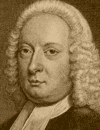 John Gill
in A Discourse on Prayer.
Read in context
By the Spirit, rather is meant the extraordinary gift of the Spirit bestowed on the apostle and others, by which they spoke with divers tongues, and which he determined to make use of, though in such a manner, as to be understood: He would not use it without an interpretation.
John Gill
in A Discourse on Prayer.
Read in context
The third Person, the Holy Spirit, takes his part, and has a peculiar place in this work; he is the author of prayer, the inditer of it, who forms it in our hearts, creates breathings, and desires after spiritual things, stirs us up to prayer, and assists in it.
John Gill
in A Discourse on Prayer.
Read in context
As for the season, he must pray always; so for the kinds of prayer, with all prayer and supplication.
William Gurnall
in The Christian in Complete Armour - Part 16
Read in context
It is because of this that there is so much spiritual emphasis from the intelligence of the Holy Spirit upon the necessity for praying for all saints, for the fellowship prayer, the corporate prayer of the Lord's people.
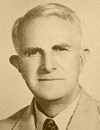 T. Austin-Sparks
in Prayer as Warfare (Continued)
Read in context
No man can pray in the Spirit except his heart is a habitation to the Spirit.
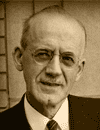 A.W. Tozer
in Jude
Listen at 19:50
The obvious reference in praying with the Spirit is when we're praying in an unknown tongue.
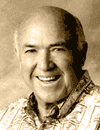 Chuck Smith
in Keep Yourself in the Love of God
Read in context
If you pray in an unknown tongue in the Spirit you do not know what you are praying; you have no understanding of it.
 Smith Wigglesworth
in The Gift of Tongues
Read in context
What Scripture says
- Ephesians 6:18 pray in the Spirit at all times, for all the saints
- Jude 1:20 praying in the Holy Spirit
- Jude 1:21 keep yourselves in the love of God
- Romans 8:26 the Spirit helps us in our weakness
- Romans 8:27 the Spirit intercedes for the saints according to the will of God
- Zechariah 12:10 a spirit of grace and prayer
- Galatians 4:6 the Spirit of His Son in our hearts, crying out, Abba, Father
- John 4:24 worship Him in spirit and in truth
- Ephesians 2:18 access to the Father by one Spirit
- Philippians 3:3 we who worship by the Spirit of God
- Luke 11:13 the Father will give the Holy Spirit to those who ask Him
How this page is made: the quotes are taken word for word from sermons on SermonIndex and checked against them by program before the page is published. The transcripts of audio and video sermons are machine-made, so follow the link to hear the words as they were spoken. The answer above the quotes is an overview with its sources listed; it is not a statement of doctrine by SermonIndex.