
Doubt is a wavering of trust in God and His word, and Scripture treats the honest doubts of a believer differently from wilful unbelief. The preachers quoted here explain where doubts come from, how Christ dealt with Thomas, John the Baptist and Peter, and how doubt is overcome by bringing it to Christ, setting the word against it, praying in faith and going on in obedience.
Doubt is a wavering of trust in God and in what He has said. It is overcome not by pretending it is not there, but by bringing it honestly to Christ, setting it against His word, praying, and going on in obedience while the light comes. The father in Mark's Gospel showed the way when he cried, "I do believe; help my unbelief!" (Mark 9:24). Thomas Manton wrote, "There are doubts in the people of God, but they get the victory over them; and, therefore, it is not to be understood as if any doubt did make us incapable of any blessing, but only such as is allowed and prevaileth."1
Doubt and unbelief are not the same
Scripture treats the doubts of a believer and the settled unbelief of the heart that turns from God as different things. The first is a weakness of faith, and the preachers often call it unbelief in a believer. The second is a refusal to trust God at all. The page on unbelief deals with the second. This page is about the first. Manton wrote of the man in James who wavers like a wave of the sea, "An unbeliever is like the waves of the sea, always rolling; but a believer is like a tree, much shaken, but firm at root."2
William Gurnall drew the same line. He wrote, "The doubting Christian sinks, but, as a traveller in a slough where the bottom is firm, and so recovers himself."3 He also wrote, "The doubtings of a true believer are attended with much shame and sorrow of spirit, even for those doubtings."4 The believer's doubts bring him shame and sorrow.
Honest doubt and wilful doubt
Some doubt is honest. It wants to know the truth and is willing to be shown it. Other doubt is a refusal dressed up as a question. Arthur T. Pierson wrote, "There is a kind of doubt that is entirely right, and of that sort is the doubt of one who does not believe what he has no reason to believe, and what he has no proof of, as true."5 He went on, "Such doubts no amount of evidence will remove unless the heart is changed; such doubters would not be persuaded though one rose from the dead."6 Pierson added, "Whatever doubts then do not spring from a wicked heart and unwillingness to be convinced will disappear when the proofs are seen and examined."7
James Stalker warned against assuming that every doubt is honest. He wrote, "It may be a vague mist of opinion, in which the mind has allowed itself to become enveloped because it has never had the courage to think its doubts through."8 Alexander Maclaren compared the words of Thomas with the words of a man who is willing to believe. Thomas said that unless he saw and touched he would not believe. Maclaren wrote, "The one is the language of willingness to be persuaded, the other is a token of a determination to be obstinate."9 Stalker added that many who have no doubts about Christ in their heads still stumble over Him. "They may have no intellectual doubts about Christ, believing him to be the Son of God and the Saviour of the world; but they are offended in him in another way."10 He went on, "They are offended by his cross; they are afraid to confess him and to take the consequences."11
It comes to strong believers
Doubt is not in itself a sign that a person was never a Christian. It has come to some of the strongest men in Scripture. Stalker wrote, "Those who are taught by experience are well aware that the soul has its fainting-fits, and that one whose faith at one time is so great as to remove mountains may at another time be weak and unbelieving."12 J.C. Ryle wrote, "It is possible for a man to forsake all for Christ's sake, and yet to be overtaken occasionally with doubts and fears."13 He was careful not to excuse the unbelief of the disciples in the storm: "I do not tell them to make the unbelief of the disciples an excuse for themselves, but I do tell them that it shows plainly that so long as they are in the body they must not expect faith to be above the reach of fear."13
John Newton wrote in a letter, "The doubts and fears you speak of are, in a greater or lesser degree, the common experience of all the Lord's people, at least for a time: whilst any unbelief remains in the heart, and Satan is permitted to tempt, we shall feel these things."14 He added, "In themselves they are groundless and evil; yet the Lord permits and overrules them for good."14
John the Baptist in prison
John had pointed to Jesus as the Lamb of God. Then he was shut up in Herod's prison, and he sent his disciples to Jesus to ask, "Are You the One who was to come, or should we look for someone else?" (Matthew 11:3). Preachers read this in two ways. Ryle held that John asked for the sake of his disciples, so that they would hear the answer from Christ Himself. Maclaren and Stalker took the question to be John's own. Maclaren wrote, "It may have also been meant to stir Jesus, if He were indeed Messiah, to 'take to Himself His great power.' But the most natural explanation of it is that John's faith was wavering."15
Stalker wrote, "The Baptist's scepticism was real, but it was honest; and we may learn from him how to manage our own doubts."16 He noted that John was a man of the desert, shut up in a cell, waiting month after month while Jesus made no sign. Stalker also wrote, "Some have spoken of his doubt as treachery; but this is quite an exaggeration."17
Where doubts come from
Doubt has many roots. Some of them lie in our circumstances, some in our own hearts, and some in the enemy of our souls.
Hard circumstances are one. John's question came out of a prison cell.
The tempter is another. The first doubt in the world was planted by a question. "Now the serpent was more crafty than any beast of the field that the LORD God had made." (Genesis 3:1). He asked the woman whether God had really spoken. A.B. Simpson said of that scene, "The root of sin in this sad picture is doubt, the tree is disobedience, and the fruit is death."18
Our own nature is a third. Manton wrote, "From that nothing wavering, or disputing, as it is in the original, man's nature is much given to disputes against the grace and promises of God."19
A fourth is looking at ourselves instead of at God. Charles Spurgeon said, "If I doubt you, my brother, because of something in myself, that is an absurd thing to do."20 He went on, "I can only reasonably doubt you, because of some failure in you; if I doubt because of some weakness in myself, I put the saddle on the wrong horse."21 Spurgeon added, "I may be led to doubt and despair about myself, that is right enough, it is clear and logical, but to doubt God because I am weak is fantastic and ridiculous."22
When the wicked prosper
Psalm 73 is the record of a believer whose faith nearly gave way. "But as for me, my feet had almost stumbled; my steps had nearly slipped." (Psalm 73:2). "For I envied the arrogant when I saw the prosperity of the wicked." (Psalm 73:3). He was tempted to think his godliness had been wasted. "Surely in vain I have kept my heart pure; in innocence I have washed my hands." (Psalm 73:13). He could not think his way out. "When I tried to understand all this, it was troublesome in my sight" (Psalm 73:16). "until I entered God's sanctuary; then I discerned their end." (Psalm 73:17).
John Calvin wrote of the psalmist, "He has already condemned himself for having transgressed; but still he acknowledges, that until he entered into the sanctuaries of God, he was not altogether disentangled from the doubts with which his mind had been perplexed."23 He wrote of the cause of such doubts, "Whenever we are dissatisfied with the manner of God's providence in governing the world, let us remember that this is to be traced to the perversity of our understanding."24 The psalmist found that God had held him all along. "Yet I am always with You; You hold my right hand." (Psalm 73:23). Calvin wrote, "From this we see how precious our salvation is in the sight of God; for when we wander far from him, he yet continues to look upon us with a watchful eye, and to stretch forth his hand to bring us to himself."25
Thomas was not with them
Thomas was absent when the risen Lord first came to the disciples. "Now Thomas called Didymus, one of the Twelve, was not with the disciples when Jesus came." (John 20:24). When they told him, he said, "Unless I see the nail marks in His hands, and put my finger where the nails have been, and put my hand into His side, I will never believe." (John 20:25).
Maclaren drew a lesson from his absence. He wrote, "The worst thing that a man can do when disbelief, or doubt, or coldness shrouds his sky, and blots out the stars, is to go away alone and shut himself up with his own, perhaps morbid, or, at all events, disturbing thoughts."26 He added, "If a fire is going out, draw the dying coals close together, and they will make each other break into a flame."27 A.W. Pink wrote, "One important lesson we may learn from this is, how much we lose by our failure to cultivate the fellowship of Christian brethren."28 He also wrote of Thomas, "He presumes to prescribe the conditions which must be met before he is ready to receive the glad tidings."28
How Christ dealt with Thomas
Jesus did not leave Thomas to himself. A week later He came again. "Eight days later, His disciples were once again inside with the doors locked, and Thomas was with them." (John 20:26). He spoke directly to the doubter and offered him the very proof he had demanded: "Put your finger here and look at My hands. Reach out your hand and put it into My side. Stop doubting and believe." (John 20:27).
Pink wrote, "Thomas needed to be re-established in the truths taught by the pierced hands and side of the Savior, and therefore he got just what was required to restore his wandering soul."28 Maclaren wrote of the command, "You can cultivate the habit of incredulity until you descend into the class of the faithless; or you can cultivate the opposite habit and disposition until you rise to the high level of a settled and sovereign belief."29
Thomas answered, "My Lord and my God!" (John 20:28). Pink wrote, "There was no need for him to handle Christ now: his intellectual doubts had vanished because his heart was satisfied!"28 Calvin wrote, "Christ blames nothing in Thomas, but that he was so slow to believe, that he needed to be violently drawn to faith by the experience of the senses; which is altogether at variance with the nature of faith."30 Jesus then spoke of all who would come after: "blessed are those who have not seen and yet have believed." (John 20:29). Maclaren wrote, "The object of the Christian's faith is not a proposition; it is not a dogma nor a truth, but a Person."31
Why did you doubt?
Peter walked on the water toward Jesus, then looked at the wind. "But when he saw the strength of the wind, he was afraid" (Matthew 14:30). He began to sink and cried out to the Lord. "Immediately Jesus reached out His hand and took hold of Peter." (Matthew 14:31). Then the Lord asked him, "why did you doubt?" (Matthew 14:31).
Spurgeon spoke of Peter's doubt as unbelief in a believer. He said, "The Saviour was well acquainted with those springs from which the unbelief of Peter arose."32 He went on, "He asked it, therefore, rather, that Peter might make the enquiry of himself—that he might look into the matter and see how groundless his unbelief was, so that on the next occasion he might not fall into the same error."33 He said of unbelief, "It only needs to be looked at closely to lose all its terror, to be robbed of its seeming foundation and to be overcome."34
Bring your doubts to Christ
The first thing to do with a doubt is to take it to the Lord. John did this. Stalker wrote, "Doubt is most dangerous when it is vague; condense it into definite questions and immediately the light begins to break."35
On the road to Emmaus two disciples were talking over their disappointed hopes, and Jesus drew near and asked what they were discussing. Later He said to the disciples, "why do doubts arise in your hearts?" (Luke 24:38). Maclaren wrote, "Jesus wishes us to put all fears and doubts and shattered hopes into plain words to Him."36
Andrew Bonar said to his hearers, "To such a Saviour you may go: go even with doubts; for you may go to hide them all in his pierced side, as Thomas did."37
Christ answered with His works
Jesus told John's messengers to report what they saw: "The blind receive sight, the lame walk, the lepers are cleansed, the deaf hear, the dead are raised, and the good news is preached to the poor." (Matthew 11:5). Maclaren wrote, "The answer is sent to him: it is he who is to ponder the things which the messengers saw, and to answer his own question thereby."38 He also wrote, "Further, we are taught here, that what Christ does is the best answer to the question as to who He is."39 Jesus added, "Blessed is the one who does not fall away on account of Me." (Matthew 11:6).
Help my unbelief
A father brought his son to Jesus and asked for help if He could. Jesus answered, "All things are possible to him who believes!" (Mark 9:23). The man cried out, "I do believe; help my unbelief!" (Mark 9:24). He confessed both his faith and his doubt, and asked for help with the doubt. Maclaren wrote, "The whole interest is shifted to him, and more prominence is given to the process by which his doubting spirit is led to trust, than to that by which his son is healed."40 He added, "There is something very beautiful and tender in Christ's way of dealing with him, so as to draw him to faith."41
Set the word against the doubt
Faith grows by hearing God speak. "Consequently, faith comes by hearing, and hearing by the word of Christ." (Romans 10:17). Pierson wrote, "The sovereign cure for all doubting disciples is to immerse themselves in the Word of God, as a vessel is dipped in the sea till it is filled and overflows."42 Calvin wrote that Thomas should have believed the word before he saw: "Faith cannot flow from a merely experimental knowledge of events, but must draw its origin from the word of God."43
The word gives the doubter something firm to look at. Ryle, urging a reader who might not yet belong to Christ to look at His power to save, wrote, "Doubt anything else if you will, but never doubt Christ's power."13
Ask in faith
James wrote of prayer for wisdom. "Now if any of you lacks wisdom, he should ask God, who gives generously to all without finding fault, and it will be given to him." (James 1:5). "But he must ask in faith, without doubting, because he who doubts is like a wave of the sea, blown and tossed by the wind." (James 1:6). "That man should not expect to receive anything from the Lord." (James 1:7). "He is a double-minded man, unstable in all his ways." (James 1:8).
Manton wrote, "From that like a wave of the sea, tossed to and fro, doubts are perplexing, and torment the mind."44 He traced most doubting to a low view of God's power: "Men deceive themselves when they think they doubt because they know not the will of God: their main hesitancy is at his power."45 He wrote of the double mind, "That doubtfulness of mind is the cause of uncertainty in our lives and conversations."46 He went on, "Their minds are double, and therefore their ways are unstable."47 He also wrote, "When we are but half convinced, we are usually unstable."48
Keep on obeying
Doubt is not cured by waiting for every question to be answered before we obey. Jesus said, "If anyone desires to do His will, he will know whether My teaching is from God or whether I speak on My own." (John 7:17). A.W. Pink wrote, "The lack of practical obedience to Christ lies at the root of the majority of doubts and fears!"49 Stalker warned against using doubt as a reason to stop obeying. He wrote, "Never is religious doubt so dangerous as when it is made an excuse for giving the reins to the flesh."50
Do not nurse your doubts
Doubts are to be fought, not kept. Spurgeon spoke plainly about unbelief in a believer. He said, "In fact, if there can be one sin more heinous than the unbelief of a sinner, it is the unbelief of a saint."51 He went on, "In a saint, moreover, unbelief is the root of other sins."52
Have mercy on those who doubt
Christ was patient with doubters, and His people must be the same. Jude wrote, "And indeed, have mercy on those who doubt;" (Jude 1:22). Maclaren drew a lesson from John in prison: "John's gloomy prison thoughts may teach us how much our faith may be affected by externals and by changing tempers of mind, and how lenient, therefore, should be our judgments of many whose trust may falter when a strain comes."53
When Jesus spoke of John to the crowds, He did not mention his question. He praised him. Maclaren wrote, "Praise from Jesus is praise indeed; and it is poured out here with no stinted hand on the languishing prisoner whose doubts had just been brought to Him."54 Even on the mountain in Galilee, where the eleven worshipped the risen Lord, Matthew records that "some doubted." (Matthew 28:17). He still gave them His commission.
From doubt to worship
The end of doubt is not a clever answer but a sight of Christ. Thomas began with a demand and ended with a confession of faith. The Gospel was written so that others might come to the same place. "But these are written so that you may believe that Jesus is the Christ, the Son of God, and that by believing you may have life in His name." (John 20:31).
- Thomas Manton, The Complete Works of Thomas Manton, D.D. Vol. IV, "CHAPTER I: James, a servant of God, and of the Lord Jesus Christ, to...".
- Thomas Manton, The Complete Works of Thomas Manton, D.D. Vol. IV, "CHAPTER I: James, a servant of God, and of the Lord Jesus Christ, to...".
- William Gurnall, Writings of William Gurnall, "Fourth Piece - The Christian's Spiritual Shield".
- William Gurnall, Writings of William Gurnall, "Fourth Piece - The Christian's Spiritual Shield".
- Arthur T. Pierson, Writings of Arthur T Pierson - Volume 1, "Chapter i. weighing the proofs".
- Arthur T. Pierson, Writings of Arthur T Pierson - Volume 1, "Chapter i. weighing the proofs".
- Arthur T. Pierson, Writings of Arthur T Pierson - Volume 1, "Chapter i. weighing the proofs".
- James Stalker, The Two St. Johns of the New Testament, "Chapter 5: The Eclipse Of His Faith".
- Alexander Maclaren, Expositions Of Holy Scripture St John Chaps Xv To Xxi, "Thomas and jesus".
- James Stalker, The Two St. Johns of the New Testament, "Chapter 5: The Eclipse Of His Faith".
- James Stalker, The Two St. Johns of the New Testament, "Chapter 5: The Eclipse Of His Faith".
- James Stalker, The Two St. Johns of the New Testament, "Chapter 5: The Eclipse Of His Faith".
- J.C. Ryle, "Peace! Be Still!" (sermon).
- John Newton, "Doubts-- Christian Growth" (sermon).
- Alexander Maclaren, Expositions Of Holy Scripture E, "John's doubts and christ's praise".
- James Stalker, The Two St. Johns of the New Testament, "Chapter 5: The Eclipse Of His Faith".
- James Stalker, The Two St. Johns of the New Testament, "Chapter 5: The Eclipse Of His Faith".
- A.B. Simpson, "Emblems From the Story of the Fall" (sermon).
- Thomas Manton, The Complete Works of Thomas Manton, D.D. Vol. IV, "CHAPTER I: James, a servant of God, and of the Lord Jesus Christ, to...".
- C.H. Spurgeon, Grace Triumphant, "Chapter 12: Unreasonable Reasons".
- C.H. Spurgeon, Grace Triumphant, "Chapter 12: Unreasonable Reasons".
- C.H. Spurgeon, Grace Triumphant, "Chapter 12: Unreasonable Reasons".
- John Calvin, Commentary On Psalms Volume 3, "Psalm 73:15-17".
- John Calvin, Commentary On Psalms Volume 3, "Psalm 73:21-24".
- John Calvin, Commentary On Psalms Volume 3, "Psalm 73:21-24".
- Alexander Maclaren, Expositions Of Holy Scripture St John Chaps Xv To Xxi, "Thomas and jesus".
- Alexander Maclaren, Expositions Of Holy Scripture St John Chaps Xv To Xxi, "Thomas and jesus".
- A.W. Pink, "Exposition of the Gospel of John CHAPTER 69 CHRIST AND THOMAS" (sermon).
- Alexander Maclaren, Expositions Of Holy Scripture St John Chaps Xv To Xxi, "Thomas and jesus".
- John Calvin, Commentary On John Volume 2, "John 20:24-25".
- Alexander Maclaren, Expositions Of Holy Scripture St John Chaps Xv To Xxi, "Thomas and jesus".
- C.H. Spurgeon, Grace Triumphant, "Chapter 12: Unreasonable Reasons".
- C.H. Spurgeon, Grace Triumphant, "Chapter 12: Unreasonable Reasons".
- C.H. Spurgeon, Grace Triumphant, "Chapter 12: Unreasonable Reasons".
- James Stalker, The Two St. Johns of the New Testament, "Chapter 5: The Eclipse Of His Faith".
- Alexander Maclaren, Expositions Of Holy Scripture E, "The risen lord's self-revelation to wavering disciples".
- Andrew Bonar, "The Leper Drawing Forth the Saviour's Grace" (sermon).
- Alexander Maclaren, Expositions Of Holy Scripture B, "John's doubts of jesus, and jesus' praise of john".
- Alexander Maclaren, Expositions Of Holy Scripture B, "John's doubts of jesus, and jesus' praise of john".
- Alexander Maclaren, Expositions of Holy Scripture: Mark, "The omnipotence of faith".
- Alexander Maclaren, Expositions of Holy Scripture: Mark, "The omnipotence of faith".
- Arthur T. Pierson, Writings of Arthur T Pierson - Volume 1, "Chapter ix.christ in the old testament".
- John Calvin, Commentary On John Volume 2, "John 20:24-25".
- Thomas Manton, The Complete Works of Thomas Manton, D.D. Vol. IV, "CHAPTER I: James, a servant of God, and of the Lord Jesus Christ, to...".
- Thomas Manton, The Complete Works of Thomas Manton, D.D. Vol. IV, "CHAPTER I: James, a servant of God, and of the Lord Jesus Christ, to...".
- Thomas Manton, The Complete Works of Thomas Manton, D.D. Vol. IV, "CHAPTER I: James, a servant of God, and of the Lord Jesus Christ, to...".
- Thomas Manton, The Complete Works of Thomas Manton, D.D. Vol. IV, "CHAPTER I: James, a servant of God, and of the Lord Jesus Christ, to...".
- Thomas Manton, The Complete Works of Thomas Manton, D.D. Vol. IV, "CHAPTER I: James, a servant of God, and of the Lord Jesus Christ, to...".
- A.W. Pink, Writings of A W Pink - Volume 1, "Chapter 15".
- James Stalker, The Two St. Johns of the New Testament, "Chapter 5: The Eclipse Of His Faith".
- C.H. Spurgeon, Spurgeons Sermons Volume 1 1855, "The Sin of Unbelief".
- C.H. Spurgeon, Spurgeons Sermons Volume 1 1855, "The Sin of Unbelief".
- Alexander Maclaren, Expositions Of Holy Scripture E, "John's doubts and christ's praise".
- Alexander Maclaren, Expositions Of Holy Scripture B, "John's doubts of jesus, and jesus' praise of john".
In their own words
Each line below is quoted exactly from a sermon on this site. Follow the link to hear or read it where it was said.
It is possible for a man to forsake all for Christ's sake, and yet to be overtaken occasionally with doubts and fears.
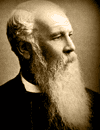 J.C. Ryle
in Peace! Be Still!
Read in context
I do not tell them to make the unbelief of the disciples an excuse for themselves, but I do tell them that it shows plainly that so long as they are in the body they must not expect faith to be above the reach of fear.
J.C. Ryle
in Peace! Be Still!
Read in context
Doubt anything else if you will, but never doubt Christ's power.
J.C. Ryle
in Peace! Be Still!
Read in context
The doubts and fears you speak of are, in a greater or lesser degree, the common experience of all the Lord's people, at least for a time: whilst any unbelief remains in the heart, and Satan is permitted to tempt, we shall feel these things.
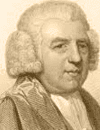 John Newton
in Doubts-- Christian Growth
Read in context
In themselves they are groundless and evil; yet the Lord permits and overrules them for good.
John Newton
in Doubts-- Christian Growth
Read in context
The root of sin in this sad picture is doubt, the tree is disobedience, and the fruit is death.
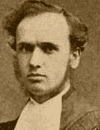 A.B. Simpson
in Emblems From the Story of the Fall
Read in context
One important lesson we may learn from this is, how much we lose by our failure to cultivate the fellowship of Christian brethren.
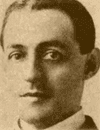 A.W. Pink
in Exposition of the Gospel of John CHAPTER 69 CHRIST AND THOMAS
Read in context
He presumes to prescribe the conditions which must be met before he is ready to receive the glad tidings.
A.W. Pink
in Exposition of the Gospel of John CHAPTER 69 CHRIST AND THOMAS
Read in context
Thomas needed to be re-established in the truths taught by the pierced hands and side of the Savior, and therefore he got just what was required to restore his wandering soul.
A.W. Pink
in Exposition of the Gospel of John CHAPTER 69 CHRIST AND THOMAS
Read in context
There was no need for him to handle Christ now: his intellectual doubts had vanished because his heart was satisfied!
A.W. Pink
in Exposition of the Gospel of John CHAPTER 69 CHRIST AND THOMAS
Read in context
To such a Saviour you may go: go even with doubts; for you may go to hide them all in his pierced side, as Thomas did.
 Andrew Bonar
in The Leper Drawing Forth the Saviour's Grace.
Read in context
What Scripture says
- Mark 9:24 I do believe; help my unbelief!
- John 20:27 Stop doubting and believe
- John 20:29 blessed are those who have not seen and yet have believed
- Matthew 11:3 John's question from prison
- Matthew 14:31 why did you doubt?
- James 1:6 ask in faith, without doubting
- Psalm 73:17 until I entered God's sanctuary
- Jude 1:22 have mercy on those who doubt
- John 7:17 the one who desires to do His will shall know
- Luke 24:38 why do doubts arise in your hearts?
- Romans 10:17 faith comes by hearing
How this page is made: the quotes are taken word for word from sermons on SermonIndex and checked against them by program before the page is published. The transcripts of audio and video sermons are machine-made, so follow the link to hear the words as they were spoken. The answer above the quotes is an overview with its sources listed; it is not a statement of doctrine by SermonIndex.