
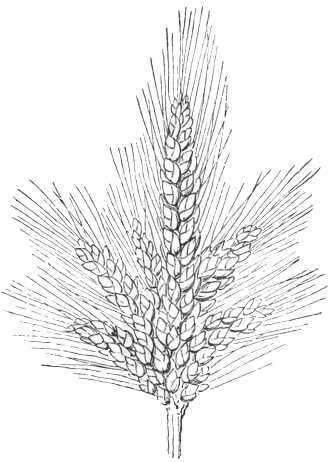
Fig. 342—Egyptian Wheat—Triticum compositum
Wheat occurs in various passages of Scripture, and there can be no doubt that the word so rendered has this signification.
Wheat having been one of the earliest cultivated grains, is most probably of Asiatic origin, as no doubt Asia was the earliest civilized, as well as the first peopled country. As both wheat and barley are cultivated in the plains of India in the winter months, where none of the species of these genera are indigenous, it is probable that both have been introduced into India from the north, that is, from the Persian, and perhaps from the Tartarian region, where these and other species of barley are most successfully and abundantly cultivated. Different species of wheat were no doubt cultivated by the ancients; but both barley and wheat are too well known to require further illustration in this place.
Is the principal and most valuable kind of grain for the service of man, and is produced in almost every part of the world, Gen 30:14 Deu 8:8 Jdg 6:11 Mat 13:25 1Co 15:37 . It is often intended where the word corn is used. See CORN.\par The Egyptian wheat, Triticum Compositum, has six or seven ears on one head; so that it presented its usual appearance in this respect in Pharaoh’s dream, Gen 41:5-7 . The "meat-offerings" of the Mosaic service, Lev 2:1-16, were all made of wheaten flour.\par
Wheat. The well-known valuable cereal, cultivated from the earliest times, is first mentioned in (Gen 30:14, in the account of Jacob’s sojourn with Laban in Mesopotamia. Egypt, in ancient times, was celebrated for the growth of its wheat; the best quality was all bearded; and the same varieties existed in ancient as in modern times, among which may be mentioned the seven-eared quality described in Pharaoh’s dream. Gen 41:22. Babylonia was also noted for the excellence of its wheat and other cereals. Syria and Palestine produced wheat of fine quality and in large quantities. Psa 81:16; Psa 147:14; etc.
There appear to be two or three kinds of wheat at present grown in Palestine, the Triticum vulgare, the Triticum spelta, and another variety of bearded wheat which appears to be the same as the Egyptian kind, the Triticum compositum. In the parable of the sower our Lord alludes to grains of wheat which in good ground produce a hundred-fold. Mat 13:8. The common Triticum vulgare will sometimes produce one hundred grains in the ear.
Wheat is reaped toward the end of April, in May, and in June, according to the differences of soil and position; it was sown either broadcast and then ploughed in or trampled in by cattle, Isa 32:20 or in rows, if we rightly understand Isa 28:25 which seems to imply that the seeds were planted apart in order to insure larger and fuller ears. The wheat was put into the ground in the winter, and some time after the barley; in the Egyptian plague of hail, consequently, the barley suffered, but the wheat had not appeared, and so escaped injury.
The wheat harvest (usually in the end of May) in Palestine is mentioned as early as Reuben (Gen 30:14), compare Isaac’s hundred fold increase (Gen 26:12). The crops are now thin and light, no manure being used and the same grain grown on the same soil year by year. Three varieties are grown, all bearded. The sickle was in use for cutting grain as well as sometimes for the vintage (Rev 14:18-19). Generally, the ears only were cut off, the long straw being left in the ground.
Wheat. In Palestine this most important of all grains was sown after barley—late in the fall. It was not only scattered broadcast and then ploughed, harrowed, or trodden in, Isa 32:20, but it seems, according to the Hebrew of Isa 28:25, to have been planted in rows or drills, as it certainly often is at present in Syria, wheat is still produced for export east of the Jordan. Eze 27:17; Deu 8:8. In the days of Jacob this grain was already so much cultivated in Mesopotamia that "wheat harvest" denoted a well-known season. Gen 30:14. The many-eared variety, or mummy wheat, is referred to in Pharaoh’s dream. Gen 41:22. In the A. V. and R. V. this grain is often mentioned under the general name of "corn."
This cereal was extensively grown in Palestine; the harvest was in May and June. In the parable it is used by the Lord as representing the children of the kingdom, the fruit of the good seed that He was sowing on the earth, in contrast to the tares, or darnel, which Satan secretly sowed among the good seed.
The Lord Himself, being the second Man ’out of heaven,’ is compared to the grain of wheat that must have remained alone unless it had died, but which in dying would bring forth much fruit. This clearly shows that there was no union of Christ and natural man by His incarnation alone, and that through the death of Christ the fruit produced by His resurrection is of the same order as Christ Himself. Mat 13:25-30; Joh 12:24; 1Co 15:48-49.
There are three or four varieties of Triticum grown in Palestine.
WHEAT.—Of all the cereals, wheat is at once the most valuable and the most widely distributed. It has been cultivated from very early times, as is proved by the finding of wheat grains in some of the oldest Egyptian tombs. In what land it had its-origin is unknown, but de Candolle assigns the honour to Mesopotamia. In Palestine its cultivation dates back to a time prior to the Hebrew conquest (Deu 8:8). How long before cannot be said, but it was probably a considerable time. In the OT the most common name for it is
Hugh Duncan.
(Hebr. "ḥiṭṭah"; Deut. viii. 8 et seq.):
By: Emil G. Hirsch, Immanuel Benzinger
The chief breadstuff of Palestine in both ancient and modern times. It has been observed that the cultivation of wheat indicates a higher stage of civilization than the cultivation of barley alone. Barley bread is, therefore, mentioned comparatively seldom (Judges vii. 13; II Kings iv. 42), and was probably the food of the common people only. Among the Greeks and Romans, as in the Orient today, barley was less esteemed than wheat, which was therefore the preferred breadstuff. The loaves of bread used for divine sacrifice were naturally made only from the choicest wheat flour.
In Palestine the winter grain is sown in late autumn, when the early rains have loosened the soil and prepared it for plowing. Wheat is harvested somewhat later than barley, and generally at a time when the heavy rains have ceased (I Sam. xii. 17). The harvest season varies, according to the districts, between the end of April and the beginning of June. On harvesting, thrashing, and measuring the wheat see Agriculture; Baking; Bread.
Wheat was an article of export from ancient times, Tyre (according to Ezek. xxvii. 17) obtaining wheat from Judah (comp. also Acts xii. 20). Galilee, according to Josephus, was the most fruitful district. At present the plains of Philistia and Jezreel produce chiefly wheat, but the Hauran district is still the great granary of Syria; and its grain is exported in large quantities by way of Haifa and Beirut.
Grains of wheat were eaten also roasted, a survival from the period when grinding and baking were not understood. Parched kernels ("ḳali") seem to have been very popular among the ancient Hebrews (I Sam. xvii. 17, xxv. 18; II Sam. xvii. 28), especially during harvesting (Ruth ii. 14; Lev. xxiii. 14), as is still the case to-day.
WHEAT (chittâh, Gen 30:14, Exo 34:22 etc.; sitos, Mat 3:12; Mat 13:25; Mat 13:29-30, Luk 3:17; Luk 16:7; Luk 22:31 etc.).—The wheat of Palestine is mostly of the bearded varieties; it is not only eaten as bread, but also boiled, unground, to make the peasant’s dish burghul, which is in turn pounded with meat in a mortar (cf. Pro 27:22) to make the festive delicacy kibbeh. Wheat is grown all over the valleys and plains of W. Palestine, though to a less extent than barley, but it is cultivated in the largest quantities in the Nuqra or plain of the Hauran, one of the finest grain-growing countries in the world. The wheat harvest occurs from April to June; its time was looked upon as one of the divisions of the year (Exo 34:22, Jdg 15:1, 1Sa 12:17). The expressions ‘fat of wheat’ (Psa 81:16 mg., 147:14 mg.) and ‘the fat of kidneys of wheat’ (Deu 32:14) refer to the finest flour of wheat.
E. W. G. Masterman.
(óῖôïò, óåìßäáëéò)
Apart from the Gospels the only books in the NT which contain a reference to wheat are the Acts of the Apostles, St. Paul’s First Epistle to the Corinthians, and the Apocalypse. The reference in Acts (Act_27:38) requires no comment. The operation there alluded to completed that begun in Act_27:18. In 1Co_15:37 it occurs in a simile introduced by St. Paul in his dissertation on the Resurrection. The general meaning of the passage is: Thou sowest not the body that shall appear-i.e. the bladed stem with ears of corn-but a naked grain. In Rev_6:6, the Voice fixes the maximum price for the main food-stuffs. The denarius was the daily wage (cf. Mat_20:2) and a ÷ïῖíéî of wheat the average daily allowance of the workman. Barley, being much cheaper, formed the main staple of food of the poor, and in NT times the proportionate value of these two different kinds of grain was probably as three to one as estimated here. The Greek measure ÷ïῖíéî was probably something under two pints. The proclamation is addressed to the nameless rider who represents Dearth, and is a prohibition of famine prices.
In the great dirge over the fall of Babylon in Revelation 18, reference is made to fine flour and wheat as two of the commodities for which the merchants of the earth are no longer able to find a market. The fine flour was no doubt imported for the wealthy. The word used, óåìßäáëéò, is a ἅðáî ëåã. in the NT. The wheat supply of Rome came largely from Egypt and was conveyed by ship from Alexandria. The land of it origin is a matter of speculation, but Mesopotamia, the enormous wheat-harvests of which were in ancient times proverbial, probably has as good a claim as any other country.
The knowledge of agriculture certainly goes back to pre-Semitic times, for grind-stones belonging to that period have been discovered (cf. the present writer’s Latest Light on Bible Lands, London, 1913, p. 213). Several varieties of wheat are grown in Palestine, of which the most common is the Triticum spelta. Two other important varieties are the Triticum compositum and the Triticum hybernum. Wheat has been an article of export from very early times (cf. Eze_27:17, Act_12:20). The principal wheat-growing district is the plain of the Ḥauran.
See, further, Harvest, Sickle.
Literature.-H. B. Tristram. Natural History of the Bible10, London, 1911, pp. 488-493; R. B. Rackham, The Acts of the Apostles, do., 1901, p. 490; A. Robertson and A. Plummer, ICC , ‘First Epistle of St. Paul to the Corinthians,’ Edinburgh, 1911, p. 369 f.; H. B. Swete, The Apocalypse of St. John 2, London, 1907, pp. 88, 234; The Speaker’s Commentary, iii. [do., 1881] 367; W. M. Thomson, The Land and the Book, 3 vols., do., 1881-86, passim; J. C. Geikie, The Holy Land and the Bible, do., 1903, p. 53; DCG ii. 821; SDB , p. 972; EBi iv. 5299 f.
P. S. P. Handcock.
Psa 81:16 (c) We may learn from this that those who hearken to the Lord and seek to obey His Word may expect to receive GOD’s richest blessings that will make them strong, able and happy Christian servants. (See also Psa 147:14).
Jer 23:28 (a) The wheat in this case represents the Word of GOD, while the chaff represents the ideas, notions and dreams of men.
Mat 3:12 (a) Our Lord JESUS, as well as others, used "wheat" as a type of Christians, believers in the Lord JESUS. The chaff represents hypocrites, who are raised among the wheat, and close to the wheat, but never become "wheat." In the final day, GOD takes the Christians (the wheat) into His home in glory, while the unsaved are shut out. (See also Luk 3:17).
Mat 13:25 (a) The grain in this verse represents the Word of GOD as the wheat, and false doctrines and false writings as the tares. There are always those in every community who would bring evil doctrines in among GOD’s people in order to hinder the salvation of souls. The field in which these mixed seeds are sown is the world. In GOD’s true church, only the precious Word of GOD is preached and taught.
Joh 12:24 (a) This grain is the Lord JESUS Himself. He was cut down and was buried, but came forth from the tomb to produce a tremendous crop of believers for eternity.
Wheat. The most important cereal grass mentioned in the Bible. This was the bearded variety belonging to the genus Triticum. It was cultivated in Bible lands from early times ( Gen 30:14). Egyptian wheat was the many-eare d variety called "mummy wheat."This was the wheat of Pharaoh’s dream ( Gen 41:5-57). It was also depicted on Egyptian monuments.
Wheat was sown after barley in November or December. It was usually broadcast and then either plowed or trodden into the soil by oxen or other animals ( Isa 32:20). This grain was used for bread ( Exo 29:32), and was also eaten parched ( Lev 23:14; Rth 2:14). It was used in ceremonial offerings ( Lev 2:1; Lev 24:5-7) and as an article of commerce ( Eze 27:17; Act 27:38).
When corn is mentioned in the Bible, it refers to wheat, as corn was not known in Bible times ( Psa 72:16; Mat 12:1; Mar 4:28). Jesus compared His death to a grain of wheat which must die
to produce fruit ( Joh 12:24).