
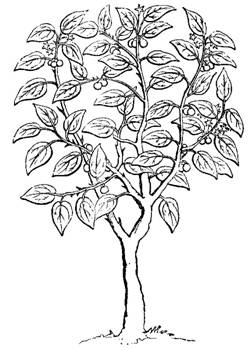
Fig. 330—Thorn Bush: Zizyphus Spina Christ
There are a considerable number of words in Scripture which have been considered to indicate brambles, briers, thorns, thistles. Rabbinical writers state that there are no less than twenty-two words in the Bible signifying thorny and prickly plants; but some of these are probably so interpreted only because they are unknown, and may merely denote insignificant shrubs.
The cut given above represents the Zizyphus Spina Christi of which Hasselquist says, ’In all probability this is the tree which afforded the crown of thorns put upon the head of Christ. It is very common in the East. This plant is very fit for the purpose, for it has many small and sharp spines, which are well adapted to give pain: the crown might easily be made of these soft, round, and pliant branches; and what in my opinion seems to be the greater proof is, that the leaves very much resemble those of ivy, as they are of a very deep glossy green. Perhaps the enemies of Christ would have a plant somewhat resembling that with which emperors and generals were crowned, that there might be a calumny even in the punishment.’
By: Isidore Singer, Immanuel Löw
The desert flora of Palestine is unusually rich in thorns and thistles, containing a whole series of acanthaceous shrubs and various thistles, including Acanthus, Carduus (thistle), Centaurea Calcitrapa (star-thistle), Cirsium acarna, Linn. (horse-thistle), Cnicus benedictus, Linn. (blessed thistle), Cynara Syriaca, Linn. (cardoon), Echinops (globe-thistle), Eryngium nitraria, Noea, Notobasis Syriaca, Linn. (Syrian thistle), Ononis antiquorum, Linn. (tall rest-harrow; var. leiosperma, Post), Onopordon (down-thistle), Phæopappus scoparius, Sieb., Silybum Marianum, Linn. (milk-thistle), Tribulus terrestris, Linn. (land-caltrops), and others, some of them in many subspecies. All these plants were very troublesome to the farmer (Prov. xxiv. 31), who frequently set fire to his fields to get rid of them (Isa. x. 17), while the Prophets threatened the people with a plague of briers and thistles (Isa. v. 6; Jer. xii. 13). The tyrant is compared to the useless bramble (Judges ix. 14); and King Amaziah is likened to the thistle (II Kings xiv. 9). Instead of fruit the earth is to bring forth "thorns and thistles" (Gen. iii. 18), which must, therefore, be edible, and which are considered by the Midrash to be artichokes.
Many names for these plants are found in the Bible as well as in post-Biblical literature. Acanthaceous trees and shrubs, some of them admitting of classification, constitute the first group, which includes:  , Bible and Mishnah (also Assyrian, Phenician, and Aramaic) = Lycium Europæum, Linn. (not Rhamnus), box-thorn;
  , Bible, Mishnah, and Aramaic = Rubus sanctus, Schreb., blackberry;
  = Acacia;
  , Mishnah, and
  , Talmud = Cratægus Azarolus, Linn., hawthorn;
  , Mishnah, and
  , Talmud = Zizyphus lotus, Lam., jujube, and Zizyphus spina-Christi, Linn., Christ's-thorn;
  , Mishnah, and
  , Talmud =Zizyphus vulgaris, Lam., common jujube.
The second group comprises acanthaceous or prickly herbs, shrubs, and nettles:  (?), Bible,
  , Mishnah, and
  , Talmud (Assyrian, "egu" [?])= Alhagi Maurorum, DC., alhagi;
  and
and  , Mishnah,
  and
and  , Talmud = Carthamus tinctorius, Linn., safflower;
  , Bible, and
  , Talmud = Centaurea Calcitrapa, Linn., starthistle;
  (?), Bible,
  , Mishnah and Talmud = Echinops spinosus, Linn., or Echinops viscosus, DC., echinops (?);
  = Eryngium Creticum, Lam., button-snakeroot;
  = Cynara Scolymus, Linn., artichoke;
  = Cynara Syriaca, Boiss., and Cynara Cardunculus, Linn., cardoon (the heads of which are well described by Rashi in his commentary on Ps. lxxxiii. 14);
  = Paliurus aculeatus, Linck., garland-thorn;
  (?), Bible = Phæopappus scoparius, Sieb., phæopappus;
  = Solanum coagulans, Forsk., nightshade;
  (?), Bible, and
  , Talmud = Urtica urens, Linn., nettle.
General terms, some of them applied also to thorns, are  , and
, and  in the Bible, and
  , and
, and  in the Mishnah and Talmud.