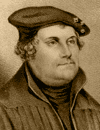
Commentary on GalatiansMartin Luther (1483–1546), the German theologian and leader of the Protestant Reformation, considered Galatians his favorite epistle and called it 'my own epistle, to which I am betrothed.' His Commentary on Galatians, based on lectures delivered in 1531 and published in 1535, is one of the most important and influential commentaries of the Reformation era, passionately expounding the doctrine of justification by faith alone.1 Books6+ EntriesRead commentary →
SWORD — the shared format behind Xiphos, BibleTime, And Bible (Android),
PocketSword (iOS) and Ezra. Unzip the file into your SWORD library folder: on Linux and
Windows that is usually ~/.sword/; on Android put the unzipped
mods.d and modules folders inside the app’s SWORD folder.
Restart the program and the commentary appears under Commentaries.
MyBible — the Android app by Denis Popov. Unzip the file and copy the
.SQLite3 file inside it to your MyBible data folder (the folder the app
names under its module settings). It shows up under Commentaries.
e-Sword — the free Windows program by Rick Meyers. Unzip the file and
copy the .cmti inside it into e-Sword’s resources folder, then restart
e-Sword; the commentary appears in the Commentary pane. This is the current HTML-based
module format, so it needs a recent e-Sword rather than one of the older RTF versions.
theWord — the free Windows program by Costas Stergiou. Unzip the file and
copy the .cmt.twm inside it into theWord’s module folder (usually
C:\Program Files\theWord or your personal
Documents\theWord folder), then restart theWord; the commentary appears in
the Commentaries list. It also runs under Wine on Linux and macOS.