
The biblical topic of "The Suffering Savior" is a central theme in Christian theology, emphasizing the profound significance of Jesus Christ's suffering and death on the cross for the redemption of humanity. As Isaiah 53:5 prophetically declares, "He was wounded for our transgressions, he was bruised for our iniquities," underscoring the notion that Christ's suffering was a substitutionary atonement for human sin. The New Testament reaffirms this concept, with Romans 5:8 stating that "God demonstrates his own love for us in this: While we were still sinners, Christ died for us," and Psalms 22:16-18 foreshadowing the intense physical and emotional agony Jesus endured during the crucifixion. Through his suffering, Jesus Christ provided salvation and reconciliation for all people, as affirmed in Isaiah 53:11, where it is written that "by his knowledge my righteous servant will justify many."

A.B. Simpson presents a profound exploration of Jesus as the Conqueror, Savior, and Sufferer, emphasizing His victory over sin and death, which He achieved through His solitary suffering. He illustrates that Christ's triumph is not just a historical event but a present reality for believers, who can
A.B. Simpson expounds on Isaiah Chapter 21, focusing on the profound suffering of the Savior as depicted in Isaiah 52:14-15 and 53:11. He emphasizes the lowly birth, rejection, and sacrificial sufferings of Jesus, portraying Him as the Man of sorrows who bore the weight of humanity's sins. Simpson a

J.R. Miller reflects on Pilate's poignant presentation of Jesus, urging the crowd to 'Behold the man!' as He stands adorned with a crown of thorns and a purple robe. Despite the cruelty inflicted upon Him, Jesus remains sinless and embodies the essence of love and mercy, having no faults to be found
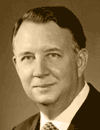
Paris Reidhead emphasizes that our greatest enemy is ourselves, revealing his personal struggles with spirituality and critical attitudes during his missionary work in Africa. He shares his journey of disillusionment and the realization that true victory comes from recognizing our identity in Christ

Roy Hession explores the name Jehovah Nissi, emphasizing that God is our banner and source of victory in spiritual battles. He recounts the story of Israel's battle against Amalek, illustrating how Moses' intercession and the support of Aaron and Hur led to Israel's triumph. Hession highlights the i

Derek Prince emphasizes that believers will face significant challenges and tribulations, as outlined in Matthew 24 and 2 Timothy 3, but reassures that through Christ, they can emerge victorious and even more than conquerors. He stresses the importance of aligning oneself with God's will, which is t

John Alexander Dowie reflects on the life and death of Esther Dowie, emphasizing the profound beauty and purity of her spirit dedicated to God and humanity. He expresses sorrow over her sudden passing due to disobedience, yet finds solace in the victory given by God, reminding the congregation of Hi

Brian Brodersen emphasizes the reality of spiritual warfare in the Christian life, urging believers to recognize the unseen battles against the devil and his forces. He explains that our struggle is not against flesh and blood but against spiritual powers, and encourages the congregation to be equip

Charlie Orr emphasizes the reality of spiritual warfare, drawing from Revelation 12 to illustrate that while the devil is a defeated foe, many Christians live in defeat due to ignorance of his tactics and the weapons available to them. He encourages believers to recognize the supernatural, serious,
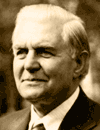
Major Ian Thomas emphasizes that true victory in the Christian life comes from understanding our identity in Christ and the necessity of His life within us. He explains that humanity, since the fall of Adam, is inherently sinful and uninhabited by God, leading to a life dominated by sin. The sermon