
Self-giving love is a fundamental concept in the Bible and Christian faith, emphasizing the importance of sacrificing one's own interests for the benefit of others. This type of love is exemplified in Jesus' ultimate sacrifice on the cross, as described in John 15:13, where he states, "Greater love has no one than this: to lay down one's life for one's friends." The Bible teaches that self-giving love is a reflection of God's character, as seen in 1 John 4:8, which declares that "God is love," and in Psalms 86:15, which highlights God's lovingkindness and compassion. Through the example of Jesus and the teachings of Scripture, Christians are called to demonstrate self-giving love in their relationships and interactions with others, mirroring the sacrificial love of their Savior.
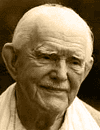
Norman Grubb explores the profound questions of life: what it is, how to live it, and why we live it, emphasizing that true humanity is found in self-forgetfulness and spontaneous expressions of God's love. He asserts that Jesus Christ is the embodiment of life and love, and that our existence is me

Stephen Kaung emphasizes the significance of John's ministry as a ministry of recovery, focusing on the themes of life and light found in Christ. He explains that John's approach leads believers back to the beginning, where true life is found in Jesus, the Word made flesh. Kaung illustrates how John

John Gill preaches on the profound truth that for believers, life is centered around Christ and death is a gain, emphasizing that both living and dying serve to glorify Christ. He reflects on the life of Reverend Joseph Stennett, illustrating how his ministry was dedicated to Christ and how his deat

G.W. North emphasizes that man was originally created by God's breath, embodying a perfect union of spirit, soul, and body, but through sin, he fell from this spiritual state into a carnal existence. This tragic change led to a disconnection from God, resulting in a life dominated by sin and death.
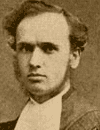
A.B. Simpson explores the profound question of life through Romans 8, emphasizing that true life is found in God, who is the source of all vitality. He explains how the Holy Spirit imparts life to believers, quickening their mortal bodies and enabling them to experience divine strength and healing.

T. Austin-Sparks emphasizes in his sermon 'Life Triumphant Over Death' that John 6 reveals the profound truth of life overcoming death through Christ, who is the Bread of Life. He highlights the importance of union with Christ, where believers must continuously feed on Him to maintain a testimony of
T. Austin-Sparks emphasizes the profound significance of life as the central issue between God and humanity, illustrating that true life is governed by the 'law of the Spirit of life in Christ Jesus.' He contrasts Adam's failure to embody this law with Christ's perfect representation of it, highligh
T. Austin-Sparks emphasizes the theme of life triumphing over death, drawing from Isaiah 8:16-9:2. He explains that the essence of Zion is divine life, which is a nature, method, and law that governs spiritual growth and the Church's testimony. Sparks illustrates how the ministries of Elijah and Eli
T. Austin-Sparks emphasizes that the world's greatest need is 'life,' which encompasses reality, power, and fullness. He observes that both the ungodly and the nominal Church are seeking life, albeit in misguided ways, revealing a deep hunger for true spiritual vitality. The answer to this need is f
T. Austin-Sparks emphasizes the inseparable relationship between life and Christ in his sermon 'A New Day Foreshadowed,' highlighting that true life comes only through the death of Christ, which many reject. He discusses the transition from the Passover to the Feast of Tabernacles, symbolizing a new