
The biblical concept of "Faith and Submission" is rooted in the idea that true faith is demonstrated through obedience and surrender to God's will, as evident in Romans 8:28, which states that "all things work together for good to those who love God, to those who are the called according to His purpose." This submission is not a passive act, but rather an active choice to trust in God's sovereignty, as expressed in Psalms 23:1, "The Lord is my shepherd, I shall not want," indicating a deep reliance on God's guidance and provision. Through faith and submission, believers can experience a profound sense of peace and trust, as seen in Proverbs 3:5-6, which encourages believers to "trust in the Lord with all your heart, and lean not on your own understanding," and to acknowledge Him in all their ways, that He may direct their paths. By embracing this concept, Christians can cultivate a deeper relationship with God and navigate life's challenges with confidence and hope.

John Gill emphasizes the importance of inner beauty over outward adornment in his sermon on 1 Peter 3:5. He reflects on the examples of holy women from the Old Testament, such as Sarah and Ruth, who exemplified faith and trust in God while maintaining a humble and submissive spirit. Gill encourages

John Nelson Darby expounds on Matthew 11, illustrating the definitive judgment of Israel and the contrasting responses to Jesus' ministry. He highlights John the Baptist's inquiry about Jesus' identity, emphasizing the need for faith to recognize the true nature of the Messiah amidst His humble appe

Chuck Smith discusses the story of a good man who ultimately went to hell, emphasizing the distinction between being good in the eyes of men and being right with God. He highlights the rich young ruler's question, 'What lack I yet?' and points out that one can appear righteous in human relationships
John Gill emphasizes the importance of inner beauty over outward adornment in his sermon on 1 Peter 3:3. He explains that while clothing and accessories are not inherently wrong, they should not be the primary focus or used to promote pride and vanity. Gill encourages women to prioritize modesty and
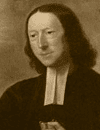
John Wesley addresses the topic of Christian dress, emphasizing that true adornment should come from within, reflecting a meek and quiet spirit rather than external opulence. He warns against the dangers of pride, vanity, and distraction from spiritual growth that can arise from wearing costly appar
John Gill emphasizes the significance of the 'hidden man of the heart' in 1 Peter 3:4, which represents the internal grace that beautifies the soul far beyond external adornments. This inner man, or new creature, is characterized by a new heart and spirit, enabling a deeper understanding and affecti

J.R. Miller emphasizes the transformative power of a renewed mind and heart in his sermon 'Transformation.' He explains that true transformation is not reserved for extraordinary circumstances but can occur in the mundane aspects of daily life, where work and love can lead to spiritual growth. Mille

Thomas Brooks emphasizes the importance of modesty in women's dress, urging them to prioritize decency and propriety over extravagant adornments. He warns that dressing to provoke lust can lead to spiritual consequences, as it tempts others and reflects the vanity of one's heart. Brooks encourages w

T. Austin-Sparks emphasizes the complexities within Christianity, using the parable of the mustard seed to illustrate how the Kingdom of Heaven, while starting small, has grown to encompass a mixture of good and evil. He warns that many who hear the teachings of Jesus may not grasp their deeper mean

G. Campbell Morgan explores the Parable of the Leavened Meal, presenting two interpretations: one that views leaven as a symbol of the Kingdom of Heaven, and another that sees it as a representation of evil corrupting the Kingdom's testimony. He argues that the latter interpretation aligns with the